Africa, on its own terms
SEVICS Africa is a nonprofit. We help young people of African heritage, at home and across the diaspora, become the fullest version of themselves. It starts with rediscovering the culture and the history they came from.
Most of what the world knows about African culture was written down by people who were passing through. They came, they looked, they wrote, and they left. The objects left with them. Today those objects sit in museums in Europe and America, catalogued in somebody else’s language. The young Africans who should have inherited that knowledge meet it as a footnote. Those growing up in the diaspora often do not meet it at all.
We started SEVICS to change that, and to change what it makes possible.
Read the restShow less
Think about how development usually arrives in an African community. Somebody else designs it somewhere else. It assumes money nobody has, tools nobody owns, and a way of living nobody recognises. It quietly contradicts what the people already believe. Then everybody stands around wondering why it did not last.
We work the other way round. Build with what is already there. Price it so people can actually pay for it. Shape it so it fits the culture instead of fighting it. Done properly, the work stops looking like an idea pushed on somebody and starts looking like something they would have done anyway. That is what makes it stay standing after the funding stops.
But you cannot build something that fits a culture you have not troubled to understand. So we begin with rediscovery.
And here is what we have found. Rediscovering where you come from is not nostalgia. It is the first honest answer to the question of who you are. It travels with you into your education, into your work, and into what you believe you are permitted to build.
We do this at three levels, and our name is the plan. Individuals, meaning the young people and diaspora Africans who come to us directly. The communities they belong to. And the systems around them, meaning the indigenous organisations, institutions and companies working in African contexts, whom we serve through tailored corporate support.
All of it rests on evidence or it rests on nothing. The database below is what that looks like in practice. Every record carries a grade saying how firm its attribution is. Every record is honest about what is still unknown.
Have a mask? Find out what it is.
Upload a photograph and get a proposed typology, the visible features behind it, and catalogued records of the same tradition to compare against. It is a place to start looking, not a certificate.
The African mask database
Every object here has its own page, its own attribution and its own stated evidence. Each record says how firm the attribution is and what is known of the object's history, because a mask database that hides its uncertainty is worth less than one that admits it. 85 records published so far, drawn from 4 open access museum collections.
Countries with records
- Angola 2
- Benin 3
- Burkina Faso 8
- Cameroon 5
- Côte d'Ivoire 14
- Democratic Republic of the Congo 15
- Egypt 1
- Ghana 1
- Guinea 5
- Liberia 4
- Mali 9
- Nigeria 24
- Senegal 1
- Sierra Leone 2
- Sudan 1
- Zambia 3
Countries shown in outline have no records here. For many that is a fact about the traditions rather than a gap in the catalogue: a great many African countries have no history of carved ceremonial masks at all.
Recently catalogued
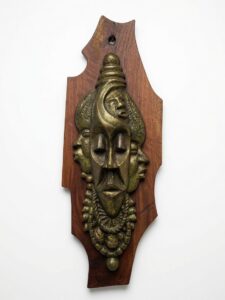 The Mask of DiscontentField-documented Unknown history
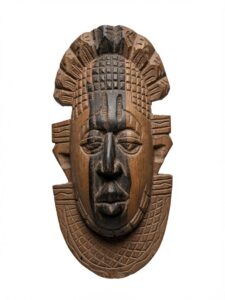 Queen Idia Mask, Wooden Replica (Benin)Field-documented Unknown history
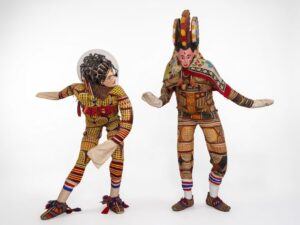 Agbogho Mmuo Maiden Spirit Masquerade (Igbo)Field-documented Unknown history
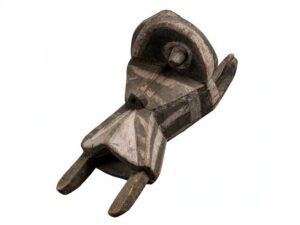 Ogbodo Enyi Elephant Spirit Mask (Igbo)Field-documented Unknown history
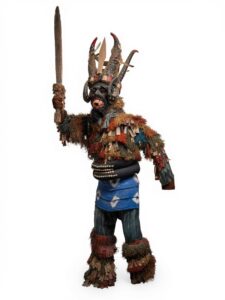 Mgbedike Mask (Igbo)Field-documented Unknown history
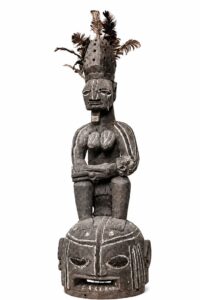 Epa Mask (Yoruba)Field-documented Unknown history
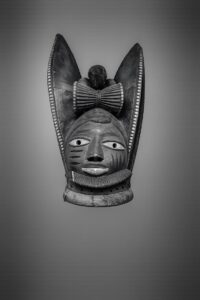 Gelede Headdress (Yoruba)Field-documented Unknown history
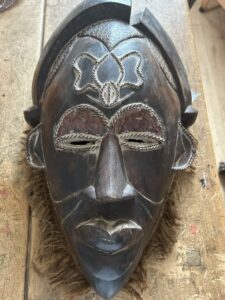 Mwana Pwo MaskField-documented Unknown history
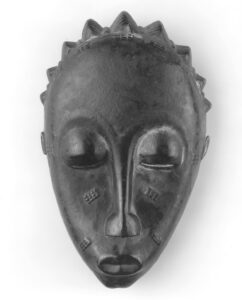 Mask for Mblo MasqueradesMuseum-published Museum accession
 Igbudu Helmet MaskMuseum-published Museum accession
Posts
 Dinka Initiation Scarification: What a Boy Goes Through to Become a ManOctober 26, 2026
 Bafo Sculpture: A Cameroonian Tradition Identified by a Single GestureOctober 26, 2026
 Cameroon Grassland Art: Ninety Kingdoms, One Common Ancestor, and a King Who Could Become an ElephantOctober 25, 2026
 Nyamwezi Art: Divination Figures That Became a Dance Troupe’s Stage PropsOctober 24, 2026
 Anang Masks: The Grotesque and the Beautiful, Staged by the Same Ancestral SocietyOctober 23, 2026
 Fanti Asafo Flags: The Ghanaian Art Tradition Built Without a Single MaskOctober 22, 2026
- Why African “Secret Societies” Were Called Secret, and Who Gave Them That NameOctober 21, 2026
 Gurunsi Masks: Seven Peoples United Under a Name Their Rivals Gave ThemOctober 21, 2026
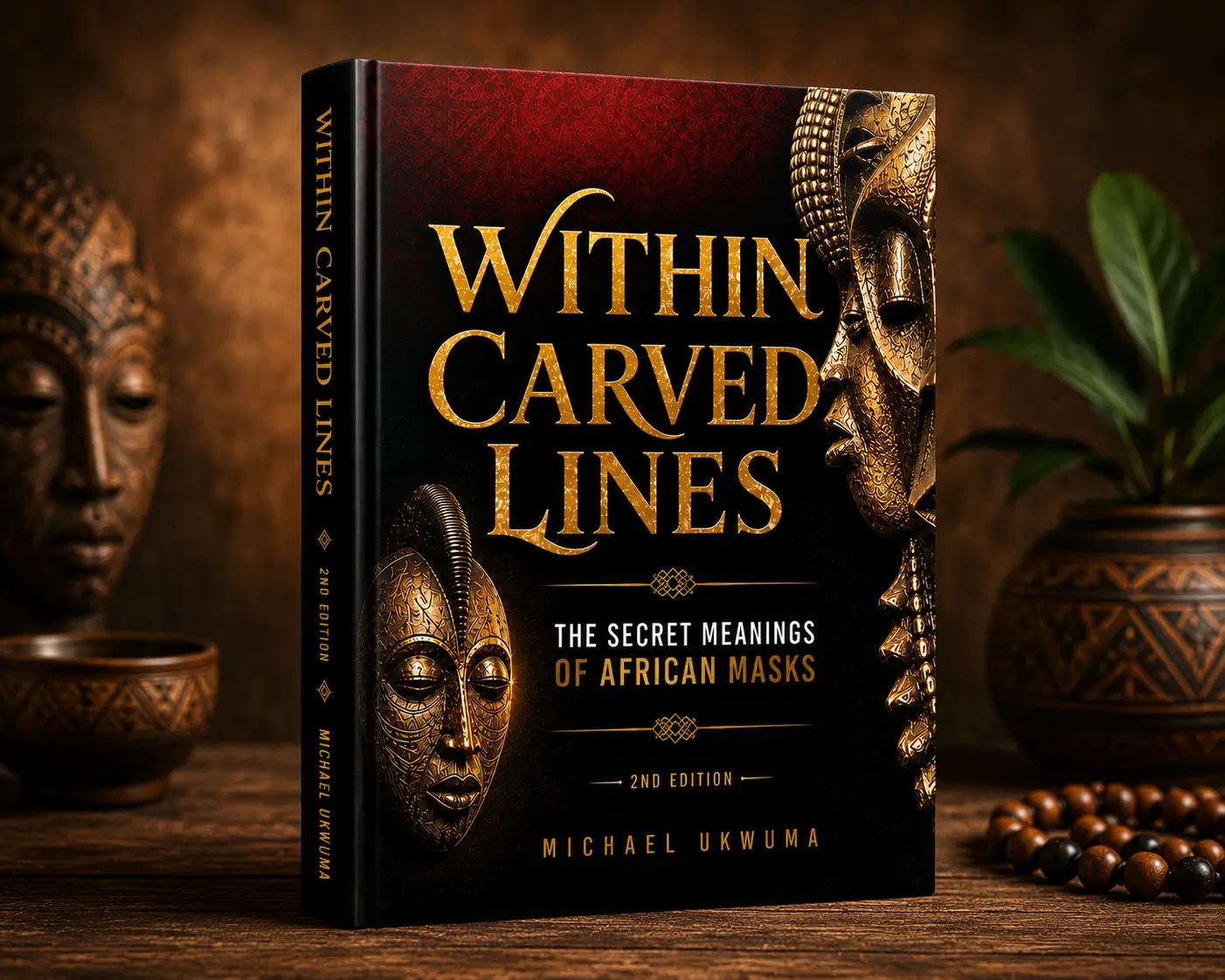
The book to buy
Within Carved Lines
The second edition. What the masks mean, who dances them, and why so much of what has been written about them was written by people passing through.
As an Amazon Associate we earn from qualifying purchases.
Watch our Mask Videos


How the database is built
Nothing is written from memory
Every record traces to a retrieved catalogue entry from a holding institution. Where a source is silent, the field stays empty rather than being filled with a plausible guess. No record is ever generated from what a language model happens to believe.
Two grades, never merged
How firm the attribution is, and what is known of the object’s history, are recorded separately and shown separately. A museum accession number tells you where an object has been. It does not tell you who carved it, and merging the two would hide exactly the distinction a collector needs.
Nothing publishes itself
Harvested material lands in a review queue as a draft. A person reads it, corrects it or bins it. Of the first 190 candidates, 63 were published and 127 were rejected. The queue is the product.
Licences are checked first
An image is only taken where the holding institution has released it under terms that permit reuse, and the licence and the credit travel with it onto the page. Anything that fails the check is refused rather than quietly used.
Uncertainty is published too
Where a people is contested, a form is unclear or a history is unknown, the record says so. A database that only shows what it is sure of is not a record of the field, it is a highlight reel.
Stay with this
Museums, collectors, researchers and community knowledge holders are all sources this database depends on. If you hold documentation on an object, or want to correct a record, tell us.