About
We are not here to explain Africa to anybody
We are here so that young Africans stop needing it explained to them.
Ask a young Nigerian what their grandmother's people believed and you will often get a shrug. Not because they do not care. Because nobody ever told them.
That gap is the whole reason SEVICS exists.
Somewhere along the way we agreed, quietly and without ever voting on it, that the serious knowledge came from outside and the things our grandparents knew were folklore. So a young person in Enugu can name four European philosophers and not one masquerade from his own local government area. He can tell you what a Renaissance painting means. He cannot tell you what the white clay on a maiden spirit mask means, or why it is white, or who was allowed to wear it.
He was not failed by his intelligence. He was failed by what was put in front of him.
SEVICS Africa is a nonprofit. Our work is to help young people of African heritage become the fullest version of themselves, and we think that starts with rediscovering the culture and the history they came from. Not as decoration. Not as a costume brought out for a festival. As the foundation everything else stands on: how you learn, how you lead, how you treat the land, how you build wealth.
This is the one place we will write it out in full. SEVICS stands for the Society for Empowering Vulnerable Individuals, Communities and Systems. Everywhere else on this site we simply say SEVICS, and you will understand why once you have read it once.
Who we work with
Four groups, and we do not rank them.
- Young people, one at a time, wherever they are on the continent.
- Organisations doing this work already, who need capacity rather than advice.
- Corporate organisations operating in Africa and in African communities, who want to do it properly.
- People of African heritage in the diaspora. That last one is a very big one, and it is growing.
Two tracks run through everything below. We serve individuals directly. And we serve the organisations that serve them.
How we work
We build systems that benefit indigenous organisations. That sentence carries a lot, so let me unpack it.
Most development work arrives from outside with the answer already written. Someone flies in, tells a community what it needs, funds it for two years, and leaves. The building stays. The programme does not.
We start from the other end. What does this community already have? What do people here already do, naturally and ordinarily, without anybody paying them to? What does it cost, and can they afford it once we are gone? And most important of all, does it sit right with what they believe?
A solution that offends the culture it lands in will be nodded at politely and abandoned the moment the vehicles drive away. We have all watched it happen. So we build the other kind. Homegrown, affordable, and made of what is already there.
Our programmes
Five areas. Cultural heritage sits above the rest, and everything else grows out of it.
African HeritageSDG 4 · 11 · 13
This is the one we hold above the others. Africa's material culture is scattered across the museums of the world, and most of what is written about it was written by people who were never allowed into the shrine.
We work in three ways.
Conservation. Keeping objects, practices and knowledge alive where they still live, and supporting the people who hold them.
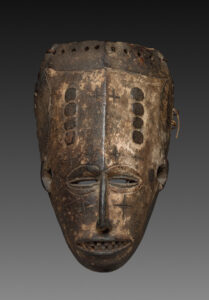
Documentation. We are building a public database of African masks. Every object gets its own page, its own attribution, and a visible grade saying how firm that attribution is and what is known of the object's history. A database that hides its uncertainty is worth less than one that admits it.
Enlightenment. Writing, video and teaching that puts this back in front of young people in a form they will actually read and watch.
We also run #giveitback. If you hold an African mask or artefact and you have come to feel it should go home, we will help you work out where home is and how to get it there. No lectures. No press release unless you want one.
And we take people to see it. Reading about a shrine is not the same as standing in front of one. We organise group tours to heritage sites across Nigeria, for schools, for organisations, and for people of African heritage coming home to see the places for themselves. Tell us what you want to see and how many of you there are.
EducationSDG 4
A curriculum that skips your own history is not neutral. It teaches a child that his people had no ideas worth learning.
We work on the whole system rather than one part of it.
- Teacher training and continuing professional development, because a teacher who was taught badly will teach badly through no fault of her own
- Student engagement and active learning, so that a classroom is a place where something happens rather than a place where notes are copied
- Organisational development for schools and learning institutions
- Producing learning resources, including material on African history and heritage that simply does not exist yet in usable form
- Sharing what is actually working in education, from anywhere, with the people who could use it
- Technology in the classroom, used where it earns its place and not where it is decoration
- Lifelong learning, because school ends and learning does not
Climate ActionSDG 12 · 13
The climate conversation reaches most Africans as weather. Rain that comes at the wrong time. A harvest that fails for no reason anyone can name. A family that moves because the farm stopped feeding them.
What is coming is a hunger problem, a poverty and displacement problem, and a health problem, in that order and often all at once.
We work on three things.
- Sustainable agriculture, built on what farmers here already know rather than on imported inputs they cannot keep buying
- Urban green spaces, because our cities are growing faster than anything planned for them
- Youth education, so that the generation who will carry this understands it before it arrives
A partnership we are glad to announce.
We are working with Viable Community and ReFi Enugu on this. Viable Community is a Dutch foundation working on ecosystem regeneration. ReFi Enugu is the local node of ReFi DAO, doing regenerative finance work here at home in Enugu.
Between them they cover the two halves of the problem that usually never meet. The money and the ground. We intend to keep them in the same room.
LeadershipSDG 16
Africa does not have a shortage of clever young people. It has a shortage of young people who believe they are allowed to lead, and older people willing to hand anything over.
- Empowering individuals to take responsibility before they are given permission
- Ethical leadership, taught as a practice rather than a poster on a wall
- Youth empowerment, and by that we mean actual decisions and actual budgets
- Community engagement, because leadership that is not accountable to a community is just position
- Women's leadership, deliberately and without apology
- Books and resources, so the work outlives the workshop
Corporate SupportSDG 8 · 17
Community organisations fail for boring reasons. Not because the work was wrong. Because nobody could write the report, or the books were kept in a notebook, or the one person who understood the funder left.
We provide capacity building to community based organisations and to corporate organisations that want to work in African communities without doing damage. Governance, systems, documentation, reporting, and the unglamorous things that decide whether an organisation is still standing in five years.
This is also how we fund ourselves. Organisations that can pay for this work do, and that pays for the work with those who cannot.
The people doing it
Rooms, events and conversations across the last few years.


What the work looks like
A few of the objects currently in the database. Every one has its own page, its own attribution, and its own stated evidence.



Where to start
If you have read this far, one of these is for you.