Great Zimbabwe: The Stone Kingdom That Rewrote African History
New: the 2nd edition of Within Carved Lines: The Secret Meanings of African Masks is out now. Get the book →
In the southeastern corner of Zimbabwe, on a granite plateau between the Limpopo and Zambezi rivers, stand the stone walls of a city that changed the way the world understands African history. Great Zimbabwe — from the Shona word dzimba-dza-mabwe, meaning “houses of stone” — was the capital of a powerful medieval kingdom that controlled trade across a huge swathe of southern Africa. Its ruins, still standing after more than seven centuries, are not only an architectural wonder but a monument to the lengths to which colonial ideology went to deny African achievement — and to the scholarly and cultural reclamation that followed.
What Is Great Zimbabwe?
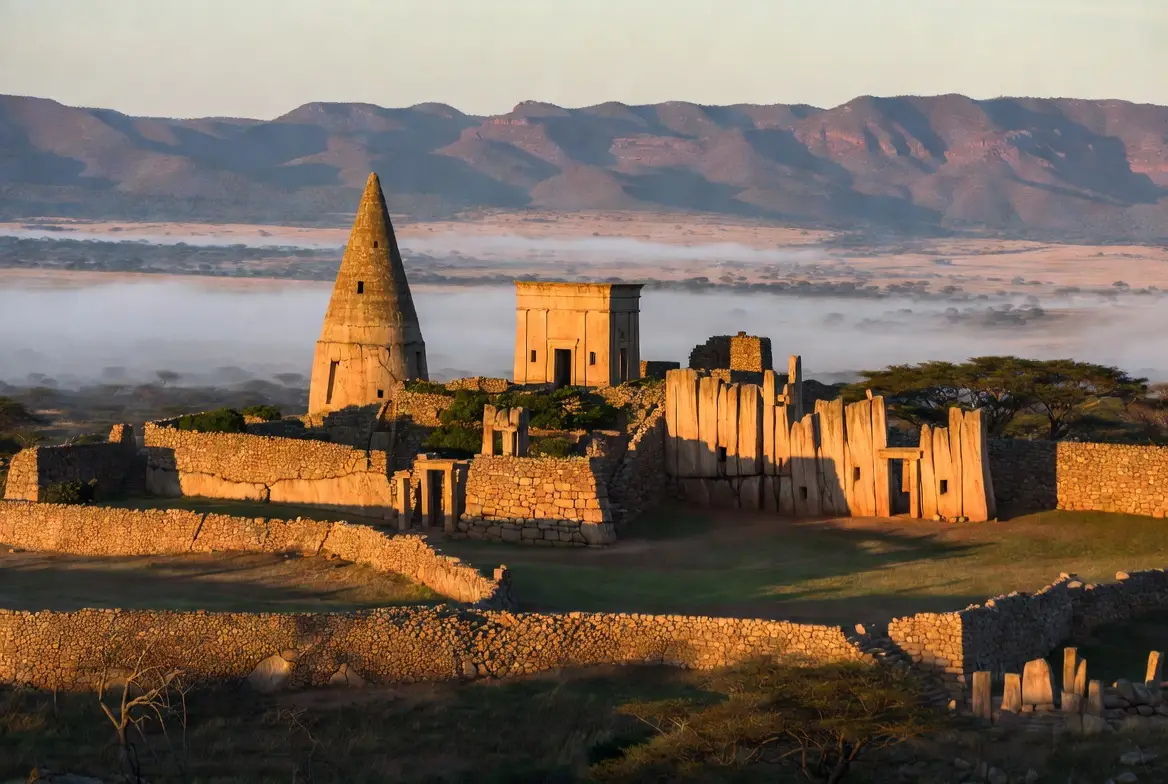
Great Zimbabwe is a complex of dry-stone walls — built without mortar, using carefully fitted granite blocks — that covers an area of nearly 800 hectares in what is now the Masvingo province of Zimbabwe. At its height, between roughly 1200 and 1450 CE, the city may have housed up to 18,000 people, making it one of the largest urban settlements in sub-Saharan Africa at the time. It served as the capital of the Kingdom of Zimbabwe, a Shona-speaking state that became wealthy by controlling trade between the gold-producing interior and the Swahili coast.
The site consists of several distinct building complexes. The Hill Complex, perched on a granite hill, is the oldest part of the site and was probably used for religious and royal purposes. The Great Enclosure in the valley below is the most famous structure: a huge oval wall up to eleven metres high and over 250 metres in circumference, built with extraordinary precision without any binding material. Inside the Great Enclosure stands a solid conical tower whose purpose remains debated. The Valley Complex between these two structures contains the remains of numerous stone enclosures that were probably elite residences.
The Kingdom of Zimbabwe
The Kingdom of Zimbabwe grew wealthy through its control of the gold trade between the interior of southern Africa and the Swahili coast. Swahili merchants based in port cities like Kilwa on the coast of present-day Tanzania organised trade networks that connected the Indian Ocean world — linking southern Africa with Arabia, Persia, India, and China. Archaeological finds at Great Zimbabwe include Chinese porcelain, Persian ceramics, and glass beads from across the Indian Ocean world, evidence of the kingdom’s integration into a vast commercial network.
The king of Zimbabwe — known as the mwene mutapa, or lord of the plundered lands — maintained his power through control of the gold trade and through elaborate court ritual. The Zimbabwe birds — carved soapstone figures of birds with human features that were found at the site — are believed to represent royal ancestors and were placed on the walls of the royal enclosure as symbols of power and legitimacy.
The Colonial Denial
When European travellers and colonisers arrived at Great Zimbabwe in the nineteenth century, the majority refused to accept that it could have been built by Africans. Various alternative attributions were proposed: Phoenicians, Arabs, King Solomon, the Queen of Sheba. These attributions were not innocent mistakes — they were products of a racial ideology that held that Africans were incapable of sophisticated construction and organisation.
The first serious scientific examination of the site was conducted by archaeologist David Randall-MacIver in 1905. After careful excavation, he concluded unambiguously that Great Zimbabwe was a medieval African site built by the ancestors of the Shona people. His conclusions were bitterly contested. Gertrude Caton-Thompson reached the same conclusion in 1929 after her own excavations, with the same result. Colonial-era authorities in Rhodesia suppressed and censored research that confirmed African authorship of the site, and the Archaeological Society of Rhodesia expelled members who publicly maintained the African origin of the ruins.
Zimbabwe took its name from this site when it became independent in 1980. The ruins are now a UNESCO World Heritage Site, and the Zimbabwe birds that were removed to South Africa during the colonial period have been the subject of successful repatriation efforts.
Great Zimbabwe Today
The ruins are now the most visited tourist attraction in Zimbabwe and a site of enormous national pride. Ongoing archaeological and conservation work continues to deepen understanding of how the site was built and used. The story of Great Zimbabwe — not just the ruins themselves but the history of how they were interpreted, suppressed, and eventually reclaimed — is one of the most important lessons in the intersection of archaeology, politics, and African identity.
Go deeper into the stories behind the masks you just read about. Within Carved Lines uncovers the history, symbolism, and ritual meaning of Africa’s traditional masks — now fully revised in its second edition.
Get Your Copy