Mwana Pwo Mask
Attribution rests on documented field collection or recorded observation of the object in use. No collection history is established for this object. Nothing here should be read as evidence of lawful acquisition or export.
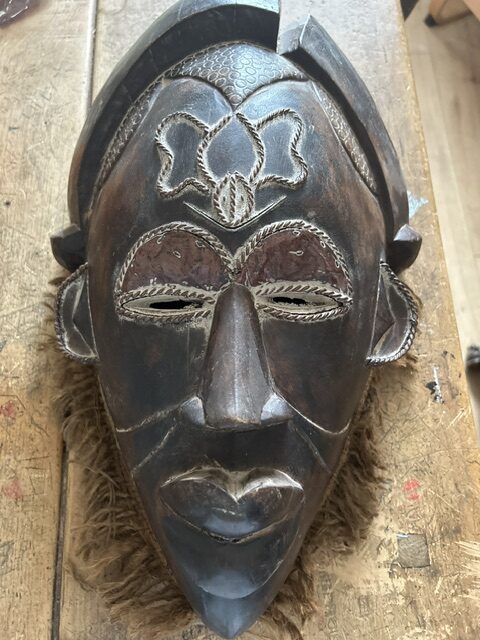
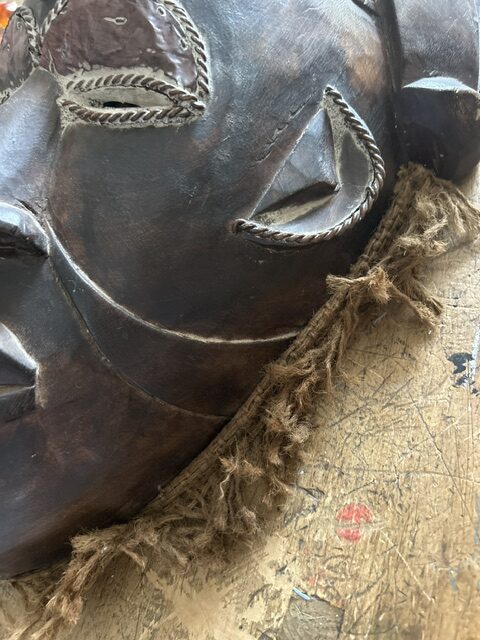
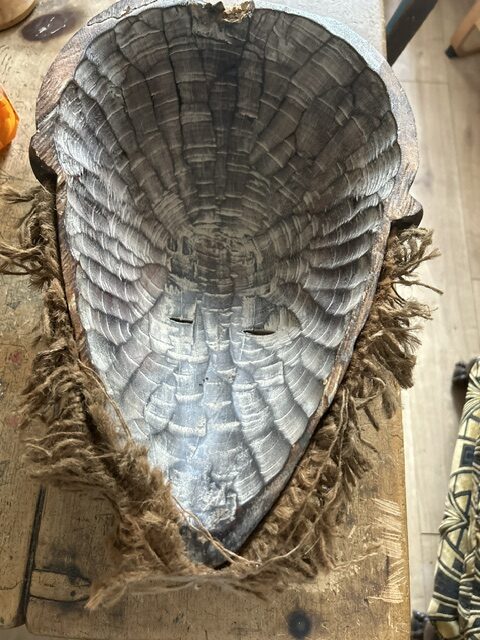
Origin and Meaning of Pwo and Mwana Pwo
The Chokwe people live across Angola, the Democratic Republic of the Congo, and Zambia. In Chokwe culture, female masks fall into two main categories. Pwo represents a mature woman who has given birth. Mwana Pwo represents a young woman who is ready for marriage.
The mask honors the female ancestors of the Chokwe. It represents physical beauty and moral virtue. Men carve the mask and perform in it. Yet the mask belongs to female cultural identity in its symbolism and purpose.
You can see the mask in village performances during celebrations. It appears when young men graduate from the mukanda initiation school. It also appears at general gatherings to entertain and bless the community.
Physical Features and Facial Marks
The face of the mask shows idealized female features. The eyes sit inside large circular sockets. The eyelids are half closed. They resemble coffee beans split down the center. The nose is slender and narrow. The mouth is usually open slightly. You can often see carved, sharpened teeth inside the open mouth. Sharpening teeth was a traditional practice of beauty among Chokwe women.
Facial markings carved into the wood reflect traditional Chokwe body art. These marks are called mitona. On the forehead, you often see a cross shape known as cingelyengelye. This cross comes from an ancient Chokwe symbol. Under the eyes, carvers cut lines called masoji. Masoji translates to tears. These lines recall the pain of childbirth and the hardships of life. On the cheeks, carvers place circular patterns called kandanda. Each mark carries social meaning and cultural identity.
Construction Materials and Carving Techniques
Carvers make the mask from a single piece of local hardwood. They use lightweight wood so the dancer can move easily. The carver uses an adze to shape the face. After carving the wood, the artist polishes the surface.
The carver colors the wood using natural elements. They mix red ochre with oil or clay. This mixture gives the mask a smooth red surface. They rub palm oil into the wood to preserve it and create a slight shine.
The hair is an essential part of the mask. It is made from plant fibers, braided cotton cords, and raffia. Carvers weave these fibers into hairstyles. The hairstyles copy the fashions worn by Chokwe women in the nineteenth and early twentieth centuries. The carver attaches the fiber wig through small holes drilled along the rim of the wooden face.
Performance Context and Costume Components
A male dancer wears the mask during performances. He covers his entire body so no skin is visible. He wears a fitted suit woven from bark fiber or cord. He wears wooden false breasts under the suit. He attaches a skirt made of grass or cloth around his waist. He carries a flywhisk in his hand.
The dancer moves with grace and restraint. His movements imitate the gestures and manners of Chokwe women. He uses short, measured steps. He moves his hips to make his skirt sway. He does not jump or perform violent actions. His dance is gentle and refined.
The dancer moves through the village space. Women often join the dance by singing and calling out. They give gifts to the performer. The performance creates a shared connection between the dancer, the audience, and the ancestors.
Social Role in Matrilineal Chokwe Society
Chokwe society traces lineage through women. Family identity and inheritance pass through the mother. The Mwana Pwo mask reflects this social structure. The mask reminds the community of the vital role women hold in continuing the family line.
The mask brings fertility and prosperity to the village. When the dancer enters a homestead, he offers a blessing. People believe the performance encourages healthy births and rich harvests.
The carver often models the face after a specific living woman. He selects a woman known for her beauty and character. He gives her a gift to ask for permission. Once finished, the mask is no longer a personal portrait. It becomes a shared representation of ideal womanhood.
Record
| People / culture | Chokwe |
|---|---|
| Country | Angola, Democratic Republic of the Congo, Zambia |
| Form category | Face mask |
| Subject depicted | Ancestor or named individual |
Source
No external source is recorded for this attribution. It rests on visual assessment alone and should be read as an open question rather than a finding.
This record is a catalogue entry, not an appraisal, valuation or legal determination. Nothing here should be read as evidence that an object was lawfully acquired or exported.