Igbo Kola Nut Ceremony: Who Breaks the Oji and What It Means
The Igbo kola nut ceremony is the first thing that happens when people gather and the last thing you should interrupt. Before business, before food, before the wedding list is read or the dispute is heard, someone brings out the kola. Everything that follows depends on it.
There is a saying that sums it up: Onye wetara oji, wetara ndụ. He who brings kola brings life. If you have been to an Igbo gathering, you have seen it. If you have not, here is what you were watching and why the rules matter.
He who brings kola brings lifeIGBO KOLA NUT CEREMONY
What Oji Is and Why It Opens Everything
Oji is the kola nut, the seed of the kola tree, which grows across West Africa. In Igbo culture it is more than a snack. It is the formal way of welcoming a person, opening a meeting and speaking to the ancestors. A host who offers kola is saying: you are welcome, you are safe, and we are about to talk honestly. A guest who accepts is saying: I come in peace.
Some people will tell you the kola is for the living. Others will tell you it is for the ancestors and the guests at the same time. Both are true. The nut carries the blessing of the people who are not in the room.
The nut has a long history too. Kola was grown and traded across forest and savanna long before colonial borders were drawn, and it travelled north along old trade routes. A gift of kola links the giver to a very old network of exchange, and everyone at the table knows it.
How the Igbo Kola Nut Ceremony Works
Practice differs by town and occasion, but the shape is familiar. The host presents the kola to the guests, often on a plate or in a bowl, and shows it so everyone can see it. He says words of welcome. The kola is then passed to the eldest person present, or to the person the community recognises as the right one, who receives it and prays over it. The prayer calls on Chukwu, the supreme God, on the land and on the ancestors. It asks for peace, health, children, a good harvest and protection on the road. Then the kola is broken, and the pieces are shared.
Who Breaks the Kola
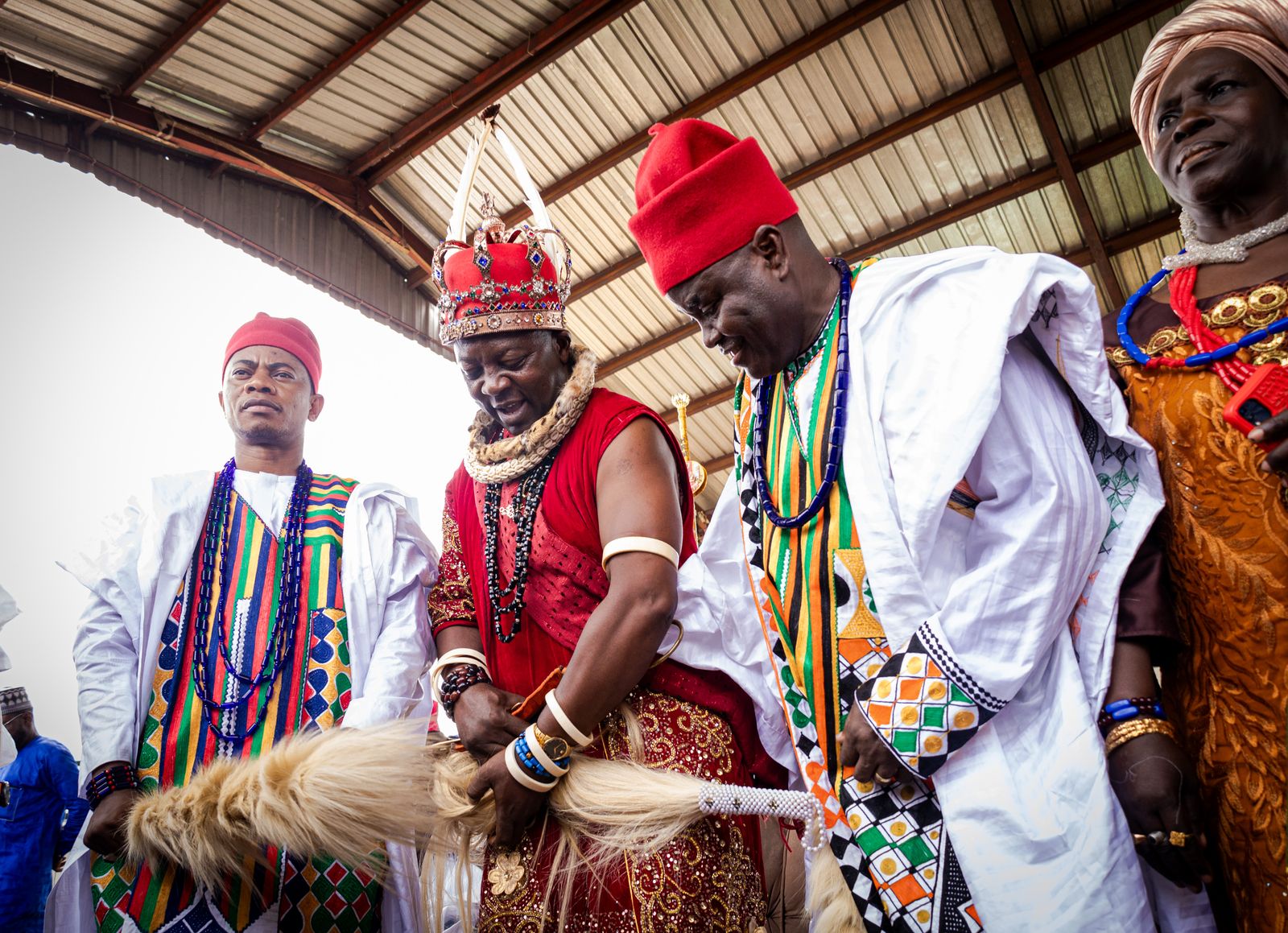
The eldest man present usually breaks it, though in some places the right goes to the oldest male of the host lineage or to a titled person. A younger man may be invited to break it when elders are absent or when an elder passes the honour to him. He must not take it. The invitation is the permission. Where a gathering has no elder, the oldest person there carries the duty.
Customs about women breaking kola differ from place to place, and families still argue about it. I will not pretend there is one answer. What is shared everywhere is the principle that the person who breaks the kola is chosen by the community, not by ambition.
What the Prayer Says
The prayer is spoken in Igbo, in the elder’s own words, and it is not a script. But certain themes keep returning. Let the one who brings kola live. Let the one who has come in peace go in peace. Let those who wish us harm fail. Let the road stay open for everyone at this table. It is blessing and boundary together. It names the community’s hopes and tells its enemies where the line is.
Rules for Guests at an Igbo Kola Nut Ceremony
If you are a guest at a gathering where kola is presented, follow a few simple rules. Do not touch the kola until it has been blessed. Do not begin eating or speaking business before it is broken. Usually you receive your piece with your right hand. If you do not eat kola, say so politely and ask whether you may hold it. Do not ask to take photographs in the middle of the prayer. If the prayer is unfamiliar, stay quiet. That is the correct response.
Refusing kola with no explanation can read as an insult. Accepting it with attention reads as respect.
Kola Beyond the Ceremony
Kola appears in weddings, naming ceremonies, burials, land discussions and meetings of age grades and titled men. It marks agreements. Some disputes begin with kola so that both sides promise to speak in good faith. Even in the city, many Igbo families keep kola on the table for visitors. And in the diaspora, a small piece of kola carried across an ocean can make a living room in London feel briefly like home.
Why the Kola Ceremony Still Matters
It is easy to look at a small nut and a short prayer and miss the point. The ceremony does three things. It gives the elder a role. It slows the gathering down so that nobody rushes into a quarrel. And it reminds everyone that the people at the table stand on the shoulders of people who are no longer present. That is a good habit for any meeting, anywhere.
Think about the last meeting you attended at work. Did anyone pause to say why the room was gathered, or who they owed it to? The Igbo kola nut ceremony does that in two minutes, and the room is better for it.
Keep Learning
If you want to see related traditions, our African Heritage section covers rituals and practices from across the continent. Watch the video on libation to the ancestors in Igbo culture on the SEVICS Africa YouTube channel, and tell us how kola is shared in your family.