Ashanti Gold Mask: History, Symbolism, and Royal Significance in Ghana
New: the 2nd edition of Within Carved Lines: The Secret Meanings of African Masks is out now. Get the book →
Ghana’s Ashanti people are among the most celebrated in Africa for their goldsmithing tradition. For centuries they have used gold — mined in the forests of what is now southern Ghana — to produce objects of extraordinary craftsmanship: jewellery, weights, regalia, and most famously, the Golden Stool. Among the most significant of their gold objects is the royal mask, a sculptural form that embodies the power, history, and spiritual authority of the Ashanti kingdom.
The Ashanti Kingdom
The Ashanti Kingdom, also known as the Asante Kingdom, was founded in the late seventeenth century under the warrior-king Osei Tutu I. According to tradition, a golden stool descended from the sky and landed on Osei Tutu’s lap — an event interpreted as a divine mandate to unify the Ashanti clans into a single nation. The Golden Stool, known as Sika Dwa Kofi, became the most sacred object in Ashanti life, representing the soul of the entire nation. It was never sat upon; it was displayed on its own throne during ceremonies, carried in procession, and guarded with extraordinary care.
At its height, the Ashanti Kingdom controlled a large portion of present-day Ghana and significant territory beyond, maintaining a sophisticated administrative system, a powerful military, and a thriving economy based on gold and kola nuts. The British fought four wars against the Ashanti between 1823 and 1900, and the kingdom was not fully absorbed into the British Gold Coast colony until 1902.
Gold in Ashanti Culture
For the Ashanti, gold is not merely a precious metal — it is a substance with spiritual significance. Gold is associated with the sun, with royalty, and with the ancestors. The Akan word for gold, sika, also means wealth in a broader sense, encompassing social standing, spiritual merit, and well-being. The Ashanti belief system held that certain colours — particularly gold, black, and red — carried specific spiritual meanings, and gold’s luminosity connected it to the life-giving power of the sun and to the potency of royal authority.
Ashanti goldsmithing used two primary techniques: casting by the lost-wax method (known in French as cire perdue) and hammering thin sheets of gold over carved wooden cores. Lost-wax casting involves creating a wax model of the desired object, coating it in clay to form a mould, melting out the wax, and pouring molten gold into the resulting cavity. This technique allows for extraordinary detail and has been used in West Africa for over a thousand years.
Ashanti Masks
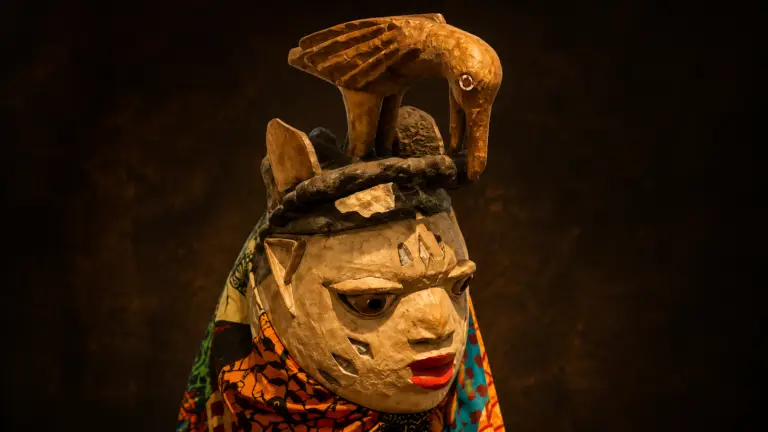
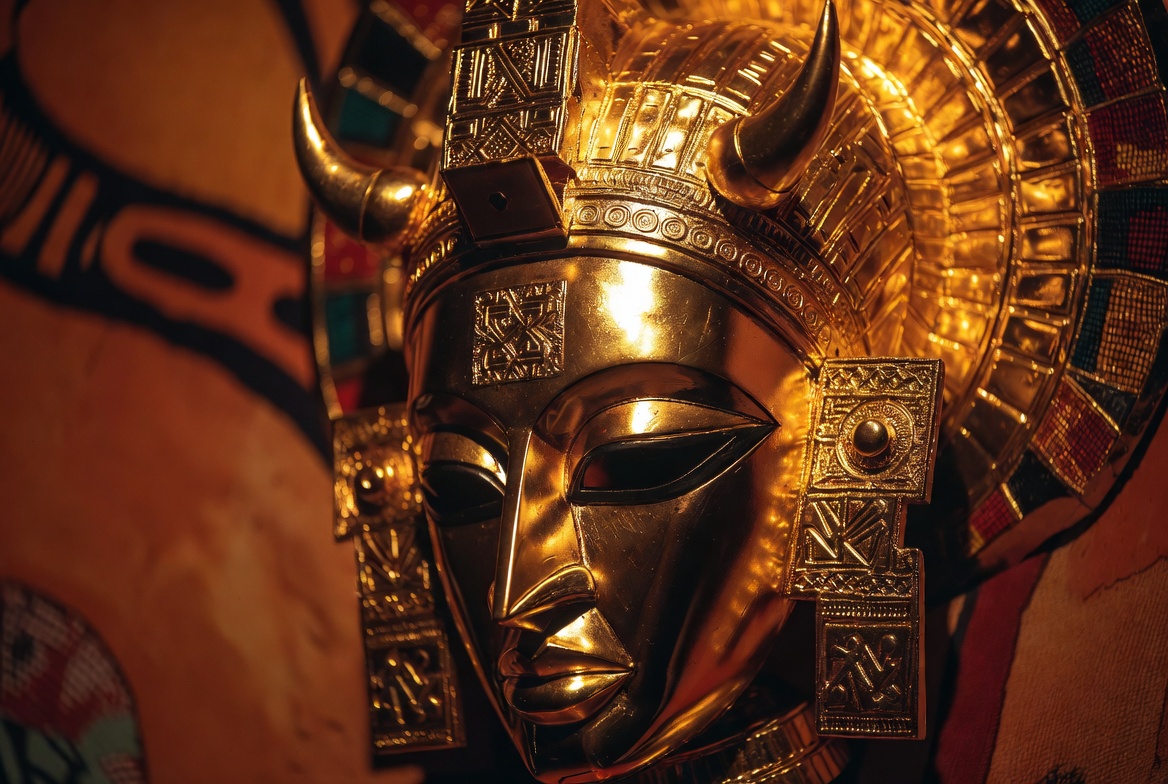
The most significant Ashanti masks were made of beaten gold over wooden forms and were worn during royal ceremonies or displayed as part of the king’s regalia. Among the most famous is the gold mask known as the head of a king — a stylised human face in beaten gold that represents both the royal person and the ancestors. These masks were not worn over the face in the manner of Central or West African masquerade masks; rather, they were displayed as icons of royal presence and power.
Historical Ashanti gold masks include what is sometimes called the “Soul Washer’s Disc” or akrafokonnmu — a gold pectoral disc worn by the king’s soul washers, priests who purified the king’s soul on certain ceremonial occasions. These discs bore human faces in relief and were considered to concentrate and protect the king’s spiritual essence.
The best-known Ashanti mask in a Western collection is held by the Wallace Collection in London: a gold mask said to have been captured during the British punitive expedition of 1874, when British forces sacked Kumasi, the Ashanti capital, and took quantities of gold regalia as war trophies. The question of whether such objects should be repatriated to Ghana is actively debated.
Royal Ceremony and Display
The Ashanti royal court is one of the most elaborate ceremonial systems in Africa. The Asantehene — the paramount king — appears publicly in extraordinary regalia: wearing cloth of gold, carried in a palanquin beneath state umbrellas, surrounded by chiefs wearing their own regalia, musicians, sword bearers, and attendants. The visual display of gold in this context is a statement of power, legitimacy, and the blessing of the ancestors.
The Ashanti kingdom continues today, with the Asantehene Otumfuo Osei Tutu II (the sixteenth Asantehene) playing an important role in Ghanaian national life as a traditional ruler and diplomatic figure. The ceremonial traditions of the court, including the display of gold regalia, continue to be observed with great care and pride.
The Legacy
Ashanti goldsmithing remains a living tradition. Artisans in Kumasi and surrounding areas continue to produce gold jewellery and regalia using traditional techniques. The Ashanti example demonstrates that African masking and regalia traditions are not museum pieces from a vanished past but continuing expressions of a living culture — one that has adapted to modernity while maintaining its core values and practices.
Go deeper into the stories behind the masks you just read about. Within Carved Lines uncovers the history, symbolism, and ritual meaning of Africa’s traditional masks — now fully revised in its second edition.
Get Your Copy