African Neck Rings: The Kayan and Ndebele Traditions Explained
New: the 2nd edition of Within Carved Lines: The Secret Meanings of African Masks is out now. Get the book →
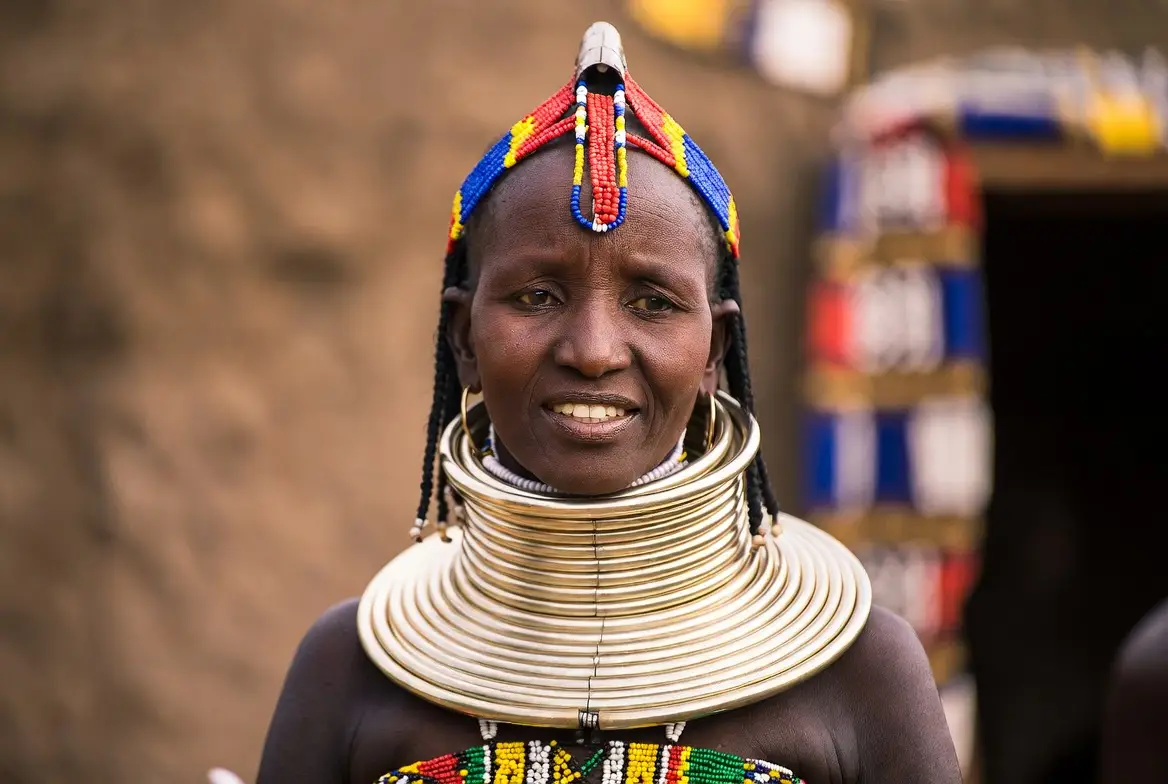
Among the most visually striking forms of body modification in the world are neck rings — coils of metal wire or solid rings worn around the neck that create the appearance of an elongated neck over time. While the practice is often associated in Western popular culture with the Kayan people of Myanmar, it has a significant history in Africa as well, most notably among the Ndebele people of southern Africa, where neck rings are part of a broader tradition of elaborate beadwork and metal ornamentation that is among the most distinctive aesthetic systems on the continent.
The Ndebele of South Africa and Zimbabwe
The Ndebele people, known as the Matabele in Zimbabwe, are a Nguni-speaking people found primarily in the Mpumalanga and Limpopo provinces of South Africa and in western Zimbabwe. They developed one of the most immediately recognisable visual traditions in Africa: a system of bold geometric ornamentation applied to both the human body and the walls of their homes, using primary colours in striking combinations against black and white grounds.
Ndebele women wear a range of metal ornaments called idzila, which include neck rings (isigolwane), arm rings, leg rings, and waist rings. These are made of copper, brass, or — in more recent times — brightly coloured plastic tubing. Traditionally, the rings are soldered in place and worn permanently, though contemporary practice allows for rings that can be removed. The visual effect of multiple stacked rings on the neck creates the appearance of elongation that has made this tradition internationally recognised.
The Meaning of Ndebele Rings
For Ndebele women, the wearing of idzila is primarily a statement of married status and cultural pride. Rings were traditionally given to a woman by her husband at marriage and represented his love and economic success — the more rings, the more prosperous the family. The rings also represent cultural continuity and identity: wearing them is an assertion of being Ndebele in a context where that identity has historically been under pressure.
The Ndebele faced particularly severe displacement and dispossession during the apartheid era, when their land was confiscated and their communities were relocated to designated “homeland” areas. In this context, the preservation of their distinctive material culture — their beadwork, their painted houses, their rings — became a form of cultural resistance. The visibility of Ndebele aesthetic traditions in national and international contexts was not simply decoration; it was a statement of survival and continuity.
The Health Question
Questions are often raised about whether neck rings cause physical damage. Medical research on the Kayan practice in Myanmar suggests that rings do not actually elongate the neck bones — rather, they push down the collarbones and ribs, creating the appearance of a longer neck. The rings do affect posture and muscle development. Whether this constitutes harm is a question that communities wearing rings tend to answer differently from outside observers.
Ndebele women who wear idzila report varying levels of physical restriction and discomfort, though many also describe the rings as a source of pride and identity that they would not choose to give up. As with all body modification practices, the perspective of the person wearing the modification should take precedence over the assumptions of observers.
Contemporary Ndebele Culture
Ndebele culture is widely celebrated today within South Africa and internationally. Ndebele geometric designs have been adapted for commercial purposes including advertising, fashion, and product design — a practice that has generated both revenue for Ndebele communities and controversy about cultural appropriation. The geometric vocabulary of Ndebele design was notably used by BMW in 1991, when artist Esther Mahlangu painted a BMW 525i in traditional Ndebele patterns as part of the BMW Art Car series.
Mahlangu herself has become one of South Africa’s most celebrated artists, exhibiting internationally and demonstrating that traditional Ndebele art practices have a vigorous contemporary life that extends far beyond the rural villages where they originated.
Go deeper into the stories behind the masks you just read about. Within Carved Lines uncovers the history, symbolism, and ritual meaning of Africa’s traditional masks — now fully revised in its second edition.
Get Your Copy