Similar Posts
Mano Masks: The Mask, Not the Man, Performs the Ritual
New: the 2nd edition of Within Carved Lines: The Secret Meanings of African Masks is out now. Get the book → Several masking traditions documented in this book draw a sharp line between the performer and the thing performed. Few state it as directly as the Mano of Liberia and southernmost Guinea, whose masks represent…
Vuvi Masks: A Mask for Every Spirit, a Name for Every Mask
New: the 2nd edition of Within Carved Lines: The Secret Meanings of African Masks is out now. Get the book → Many masking traditions documented in this book treat individual masks as interchangeable instances of a single type. The Vuvi of central Gabon organized theirs differently: each bwiti association mask apparently carried its own specific…
Boa Masks: The War Face Whose Actual Job No One Can Agree On
New: the 2nd edition of Within Carved Lines: The Secret Meanings of African Masks is out now. Get the book → Most masking traditions documented in this book carry at least a working consensus on what their masks were for, even when the deeper symbolism stays contested. The Boa of the northern Democratic Republic of…
The Hemba So’o Mask at Auction: What the Catalogue Does Not Tell You
The catalogue photograph is perfect. Soft studio light. A dark background. A face that is half human and half chimpanzee, with a wide crescent mouth stretched almost from ear to ear. Underneath, a short paragraph, an estimate, and a list of previous owners. What you do not see is the funeral. The Hemba So’o mask…
African Ceremonial Masks: What Actually Happens During the Ritual
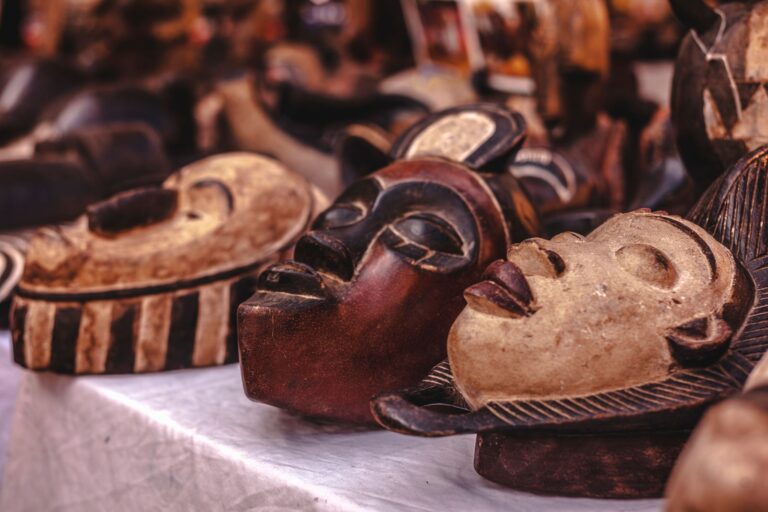
Before the mask ever touches a face, something else happens first. A man stops eating. He sits alone in a room for days. An elder speaks words over cloth and wood that no outsider is allowed to hear. This is the part most people miss when they picture african ceremonial masks. They imagine the dance,…
Bwa Plank Mask of Burkina Faso: Insects, Spirits, and Geometric Art
The towering plank masks of the Bwa people are among the most visually arresting in African art. This guide explains their origin, symbolism, and ceremony.