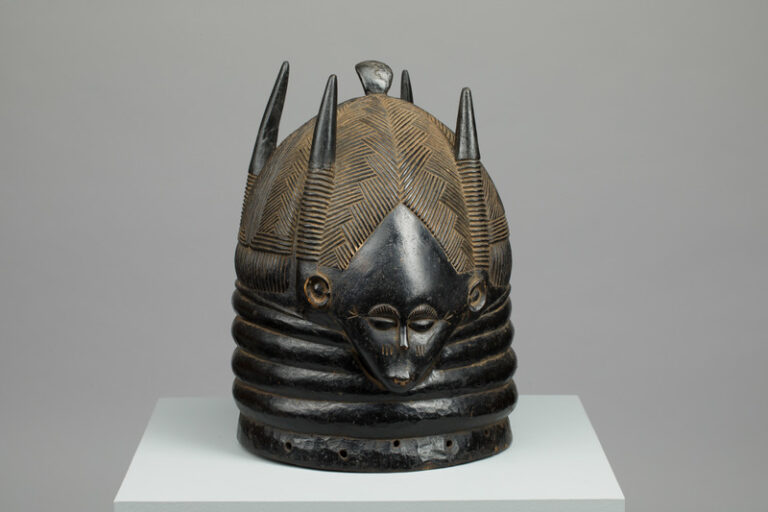
Wabele (Wambele) Helmet Mask of the Senufo: What It Was For and Why It Matters
Senufo | Côte d'Ivoire | Protective / Poro Society
What was it for?
The Wabele is a Senufo zoomorphic helmet mask related to the firespitter type, and its purpose is to combat harmful forces. The Brooklyn Museum catalogues one example as a Firespitter Helmet Mask (Wabele), placing it within the family of fierce Senufo helmet masks that confront danger on behalf of the community.
What does it look like?
A helmet worn over the whole head, combining features from several animals: tusks, horns and open jaws. The fusion is deliberate. By joining the strongest parts of different creatures, the carver created a being more powerful than any single animal could be.
Why does it matter?
The Wabele belongs to a group of related Senufo helmet masks, alongside the kponyungo and the wanyugo, that share this composite animal form. Together they show how Senufo carvers built a visual language of power, in which horns, tusks and jaws signal the ability to confront forces that ordinary people cannot face.
One thing most people never know
Museum records use several names for these composite Senufo helmet masks, including wabele, kponyungo and the Western label firespitter. The overlap is a reminder that such masks are best understood as a family of related forms, sharing a purpose and a visual language, rather than as entirely separate inventions.
Further reading: the source record for this entry.
This entry is part of the SEVICS Africa archive of 100 African masks. If you own a mask like this and want to know more about it, try our Mask Identifier.