Pende Mask of the Congo: Types, Meanings, and Ceremonial Use
New: the 2nd edition of Within Carved Lines: The Secret Meanings of African Masks is out now. Get the book →
Among the many peoples of the Democratic Republic of Congo, the Pende are distinctive for the extraordinary variety and vitality of their masquerade tradition. Where many African masking traditions focus on a single dominant mask type, the Pende have developed a rich vocabulary of mask forms, each serving a specific social or ceremonial function, creating a complete system of visual communication through performance.
Who Are the Pende?
The Pende live in the Kwilu and Kasai regions of the western DRC, with a total population estimated at around one million people. They are divided into Eastern Pende and Western (or Central) Pende groups, each with distinctive mask traditions that share fundamental characteristics while differing in style and emphasis. The Pende economy was historically based on agriculture, hunting, and trade, and the mask tradition is woven into all aspects of social life — governing, educating, healing, and entertaining.
The Mbuya Masquerade
The central masquerade tradition of the Pende is known as mbuya, a word that can refer to both the masks themselves and the performances in which they appear. Mbuya performances take place at initiations and at the conclusion of funerary mourning periods, but they also occur simply for entertainment and community celebration. What makes mbuya distinctive is its character-based structure: each mask represents a specific character type drawn from Pende social life, and each character has predictable behaviours, a characteristic voice, a distinctive costume, and a recognised role in the performance.
The characters include figures familiar to all Pende: the chief, the fool, the village beauty, the diviner, the thief, the circumciser, and many others. By embodying these characters in performance, the masquerade functions as a form of social reflection and commentary — celebrating valued behaviours, satirising vices, and exploring the tensions and negotiations of communal life in a way that is simultaneously entertaining and educational.
Mask Styles
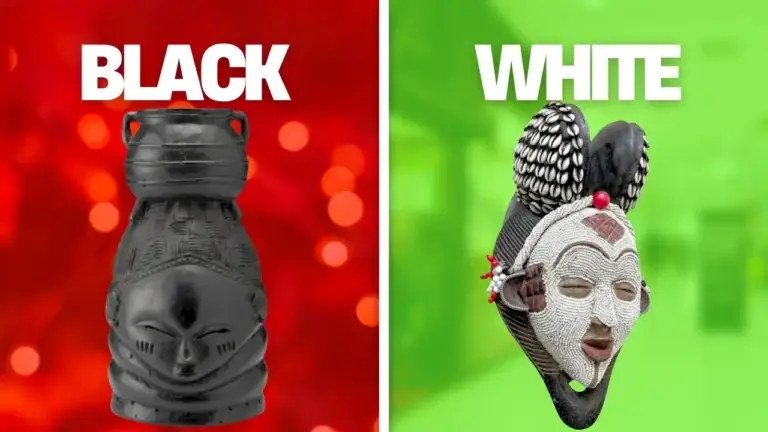
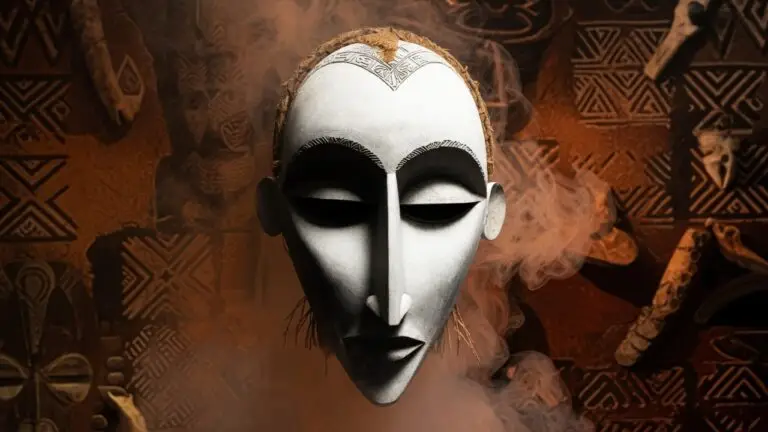
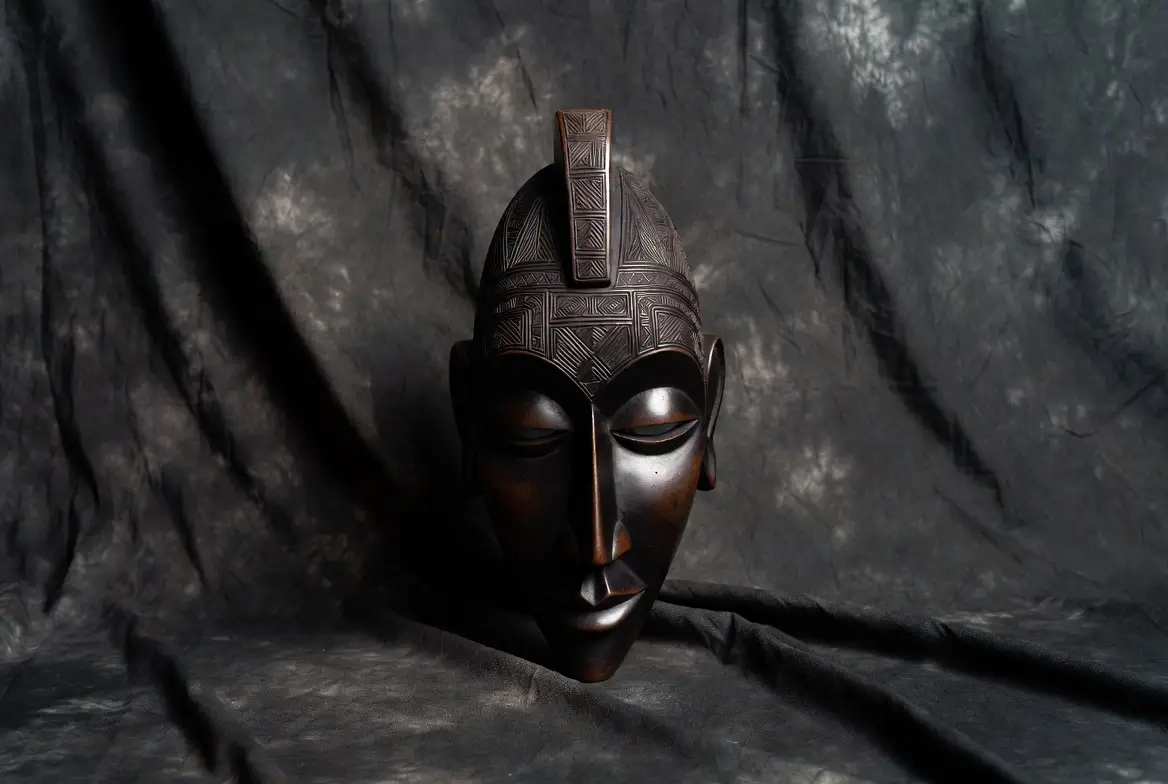
Pende masks are immediately recognisable from their distinctive features: a triangular or trapezoidal face with downward-slanting eyes, a pronounced brow ridge, and often a downward-curved nose. Many Pende masks have an expression that could be described as simultaneously serene and melancholy — a quality that the Pende aesthetic tradition values as a mark of wisdom and composure. The masks are typically painted in a palette of red, white, and black, with specific colour combinations carrying specific meanings.
Eastern Pende masks tend to be flatter and more geometric than Western Pende masks, which often have more three-dimensional modelling of facial features. Both traditions produce miniature masks as well as full-scale performance masks — the miniature versions, known as ikhoko, are worn as personal amulets and are among the most widely collected African objects in the world.
The Pumbu: Mask of Judgement
Among the most striking Pende mask types is the pumbu, which represents a criminal condemned to death. The pumbu mask has distorted features — one eye higher than the other, an asymmetrical arrangement of features — that represent the disorder and transgression of the criminal. When the pumbu appears in performance, it is accompanied by intense drumming and dramatic dance, and its presence is associated with the enforcement of social norms and the consequences of violation.
The pumbu tradition is one example of how the Pende masquerade serves judicial functions. The appearance of certain mask types in specific contexts constitutes a statement about justice, morality, and the consequences of transgression that carries community authority.
Initiation and Masks
Pende male initiation involves circumcision and a period of seclusion in the forest, during which initiates are taught the traditions, knowledge, and responsibilities of adult men. Masks play a central role in both the initiation process and the celebration at its conclusion. The masquerades that appear at the end of initiation welcome the young men back into the community as adults and celebrate their successful transformation.
Pende Masks in the World
Pende masks are among the most collected African objects in the world, and examples can be found in major museums from Brussels to New York. The miniature ikhoko amulets in particular have attracted enormous collector interest. The relationship between this global market and the living tradition in the DRC is complex — the economic opportunities created by the art market coexist with concerns about the separation of objects from their cultural context and the reproduction of masks primarily for commercial sale. The same tension shows up with another DRC tradition worth knowing alongside Pende: the Kifwebe mask of the Songye and Luba, whose striated, color-coded faces are among the most heavily reproduced African mask forms on the collector market.
Go deeper into the stories behind the masks you just read about. Within Carved Lines uncovers the history, symbolism, and ritual meaning of Africa’s traditional masks — now fully revised in its second edition.
Get Your Copy