Free chapter. This is Chapter 2 of my book Within Carved Lines: The Secret Meanings of African Masks. I have opened a few chapters here so you can read them free. See all the free chapters.
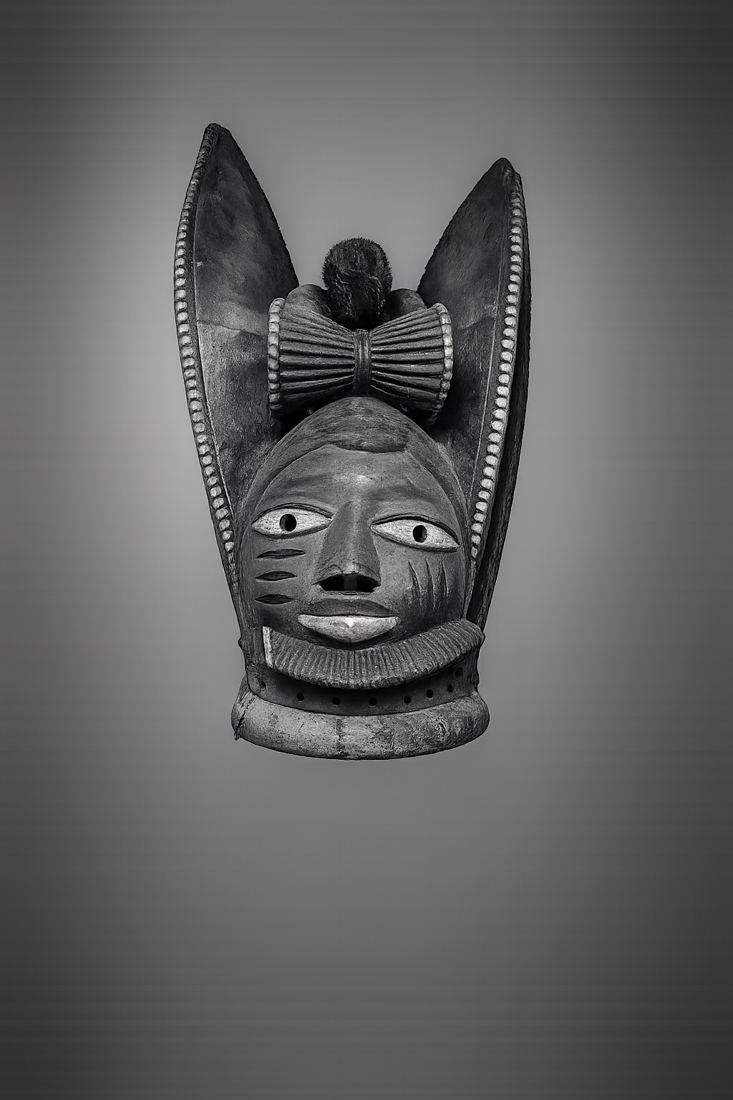
The question of whether I’m revealing sensitive cultural information has arisen frequently, particularly when discussing African cultures online. Comments like, “Stop sharing your secrets with the white man, they will steal it,” initially didn’t concern me. However, the sheer volume of these warnings prompted reflection. Will Europeans truly steal mask “secrets” if I write about them? The reality is, they already possess countless African masks. These masks, scattered across the globe in museums and private collections, are of limited use to Africans in their current exile. And, as we know, repatriation is unlikely anytime soon. So, if these are secrets, what purpose do they serve Africans today?
Let me clarify: this book contains no secrets in the traditional sense. Secrets, in this context, refer to hidden truths known only to initiates of the mask owning cults. As I do not belong to any such cults, I genuinely do not possess this privileged knowledge. I cannot claim to know the specific, esoteric meanings behind every mask. Therefore, my critics can rest assured; I am not divulging any classified information.
Many mask cults have vanished, and with the rise of Christianity and Islam, ancestral religious practices have largely been abandoned. Consequently, much of the knowledge surrounding these masks is already lost. Even if the masks were returned, we lack the understanding to fully utilize them. There’s a significant missing link. We are not the same Africans who created these works centuries ago. While we retain fragments of memory and knowledge, like remnants of a distant dream, we are far removed from our ancestors.
Consider this analogy: imagine your enemies conquer your land and seize your most powerful weapons, your nuclear arsenal, for example. They display these trophies in museums. This parallels the biblical story of the Philistines capturing the Ark of the Covenant. Now, imagine that while your enemies possess the weapons, you retain the launch codes. Imagine that remote activation was a thing. Do your enemies possess weapons, or a potential means of their own destruction? Imagine Africans had the knowledge to reawaken the masks in European museums, unleashing their power until they are returned. That would make an interesting fairytale. However, that scenario is not the subject of this book. The point is, we know these objects belonged to our ancestors, but we are uncertain how to use them. We have the hardware, but we’ve lost the software and the launch codes.
Could the knowledge in this book be used by Europeans to activate the masks against Africans? This is not a valid concern. African spirituality is rooted in the language, customs, and lands from which it originates. Our customs are intrinsically tied to bloodlines. Not every African can become a chief priest or assume certain roles. These positions are often a calling, bestowed by God and the land, not something that can be bought or learned. Europeans cannot acquire or steal these inherent connections. When they have influenced the appointment of kings, the true power has been lost because spiritual authority cannot be usurped. These fears stem from a lack of understanding of our own identity.
If much of the knowledge is lost, am I simply fabricating information? Absolutely not. My understanding comes from dedicated study and, I believe, divine inspiration. I didn’t choose to be the “mask guy.” I initially resisted the idea. My background is in the church, and I spent years actively involved in religious activities. As a content creator, I focused on career advice, project management, and workplace topics. I occasionally shared African stories, believing in the need for more African narratives told by Africans. One day, I recounted a story about a mask I owned. It was meant to be a short, inspirational piece, but it garnered more attention than my usual content. The engagement was significant. Subsequent mask related videos received similar responses. This was over five years ago. One might assume I shifted my focus to masks, but I didn’t. I wanted to pursue other topics, but I was constantly drawn back to masks. Since then, I have given interviews, assisted graduate students, and received countless requests to interpret masks. It was not my chosen path, but I eventually yielded and began to study masks in earnest. Today, I continue to learn, as the more I discover, the more I realize there is to know. I feel it is finally time to respond to those requests and share my accumulated knowledge.
Will this book contain secrets? That depends on the reader. Some will find profound wisdom and answers they have long sought. Others may find nothing particularly revealing. Perhaps there are secrets here, but not enough to deprive Africa of anything essential. If anything, these insights might provide a new argument for the return of African masks and inspire a new wave of African art, dispelling the notion among the next generation that our cultural heritage is something to be ashamed of. We have a rich heritage that we can reclaim and use to build a better future. My guess is that each reader will find something new that they need.
Continue reading Within Carved Lines
There are twenty six chapters in the full book, covering the language of masks, colour, texture, the grammar of form, secret societies, women and masking, regional traditions, the diaspora, and how to identify, authenticate and care for an African mask.
Previous: Chapter 1, Why Am I Writing This Book? | Next: Chapter 3, Are African Masks Evil? | All free chapters