Similar Posts
Bassa Masks: The Gela Dancer Who Performs Feminine Grace for an All-Male Society
New: the 2nd edition of Within Carved Lines: The Secret Meanings of African Masks is out now. Get the book → Several masking traditions documented in this book use a mask’s design to project fear, authority, or ancestral weight. The Bassa of Liberia’s central coastal region built a tradition around the opposite register entirely: a…
How to Tell If an African Mask Is Authentic: A Practical Checklist
Learn how to tell if an African mask is authentic: tool marks, wear, patina, pigment and provenance. A practical checklist from SEVICS Africa.
What Are African Masks Made Of? The Materials Behind the Meaning
Wood, brass, ivory, hide, cowries and kaolin. What African masks are made of tells you who made them, for whom, and whether they ever danced.
Kuba Kingdom: Art, Masks, and the Legacy of Central Africa’s Greatest Empire
The Kuba Kingdom of present-day DRC produced extraordinary art and governance. Explore their mask traditions and historical impact.
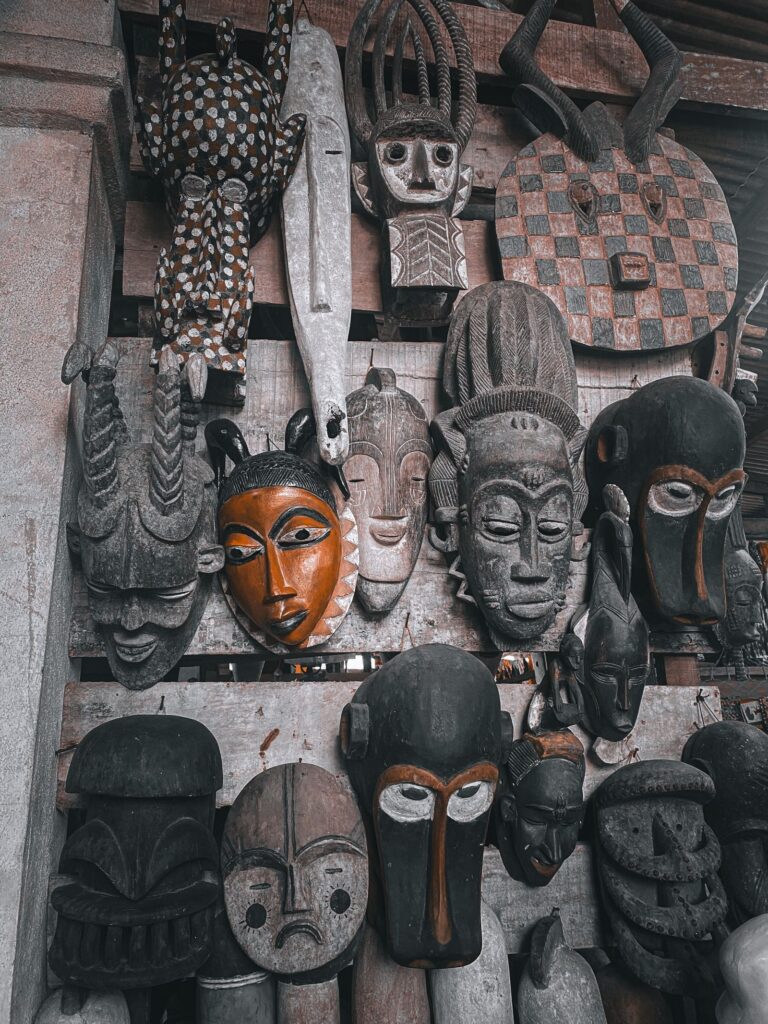
Kakuunga and Kholuka: The Masks of Yaka Initiation in the Congo
New: the 2nd edition of Within Carved Lines: The Secret Meanings of African Masks is out now. Get the book → Yaka or yakala means “males,” “the strong ones.” Bayaka, the name the roughly 300,000 Yaka people of the southwestern Democratic Republic of the Congo call themselves, means “the strong people.” It is not a…
Idoma Masks: The Water Spirit Who Answers a Woman’s Prayer for a Child
Among the Idoma, roughly 550,000 people living where the Benue and Niger rivers meet, the return of the dead is not a metaphor for memory. It is the central, organizing claim of the entire religious system, the belief from which nearly everything else, which societies exist, what their masks are for, who is allowed to…