Why African “Secret Societies” Were Called Secret, and Who Gave Them That Name
Say the words secret society and most people picture something dark: hooded figures, closed doors, something bad happening in the night. When those words get attached to African institutions, the conclusion follows quickly. If it is secret, it must be evil.
I want to tell you a short story first, and I want you to keep it in mind.
A short story
When the colonisers arrived in many African societies, the strongest resistance did not come from ordinary people. It came from the ruling class, the elders and the societies who held authority. Those were the people who understood what was at stake.
So the colonisers changed strategy. They went around the elites and spoke to the commoners. They offered heaven as a reward. They told the people that the old societies were evil and that anyone who joined them would go to hellfire. Slowly, the people turned their backs on their own institutions and followed a new government that promised freedom, wealth and eternity.
The societies did not die. They went quiet. And the name that stuck to them was the one their opponents gave them.
What these institutions actually were
Among the Yoruba, the Ogboni were a council of elders who advised the king and pushed him to take hard decisions. Through coded messages they could communicate with him, and if he stopped serving his people, they had the power to remove him. Yoruba kings were treated as partly divine. They wore beaded veils so their eyes would not strike anyone who looked into them. A council that could check a ruler like that was not a cult. It was a constitution.
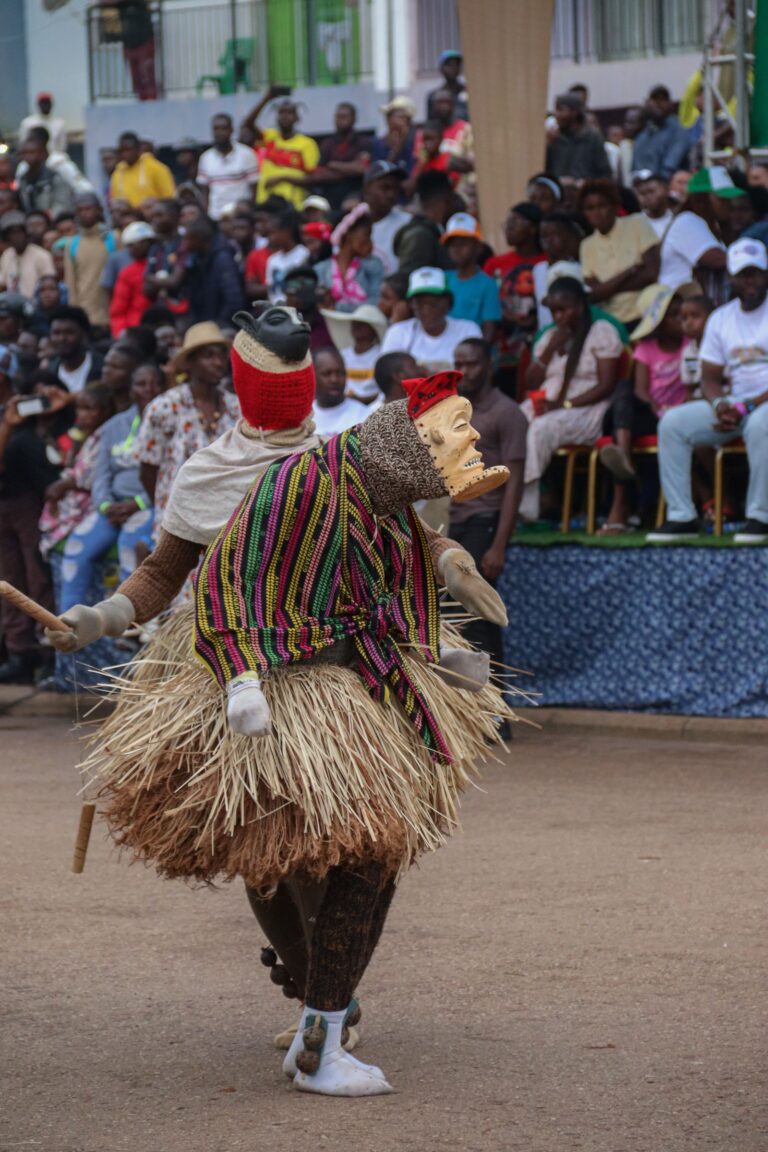
Across the continent, institutions like this ran rites of passage, settled disputes and kept the knowledge of the community safe. Many of them used masks to do that work.
Is your government a secret society?
Here is a comparison I like. Every country has intelligence services. They never reveal their operations, their findings or the names of their people. Presidents do not tell citizens everything they know. Some things are shared on a need to know basis, and we accept that as normal.
So why was it wrong for an African kingdom to keep its knowledge from foreigners who had come to take its land and its resources? The answer is that it was not wrong. It was labelled wrong by the people it was being kept from. Any institution the colonisers could not understand, or that could stand in their way, was called evil. For them it was politics. For the generations that came after, it meant growing up ashamed of their own culture.
Why they still matter
My people have a saying: Atuolu omalu, omalu. Atuolu ofeke, o fenye isi na ofia. The same direction given to a wise person informs him, but leaves a foolish one lost in the bush. Igbo knowledge was layered. There was a plain version everyone could hear, and deeper levels that opened as you grew. The societies were the guardians of those deeper levels.
Our ancestors seem to have expected that strangers would come. So they hid knowledge in ordinary things: in music, in dance, in masks, in spoken words and in writing systems like Nsibidi. Among the Igbo, the ikoro, the ogene and the oja could talk. A troupe performs in the village square. To some it is entertainment. To others a message is being passed.
Whatever the colonisers touched, they tried to erase. What survived often survived because these institutions kept it quietly. That is why I do not see them as something to fear. I see them as the reason we still have anything left to recover.
This piece comes from my book, Within Carved Lines: The Secret Meanings of African Masks. If it spoke to you, the book goes much deeper.