African Body Paint: Traditions, Meanings, and Tribes That Still Practise It
New: the 2nd edition of Within Carved Lines: The Secret Meanings of African Masks is out now. Get the book →
Body paint is one of the oldest forms of human self-expression. Archaeological evidence suggests that humans were using ochre to colour their skin at least 100,000 years ago, and some of the earliest evidence of ochre use comes from southern Africa. Across the continent today, body paint traditions survive with remarkable vitality — not as nostalgic performance, but as living systems of identity, spirituality, and community that function in the same ways they have for generations.
What Body Paint Communicates
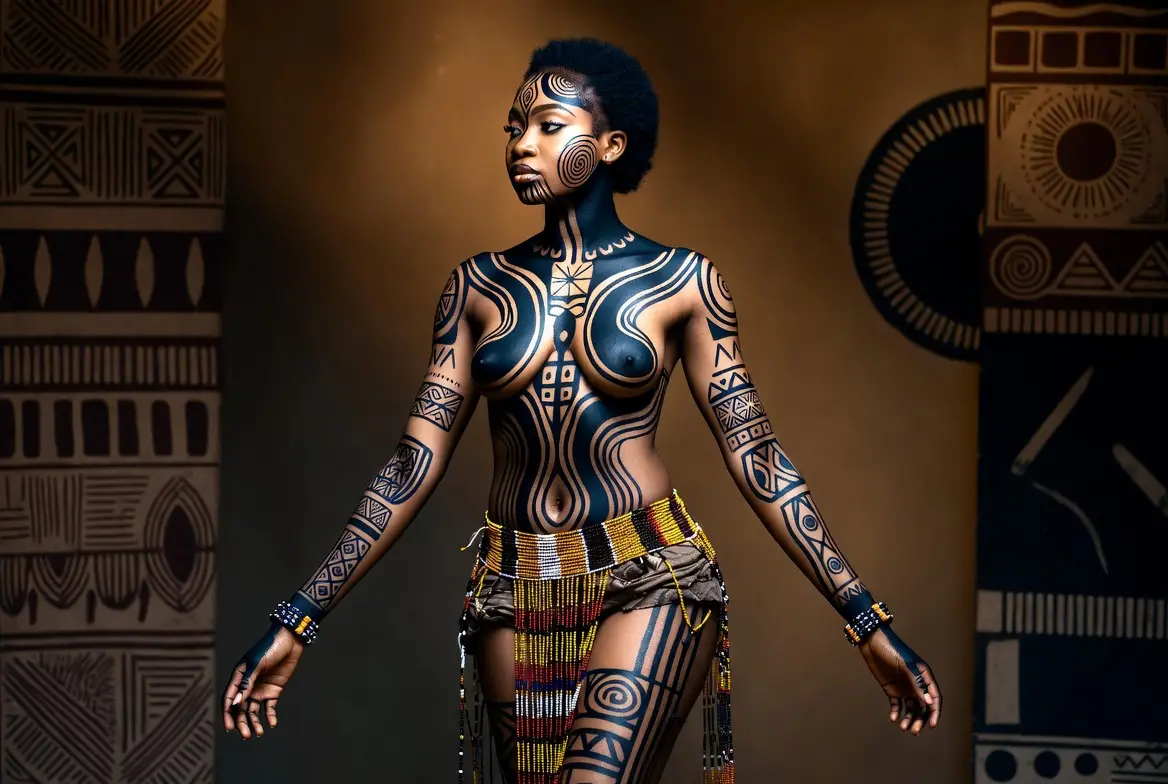
In African traditions, paint applied to the body is never merely decorative. It is communicative. The colours used, the patterns applied, and the occasion on which they are worn all carry specific meanings within the cultural system that produced them. Reading African body paint correctly requires knowing the cultural context — which is why so many outsider interpretations, reducing complex traditions to “tribal decoration,” miss what is actually being said.
Body paint communicates status and role. It can mark someone as a chief, an initiate, a warrior, or a spiritual practitioner. It communicates spiritual state — white clay, for instance, is associated with ancestral spirits and the world of the dead in many African traditions, so its application on the body creates a visible connection to that realm. It communicates seasonal and ceremonial time — certain patterns are only applied at certain moments in the ritual calendar.
The Himba of Namibia
Among the most photographed body paint traditions in Africa is that of the Himba people of northwestern Namibia. Himba women apply a mixture called otjize to their skin, hair, and clothing every day. Otjize is made from butterfat churned together with ochre, an iron-rich red pigment, and sometimes aromatic resins. The result is a deep reddish-orange colour that covers the skin entirely.
The meaning of otjize is multi-layered. At a practical level, it protects the skin from the harsh Namibian sun and from insect bites, and it serves as a substitute for water bathing in a region where water is extremely scarce. At a social level, the depth and quality of a woman’s otjize application reflects her care for herself and her social standing. At a spiritual level, the red ochre is associated with the earth, with blood, with life, and with the continuity of the Himba people.
The Surma and Mursi of Ethiopia
In the Omo Valley of southwestern Ethiopia, a group of peoples including the Surma, Mursi, Bodi, and Hamar practise some of Africa’s most elaborate body paint traditions. Men and boys compete in painting sessions before ceremonies and duels, covering their bodies with elaborate designs using white chalk, yellow ochre, red clay, and charcoal. The designs are created quickly and freely, emphasising creativity and individual artistic expression rather than adherence to a fixed template.
These traditions exist alongside other body modifications including lip plates, ear stretching, and scarification, creating a total aesthetic of the transformed body that communicates the person’s identity within the social system of their community. The painting is done communally, with friends and family members painting one another, turning the process itself into a social event.
The Dinka and Nuer of South Sudan
Among the Dinka and Nuer peoples of South Sudan, ash and white clay are used to coat the body for both practical and spiritual purposes. In cattle camps, young men cover themselves with ash from cattle dung fires — the ash repels insects and keeps the skin cool in the intense heat. But the ash-coated body is also spiritually significant, associated with the ancestors and with a state of ritual purity.
During ceremonies, more elaborate applications of white clay create patterns that mark the wearer’s participation in ritual. The combination of body paint with the distinctive scarification patterns of these communities creates a complete visual statement of identity.
The Xhosa and Ndebele of Southern Africa
In South Africa, body paint traditions are most strongly associated with initiation ceremonies. Xhosa initiates are painted entirely white with white clay during their period of seclusion following circumcision. The white represents a liminal state — neither child nor adult, neither fully human nor fully connected to the ancestors — that the initiate inhabits until they emerge, wash off the clay, and are welcomed into adulthood. Similar white-clay practices exist among other Nguni-speaking peoples including the Zulu and Swati.
The Ndebele people of Zimbabwe and South Africa are known for their geometric body and wall painting traditions, in which bold patterns in primary colours are applied to both human skin and the walls of homes. Ndebele women’s body painting is closely associated with their extraordinary beadwork traditions, with similar geometric vocabularies appearing in both media.
Body Paint in the Contemporary World
Body paint traditions in Africa are under varying degrees of pressure from urbanisation, religious change, and economic disruption. In some communities, the traditions are thriving — the Himba in particular have maintained their practices strongly and are increasingly visible in global conversations about African culture and identity. In others, the traditions are practised mainly by elders or in specific ritual contexts, with younger generations less connected to them.
There is also the complex issue of photography and tourism. Communities with visually striking body paint traditions attract enormous attention from photographers and tourists, which creates economic benefits but also raises questions about consent, commodification, and the difference between living culture and living display.
Go deeper into the stories behind the masks you just read about. Within Carved Lines uncovers the history, symbolism, and ritual meaning of Africa’s traditional masks — now fully revised in its second edition.
Get Your Copy