
African Warrior Queens: The Most Powerful Female Rulers in History
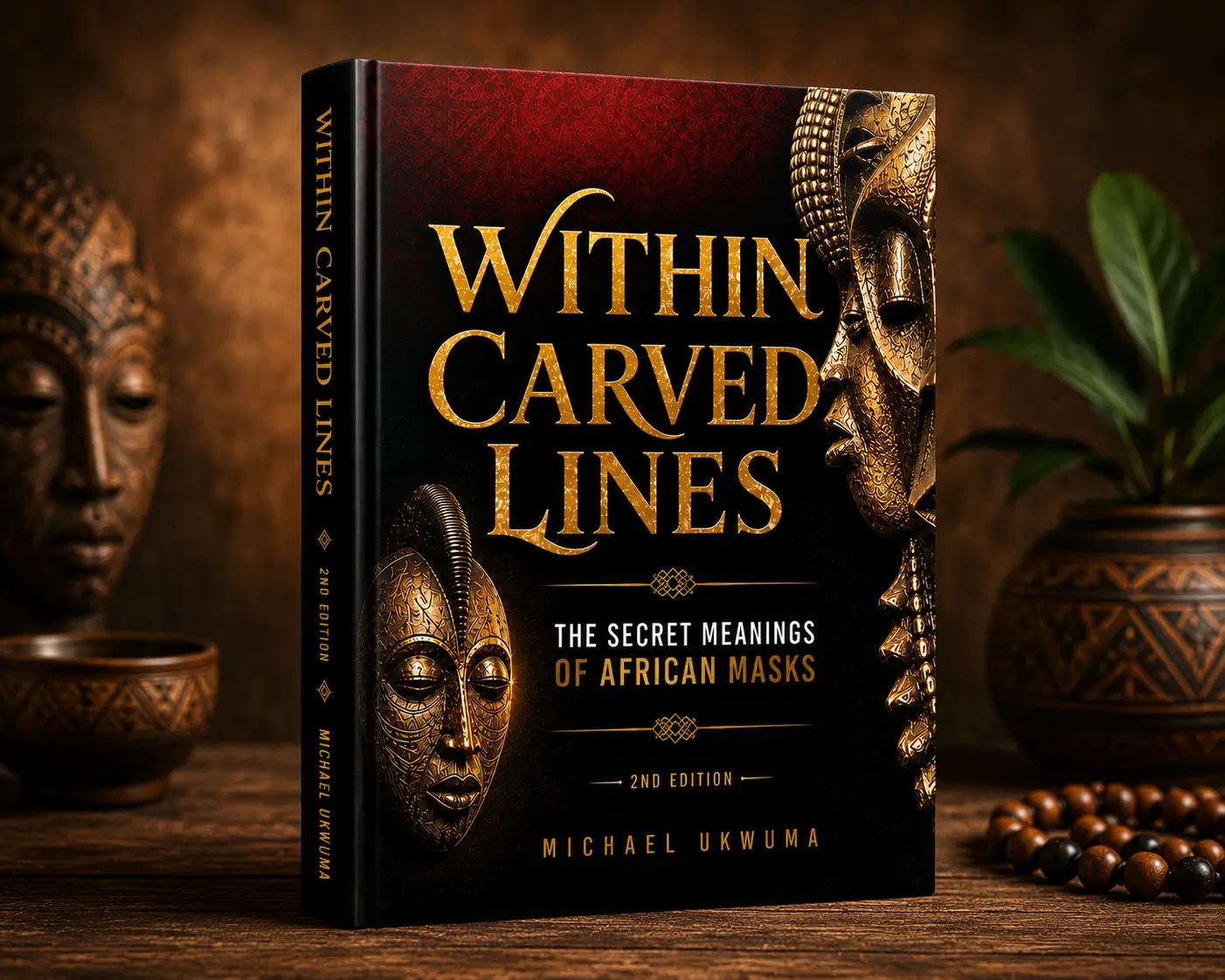
New: the 2nd edition of Within Carved Lines: The Secret Meanings of African Masks is out now. Get the book →
The history of Africa is populated by rulers of extraordinary ability and vision. Among the most remarkable are the women who led their peoples through war, resistance, and state-building — queens and commanders whose stories have been marginalised in both colonial and post-colonial historiography but are now being reclaimed with increasing urgency and pride.
Queen Amina of Zaria (c. 1533–1610)
Queen Amina of Zaria ruled the Hausa city-state of Zazzau, in present-day northwestern Nigeria, in the sixteenth century. She is recorded in the Kano Chronicle — one of the earliest written historical documents from the region — as a warrior-queen who expanded Zazzau’s territory enormously during her thirty-four-year reign, pushing its borders to include much of modern Niger and the Niger Delta.
Amina was reportedly a skilled military commander who led her armies personally, reportedly requiring a new husband in each town she conquered and having him executed in the morning — a legend that may be apocryphal but speaks to the awe she inspired. More substantiated is the historical record of the earthwork fortifications she built around her conquests, known as “Amina’s walls,” some of which are still visible today. She is commemorated in a famous Nigerian government statue showing her on horseback, spear raised.
Yaa Asantewaa of Ghana (c. 1840–1921)
Yaa Asantewaa was the Queen Mother of Ejisu in the Ashanti Kingdom of present-day Ghana. In 1900, when the British colonial governor demanded that the Ashanti hand over the Golden Stool — the sacred symbol of Ashanti national identity — she was the one who rallied the chiefs to fight. In a famous speech, she reportedly said: if the men would not fight, the women would — and she led the War of the Golden Stool against the British.
The uprising was ultimately unsuccessful — the British had overwhelming military advantage — and Yaa Asantewaa was captured and exiled to the Seychelles, where she died in 1921. But she became a symbol of anti-colonial resistance and women’s leadership, and her legacy is celebrated today in Ghana with enormous pride. A museum in Ejisu is dedicated to her life and the war she led.
Queen Nzinga of Ndongo and Matamba (1583–1663)
Nzinga Mbande, known as Queen Nzinga, ruled the kingdoms of Ndongo and Matamba in present-day Angola for decades, maintaining Mbundu independence against relentless Portuguese colonial pressure. She was a brilliant diplomat as well as a military commander, forming alliances with the Dutch and organising resistance networks that made her kingdom one of the most effective opponents of Portuguese expansion in the region.
She converted to Christianity as a diplomatic manoeuvre, took the name Ana de Sousa, negotiated treaties when advantageous and broke them when necessary, and at one point led her armies personally in the field. When she died in 1663 at approximately eighty years of age, she had spent most of her life fighting for her people’s freedom. She is the most celebrated historical figure in Angola and her statue stands in Luanda’s main square.
Amanirenas of Kush (c. 40 BCE–10 BCE)
Amanirenas was a kandake — a queen mother, or female ruler — of the Kingdom of Kush, the Nubian civilisation that flourished in present-day Sudan. Around 24 BCE, she led Kushite armies in a war against Rome following the Roman conquest of Egypt. The Kushites initially succeeded in surprising the Roman forces, sacking the city of Syene (modern Aswan) and carrying off statues of the Emperor Augustus.
Rome eventually counterattacked under general Gaius Petronius and sacked the Kushite city of Napata. But Amanirenas negotiated a peace treaty with Augustus that was remarkably favourable to Kush — Rome waived the tribute it had demanded, and the two empires maintained peaceful relations thereafter. She is one of the few rulers in the ancient world who can be said to have fought Rome to a draw.
Empress Taytu Betul of Ethiopia (c. 1851–1918)
Taytu Betul was the wife and political partner of Emperor Menelik II of Ethiopia. She played a crucial role in the resistance to Italian colonial ambitions that culminated in the Battle of Adwa in 1896 — the first time in modern history that an African nation decisively defeated a European colonial army. Taytu commanded her own contingent at Adwa and is credited with strategic counsel that influenced the outcome of the campaign. She was also the founder of Addis Ababa, Ethiopia’s current capital.
Why These Stories Matter
The women discussed here are not exceptions to African history — they are expressions of political systems that, in various ways and to varying degrees, created space for women’s leadership. The Ashanti queenmother system, the Nubian kandake tradition, and the succession practices of the Ndongo kingdom all created structural roles for powerful women. Understanding this does not diminish the extraordinary abilities of individual leaders; it places them in the context that explains how they came to lead.
These stories matter today because they provide African women and girls with historical mirrors — examples of leadership, courage, and strategic intelligence drawn from their own history rather than imported from elsewhere.
Go deeper into the stories behind the masks you just read about. Within Carved Lines uncovers the history, symbolism, and ritual meaning of Africa’s traditional masks — now fully revised in its second edition.
Get Your Copy