African Ceremonial Masks: What Actually Happens During the Ritual
Before the mask ever touches a face, something else happens first. A man stops eating. He sits alone in a room for days. An elder speaks words over cloth and wood that no outsider is allowed to hear. This is the part most people miss when they picture african ceremonial masks. They imagine the dance, the color, the drums in the square. But the real story of a masking ceremony starts long before the mask enters the crowd, and it does not end the moment the dancer walks away.
I want to walk you through that fuller story here. Not one invented ceremony pretending to speak for a whole continent, because no such ceremony exists. Different peoples across West and Central Africa built different systems around the mask, with different rules, different societies guarding them, and different endings for the object itself. What follows draws on traditions that are documented and still practiced in some form today, among them the Yoruba egungun, the Dogon dama, and Igbo mmanwu societies. Treat this as a way into the subject, not the final word on it.
Before the Mask Enters the Square
Preparation is where most of the real weight of the ceremony sits, and it is the part visitors to a masquerade never see.
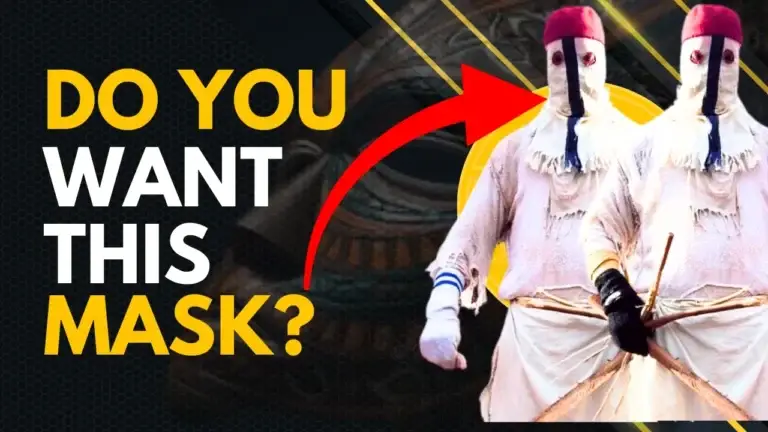
Among Yoruba communities, a man chosen to carry an egungun costume goes through a period of seclusion before major outings. He may fast. He avoids certain foods and, in many accounts, avoids his wife’s bed. An elder of the egungun cult, often called the Alagba, oversees the process and prays over the layered cloth that will become the costume, calling on the ancestors the mask is said to bring back into the world of the living.
Among the Dogon of Mali, the dama ceremony that closes a period of mourning requires masks to be carved in secret, away from women and from anyone not initiated into the Awa society. The carving happens in the bush, sometimes months ahead of the performance, and the men doing it observe their own restrictions while the work is underway. The hogon, the community’s spiritual authority, has a hand in when the dama can finally be held.
In many Igbo communities, a mmanwu masquerader is prepared by the men’s society that owns that particular mask. Preparation can include seclusion, restrictions on contact with women, and a ritual anointing of the mask itself with chalk, palm oil, or other substances tied to the spirit the mask represents. The mask is treated as something being woken up, not simply put on.
None of this is decoration. It is the mechanism by which an ordinary man becomes fit to carry something that is not supposed to be ordinary.
Who Controls the Mask: The Society and the Elders
A mask does not belong to whoever wants to wear it. Across the traditions above, a society or a body of elders decides who may carry a given mask, when, and under what conditions, and that authority is often the real subject of the ceremony, more than the performance itself.
The Yoruba egungun cult restricts who can be initiated, and in most communities that practice it, women are kept apart from the process of dressing the masquerader and from certain knowledge about who is inside the costume. The Dogon Awa society controls both the carving and the right to wear dama masks, and a young man works his way into that knowledge through stages, not all at once. Igbo mmanwu societies, which vary from town to town, often tie the right to own or wear a particular mask to age grade membership, title holding, or lineage.
This matters because it tells you something the dance alone cannot. The mask is not free floating spiritual theater. It sits inside a structure of authority that the community built and maintains, generation after generation, and stepping outside that structure carries real consequences within these communities.
The Performance: What the Mask Becomes
Once the drumming starts, something shifts. In egungun performance, dundun drums drive the dance, and the costume is built with wide layers of cloth designed to fly outward as the dancer spins, sometimes striking observers who stand too close, which is treated less as an accident and more as the ancestor asserting presence. In Dogon dama, drums and sometimes gunfire accompany masked dancers performing acrobatic movements associated with specific mask types, such as the tall kanaga with its crossbar headpiece. In Igbo mmanwu outings, gongs, flutes, and drums set the pace, and the crowd often responds with praise chants tied to that particular mask’s reputation.
The audience is not a passive crowd watching a show. In most of these traditions, watchers keep a respectful distance from certain masks, women in particular are expected to stay back from specific masquerades, and the community is expected to respond, chant, and give way, because the masquerade is understood to be moving through public space as something other than a man in costume. Once the mask is on, the wearer’s own identity is meant to disappear. Egungun performers may alter their voice. Mmanwu dancers are addressed and spoken of as the spirit the mask represents, not by their own names, for as long as the mask is worn. The performance only works if everyone present agrees, for that stretch of time, that the man is gone and something else is there instead.
Types of African Masks and Their Meanings in the Ceremony
Not every mask in a given tradition does the same job, and this is where a lot of general lists online lose the plot. An egungun mask brings a specific ancestor or ancestral category back for remembrance and blessing. A Dogon kanaga or walu mask carries the dead toward the realm of the ancestors and closes a mourning period, which is the entire point of dama. Some Igbo masks are entertainment or age grade masks, light in tone and meant to draw laughter from the crowd, while others carry judicial or enforcement functions, appearing to settle disputes or announce decisions with an authority no ordinary elder could claim alone. The meaning of a mask, in other words, is inseparable from the job it was carved to do.
After the Dance Ends
What happens to the mask afterward depends entirely on the tradition. Egungun costumes are typically returned to the cult’s shrine and kept under the Alagba’s care, reused across seasons until they wear out, at which point some are retired through their own small rites rather than simply discarded. Dogon dama masks, once their specific funeral duty is done, may be kept by the family, passed to the Awa society, or in some cases left to break down in the bush, since the mask’s job ended with the ceremony. Igbo mmanwu masks are often stored in a dedicated mask house between outings, treated as living property of the society that owns them, and in some communities a mask tied to a single ceremonial purpose is deliberately destroyed once that purpose is fulfilled, so the spirit is not left dressed for a task already finished.
Go Deeper
A single article cannot hold everything a mask carries, and it should not try to. If you want to understand how ownership, meaning, and spirit belief connect to a specific mask sitting in a shrine, a museum case, or your own home, read our companion piece, Understand Your African Mask Today.
For the wider story, visit our African Heritage section, where we cover the masks, the myths, and the people who kept them alive long before anyone photographed a ceremony. And if you would rather see this history in motion, the SEVICS Africa YouTube channel walks through masks, ritual, and heritage the way this piece has, one grounded tradition at a time.