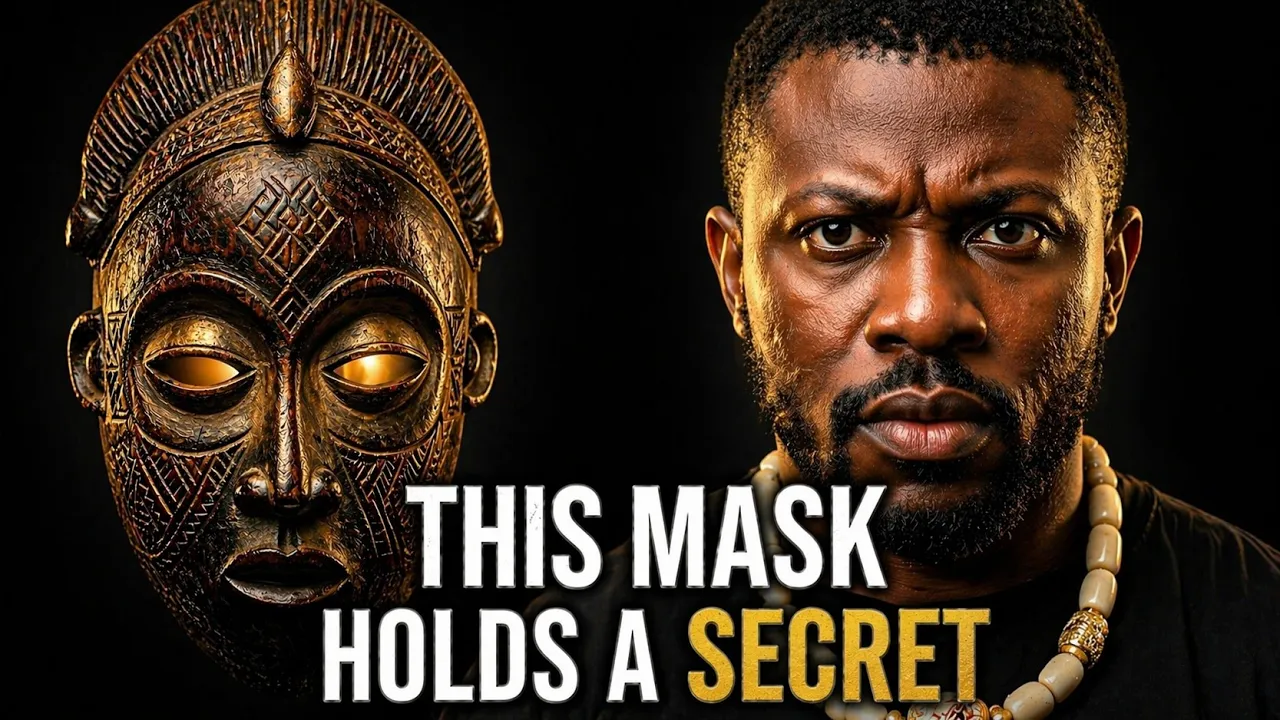
Uncover the Mysteries of African Masks at Rituals
Somewhere in a living room in Berlin, or Brooklyn, or a quiet suburb in Surrey, an African mask hangs on a wall. The owner walks past it every morning. They bought it at an estate sale, or inherited it from a relative who did volunteer work in West Africa in the 1970s. They think it is beautiful. They think it is art.
Most of the time, they are wrong.
What hangs on that wall is very likely not art at all. It was never made to be looked at. It was made to do something. And if you are reading this because your mask has begun to behave in ways you cannot explain, you already suspect what I am about to tell you.
Let me explain it properly.
African Art Was Not Made for Viewing
This is the first thing you have to understand. For a long time before colonialism reorganised the meaning of African creativity, the things our people made were not produced for galleries. They were not produced for tourists. They were not produced to sit on a wall and be admired.
They were produced to perform a function.
Some masks were ceremonial. They appeared at festivals, at burials, at coming of age rites. Some masks were ritual. They appeared only when a covenant required them to appear. Some masks represented ancestors. Some masks represented deities. Some masks were the physical seat of a spirit that had agreed to walk with the community for as long as the agreement held.
A mask was a body. The spirit was the resident. And the carving was the contract.
Think of the Ngonnso statue, the deity of the Nso people of Cameroon, sitting in a museum in Germany for over a hundred and twenty years. The Nso did not lose a sculpture. They lost their mother. They lost the deity that held the spiritual order of their world. Things have not been the same since. They will not be the same until she comes home.
That is what a ritual object is. Not decoration. A presence.
How These Masks Left Home
There are two main ways the masks ended up in foreign living rooms.
The first was straightforward. The colonialists came, saw, and took. They did not understand what they were taking, and many of them did not care. They knew there was money in it. They knew European collectors and museums would pay handsomely. So masks were carried off as trophies, sold as art, gifted to states for knighthoods and titles, and converted into careers and reputations that funded entire generations of European families. Some of those families are still wealthy because of what was taken.
The second way was Christianity.
When missionaries arrived, they did not waste time on regular villagers. They went straight for the chiefs, the priests, the custodians of the shrines. They offered scholarships to their children. The kids were taken away, dressed in white man clothes, taught English, and returned home to dazzle their families with new words for ordinary objects. A bucket. A spoon. A door. The families were impressed. The chiefs began to listen.
Then the missionaries told the priests that what they kept in their shrines was nothing. They said the deities had no power. They said anything that was not in the Bible was a sin, and anyone who held on to such things was a pagan, and pagans go to hell.
Many people believed it. They surrendered the masks. They surrendered the carvings. They burned what they were told to burn. The shrines were emptied.
And once the shrines were empty, the missionaries pointed at the empty shrines as proof. Look, they said. The gods have no power. We took your god and nothing happened.
But you can rob a church too. You can take the crucifix off the altar. You can kidnap a priest. None of that proves Jesus is dead. It only proves that human beings are capable of carrying things away.
That part of our religious history was not a defeat of the spirit. It was a defeat of the myth that surrounded it. And the same strategy that broke our traditional religion later began to break Christianity itself, when people started ripping Bibles apart and burning crucifixes and waiting for the punishment that never came.
The lesson is the same in both directions. Do not lie to people about what a sacred object can do. The truth is enough.
What a Ritual Mask Actually Is
A ritual mask is a covenant.
Pay attention to that word, because it matters. A community identifies a spirit. Maybe the spirit of purification. Maybe the spirit of harvest. Maybe an ancestor that the people have decided to keep close. They enter into communion with that spirit. They make sacrifices. They reach an agreement.
The agreement says, in effect, you will do this for us, and we will do this for you. We will honour you in this way, at this time, with this offering. And whenever this mask is presented, the agreement is activated.
The mask is the sign of the contract. It is the visible part of an invisible promise.
This is why ritual masks are not casual. They are not paraded. They are not shown for entertainment. A ceremonial masquerade can dance at a funeral or a festival. A ritual mask only appears when the covenant requires it to appear. Sometimes that is once a year. Sometimes once in a generation. Sometimes only when a specific need arises.
And there are ritual masks that should never be seen at all.
In many West African communities, certain masquerades only walk at night. Bells are rung in advance. Whistles are blown. Announcements are made. The people are told to go inside, lock their doors, turn off their lights. Total darkness. The masquerade passes through the town and no human eye is permitted to fall on it. To see it is to break something. To break something is to invite consequences nobody can predict.
Other ritual masks live in inner chambers of shrines. They are only viewed by initiates. Only viewed by elders. Only viewed by men or women of a specific standing who have prepared themselves through fasting, through cleansing, through the right rites.
When the work is done, the mask is returned to its home. These masks have homes. Real homes, built for them, where they are stored and locked away until they are needed again.
So when one of these masks ends up in a living room in Europe, the contract has been violated in the deepest possible way. The mask is being viewed by people who should not view it, in a setting that should not contain it, by an owner who has no idea what they are housing.
Why Your Mask Might Be Acting Up
If you have an African mask and it has been doing strange things, this is what may be happening.
It might be cyclical. The covenant the mask was made for runs on a rhythm. A yearly festival. A planting season. A new moon. A purification rite. When the cycle comes around, the mask becomes active. It is doing what it was designed to do. The fact that it is sitting in your bedroom in Toronto does not stop the cycle. The mask still knows what time it is.
It might be neglect. The covenant required certain offerings. Certain prayers. Certain rituals to keep the mask fortified. You have not been doing any of those things. Why would you. You did not know there was anything to do. But the mask knows it is owed something, and it has its own way of asking.
It might be defilement. A mask that was meant for an inner chamber is now hanging in a hallway where strangers walk past. A mask that was never to be photographed has been on Instagram. A mask that was meant only for initiates has been touched by hands that were never supposed to touch it. In most cases, the spirit who occupied the mask has long since withdrawn. But every now and then there is movement. A reminder. An echo of what is owed.
It might be presence. Some spirits stay. Even after the consecration is broken, even after the cycles are interrupted, some choose to remain with the object they were called into. They reach out from time to time. They let you know they are there.
So when you tell me your mask speaks to you, or appears in your meditation, or seems to want something, I do not dismiss it. I have heard this too many times to dismiss it. What you are receiving are vibrations, energies, messages. They are coming from somewhere. They are coming from something. And that something has a history you have not yet uncovered.
What You Should Do
If you have an African mask that you suspect is more than decoration, you have options. Real ones.
The first option is to get a reading. Find someone who understands these objects from the inside, not the outside. Not an art historian. Not a collector. Someone who can sit with the mask, listen to it, and tell you what you are actually housing. We do mask readings on the SEVICS Africa channel. The link is in the description of the video. If you are unsure where to start, start there.
The second option is to consider giving it back. This is harder. It will feel like a loss. But if the mask is a covenant object, it does not belong to you. It never did. The person who originally took it had no right to give it away. The person who gave it to your relative had no right to give it away either. The chain of ownership that brought it to your wall does not stand up under any honest examination.
If you know where it came from, send it home. If you do not know, we can help you find out. We are actively involved in the work of returning masks to the communities they were taken from, and we will receive yours and return it for you if that is the path you want to take.
The third option is to do nothing. I will not pretend you do not have that option. People do nothing all the time. But if your mask has been speaking to you, it has been speaking for a reason. The longer you ignore it, the louder it tends to get.
A Final Word
We have spent more than a hundred years being told that what our ancestors made was primitive, superstitious, idolatrous, decorative. None of that is true. What our ancestors made was technical. Spiritual. Functional. They made bodies for spirits. They made signs for covenants. They made meeting points between this world and the one beneath it.
Some of those objects are now scattered across the world, sitting in places they were never meant to sit, in front of eyes that were never meant to see them. Some are quiet. Some are not.
If you have one of those objects in your home, you are not just an owner. You are a participant in a story that began long before you were born. You can choose to learn what part you are playing. You can choose to give the object back. You can choose to keep it and tend it properly. What you cannot do, in good conscience, is pretend it is just a piece of art.
It never was.
If you have an African mask and you would like to know what you have, leave a comment under the video. Tell me what you own. Tell me what it has done. Tell me what you have felt around it. I read every comment, and I will respond. If you want a private reading, the link is in the description. And if you want to support this work and help us keep returning these masks to where they belong, become a channel member. Every contribution keeps the work going.
The masks are still here. They are still listening.
The question is whether we are.