Yoruba Scarification: Reading the Ila Lines That Named a Person
There is an old Yoruba habit of reading a stranger’s face before reading his name. You looked at the cheeks. Three short strokes told you one thing. Four long ones told you another. A pair of vertical lines meant a different town entirely, and if you got it right you already knew how to greet him.
Yoruba scarification was a document. Not decoration, not fashion, not initiation alone. A document, worn where it could not be lost, forged, or left at home.
Almost nobody carries it now. Which is exactly why it is worth writing down.
What Yoruba scarification meant, and what ila actually is
The general Yoruba word for facial marks is ila. It is not one design. It is a system, and the system is genealogical before it is anything else.
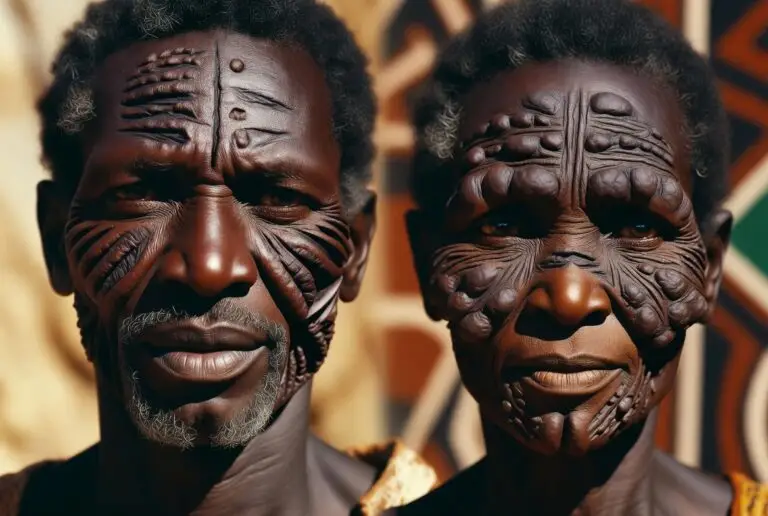
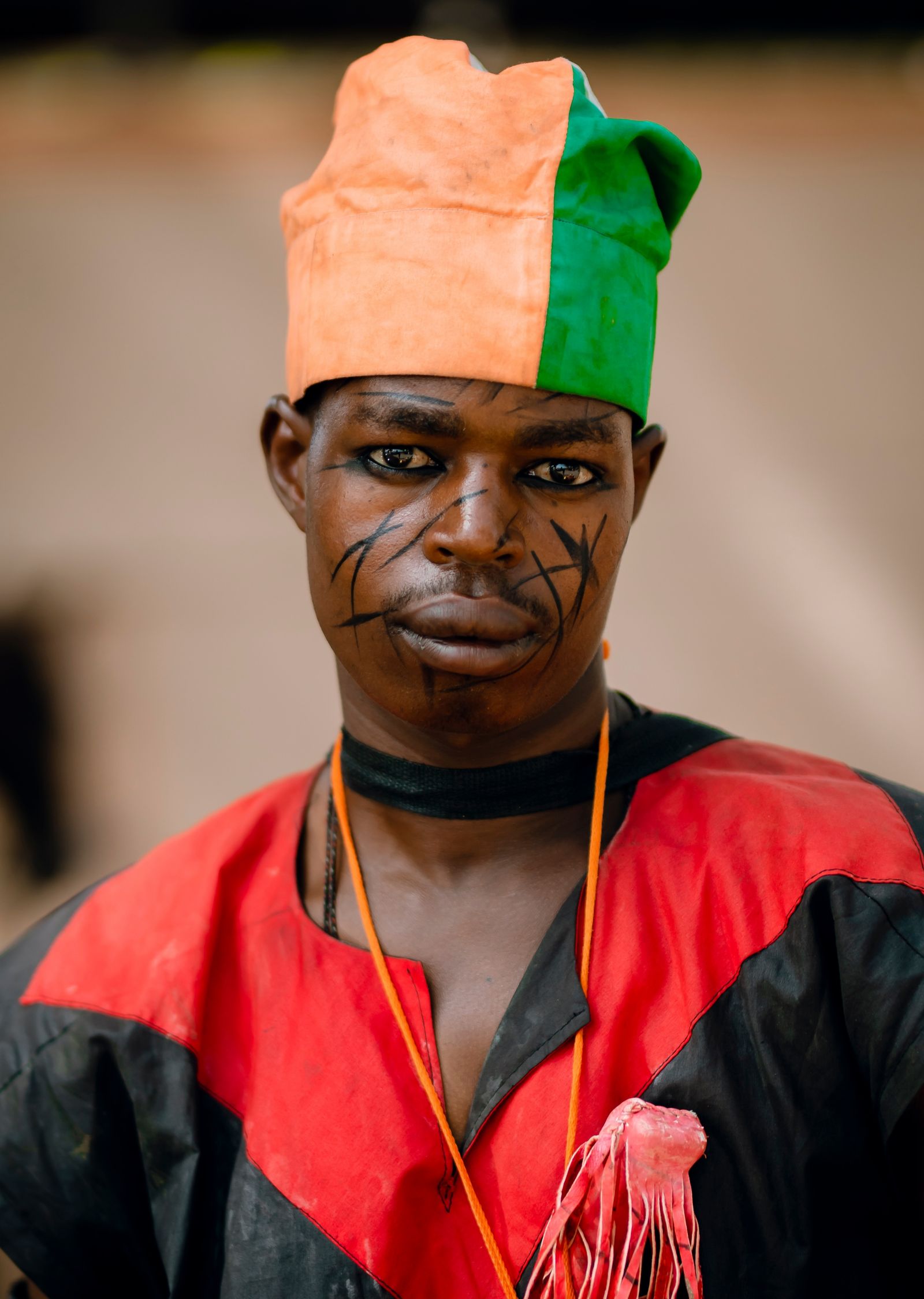
The broad families of marks that recur across Yorubaland include abaja, pele, keke, gombo, ture, mande and bamu. Abaja are horizontal, usually cut in sets on each cheek, and are strongly associated with Oyo. Pele are vertical or near vertical, longer and fewer. Keke and gombo, sometimes treated together, are the dense combinations of horizontal and vertical strokes associated with Ogbomoso and its surrounding towns, and they are the most visually striking of the set.
Within each family the count mattered. Abaja meta, three lines. Abaja merin, four. The number, the length, the spacing and whether the strokes were cut on one cheek or both could distinguish not just a town but a compound within it. A person could be placed by a stranger in seconds.
That is the function people miss. In a region of dense, mobile, multilingual populations with no identity cards, the face did the work of a passport.
Who cut them, and how
The specialist was the oloola. This was a profession, often hereditary, and the same practitioner usually handled circumcision. He was not a casual operator. He was paid, he was known, and his reputation lived or died on the evenness of his lines.
The cutting was done in infancy in most traditions, often within the first weeks or months, while the family was still gathered. The tool was a small blade. The cuts were shallow but deliberate, and substances were rubbed into them to control healing and to raise or darken the scar. Charcoal, indigo, and certain plant preparations appear in the accounts. The aim was a clean, permanent, legible line, not a keloid.
There is a separate practice that is often confused with ila, and it should not be. Gbere are small incisions made for medicine, cut so that a preparation can be worked into the skin. They are functional and usually inconspicuous. And kolo refers to decorative body marking, often on women, done for beauty rather than lineage. Three different practices, three different logics.
What the marks were doing beyond identity
Lineage first. But not lineage only.
Marks recorded status. Certain configurations belonged to royal lineages and could not simply be adopted. Others announced a religious affiliation, tying a person to a particular orisa or a particular priesthood. In some accounts, marks were given to a child born after a series of infant deaths, an abiku child, as a way of making the returning spirit recognisable and therefore refusable if it tried to come and go again. That is a mark cut out of grief, not vanity.
They also recorded survival of the slaving centuries. Through the eighteenth and nineteenth centuries, when Yoruba people were taken in enormous numbers across the Atlantic, marks were one of the few things that travelled intact. There are records in Brazil, Cuba, and Sierra Leone of people identified by their facial marks and reconnected, sometimes to family, sometimes only to a town name. A liberated African landing at Freetown could carry his origin on his cheeks when he carried nothing else.
That is a heavy thing to sit with. A practice that colonial officials called barbarous was, for some people, the last surviving proof of where they came from.
Why the practice collapsed
Three pressures, in sequence.
Christianity and Islam both discouraged it, though with different intensity and different reasoning. Colonial administration and colonial medicine framed it as unsanitary and primitive, and the mission schools carried that framing into a generation of educated Yoruba who then did not mark their own children.
Urbanisation did the rest. In Lagos, a mark that identified you as Ogbomoso stopped being useful and started being a liability in a job interview. By the nineteen eighties the practice was largely confined to rural families and traditional households.
Then it became law. Nigeria’s Child’s Rights Act of 2003 prohibits tattooing and skin marking of children, with penalties attached. Whatever one thinks of the practice, that settled the question for anyone who might have continued it.
So today you meet Yoruba elders with full abaja and their grandchildren with nothing, and the reading system has one generation left in it.
Where this sits in the wider African record
Yoruba ila is one branch of a continental practice. The Dinka of South Sudan cut a very different set of marks with a very different meaning, and we have covered Dinka scarification and what its patterns record separately. The broader picture, across regions and purposes, is set out in our overview of African scarification traditions and their significance.
What links them is not the design. It is the premise. That a body is a legitimate place to keep information, and that some information is important enough to be permanent.
The part that should bother us
We are the generation that will decide whether ila survives as knowledge after it has stopped surviving as practice. Nobody is going back to the oloola. That is settled. But there is a difference between a practice ending and a practice being forgotten, and right now we are sliding toward the second because almost nothing is written down by the people it belonged to.
Go and photograph your grandfather’s face. Ask him which marks they are, who cut them, and what town they point to. Write the answer down. That is not nostalgia. That is archiving, and nobody else is going to do it for you.
We document these traditions on the SEVICS Africa channel on YouTube and in the culture sections of this site. If you work in education, heritage, or corporate social investment and you want this record to exist properly, our corporate support page explains how that work gets funded.