African Mask Symbols and Meanings: How to Read a Carved Face
A mask is not a picture of a face. It is a sentence. Every part of it was chosen. The height of the forehead. The shape of the eyes. Whether the mouth is open or shut. If you want to understand African mask symbols and meanings, you have to stop looking at the mask as decoration and start reading it the way the carver meant it to be read.
Here is the honest truth before we begin. There is no single dictionary. A white face means one thing among the Punu of Gabon and something else among the Igbo. Horns on a Bamana headdress do not carry the same message as horns on a Senufo helmet. So what I give you here is not a code. It is a grammar. The common signs, what they usually point to, and the questions you should ask before you decide.
Let’s dig in. Shall we?
Watch on the SEVICS Africa channel: I Decoded African Masks and Their Color Symbolism
Why African Mask Symbols and Meanings Are Never Random
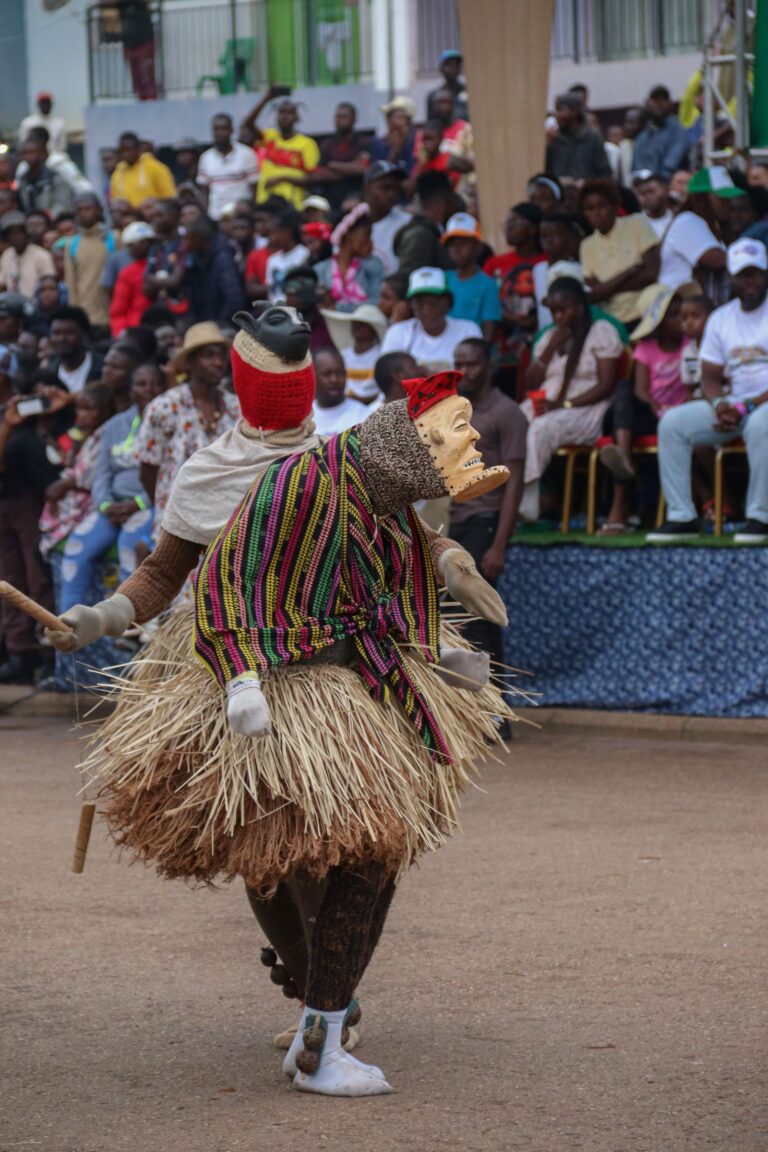
A mask is made for a performance. It is worn by a dancer, inside a costume, in front of a community that already knows the story. The carver does not need to explain. The audience brings the meaning with them.
That is why a symbol on a mask is never random. The carver was working inside rules set by a society, a lineage, or a shrine. Change the eyes and you change the spirit. Change the colour and you may have made the mask for a different ceremony entirely.
When you read these signs, you are reading the values of the people who made them.
The Eyes: Composure, Vision, or Threat
Start with the eyes. They tell you the temperament of the spirit.
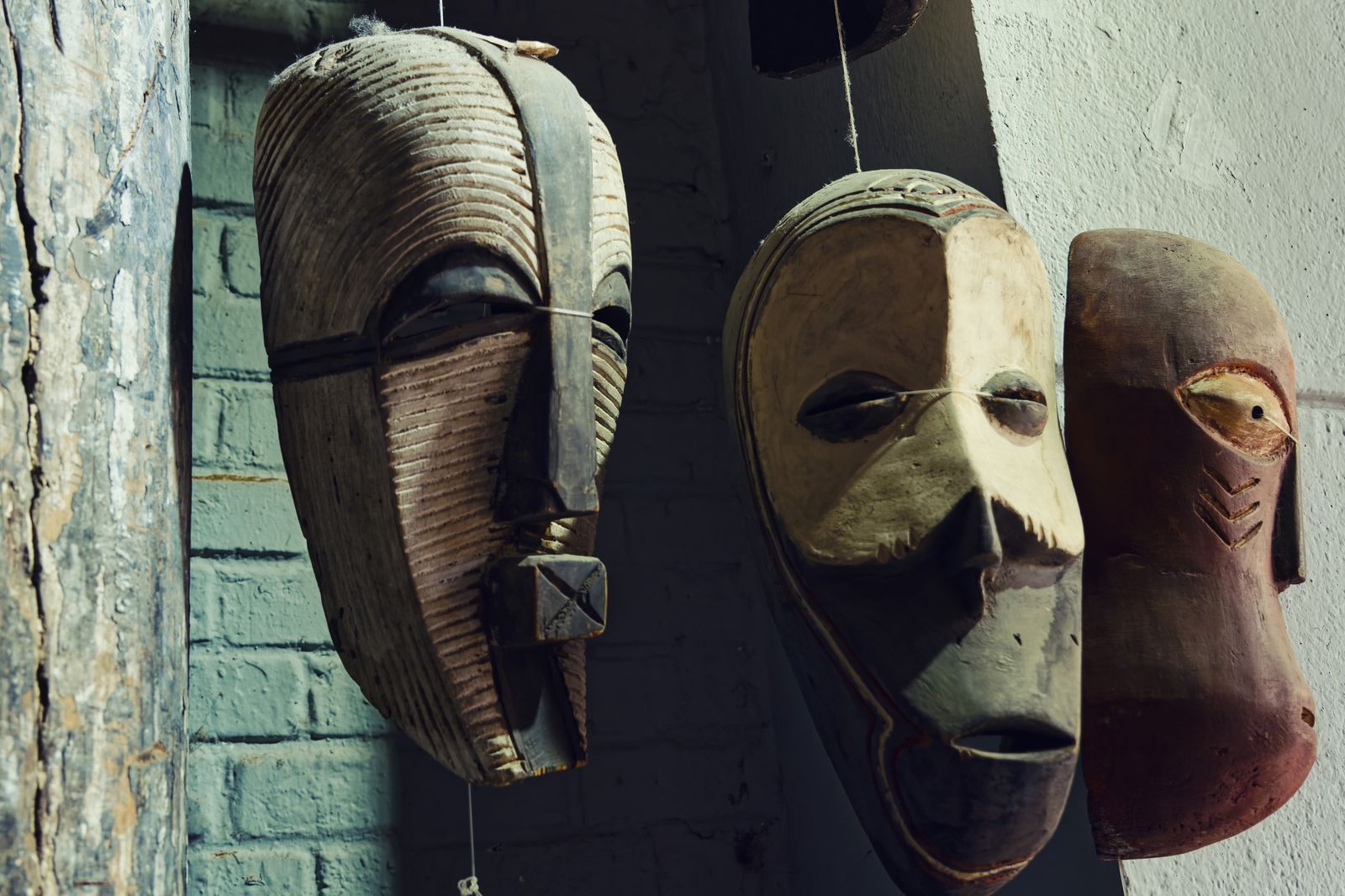
Narrow, half closed eyes with heavy lids appear across West and Central Africa. On Baule portrait masks and on Punu white faced masks, the downcast eye suggests calm, restraint, and inward vision. This is a face that does not need to shout. In many communities, composure is the highest form of beauty and the mark of a wise person.
Wide, bulging, or tubular eyes do the opposite. On some Dan masks from Liberia and Côte d’Ivoire, projecting eyes give the wearer the look of something alert and dangerous. These faces are built to be seen from far away and to make people step back.
Holes cut beside the eyes or below them are often practical. The dancer has to see. Do not over read a hole that exists so a man can walk.
The Mouth: Restraint or Power
A small, closed mouth is one of the most common signs of an ideal person. It says this face does not gossip. It does not boast. Among many West African peoples, controlled speech is a virtue, and the carved mouth reflects it.
An open mouth with teeth, by contrast, often belongs to a spirit with force. Think of masks used for judgement, policing, or warfare. The teeth are a warning.
Some masks have a mouth that is barely there. That absence can mean the spirit communicates through other means, through song carried by attendants or through the sound of the costume itself.
Horns: Strength from the Wilderness
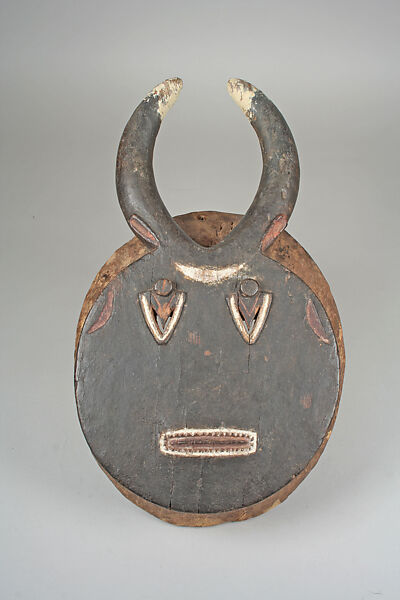
Horns bring the bush into the village. They borrow the power of the buffalo, the antelope, and the ram.
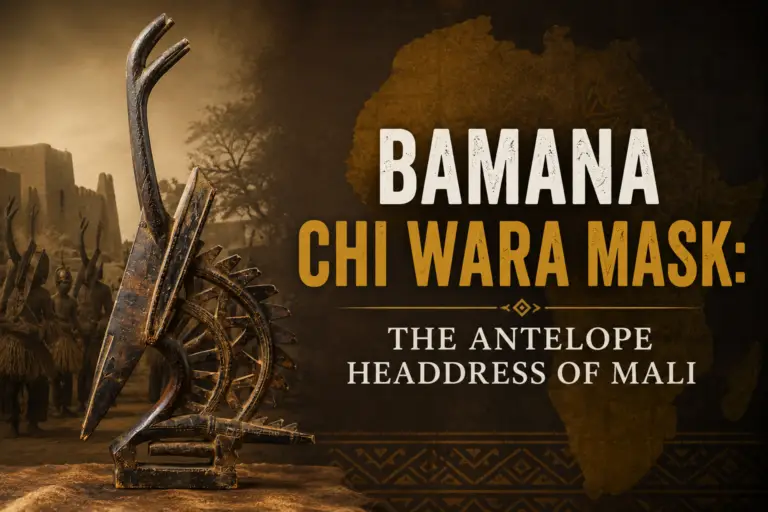
The Bamana Chi Wara headdress from Mali is the clearest example. Its tall antelope horns honour the mythical being who taught people to farm. The horns there speak about agriculture and endurance, not aggression.
Among other peoples, horns signal raw power and the dangerous energy of the forest. If you want the full story on this one sign, read our piece on why African masks have horns.
Colour: White, Red, and Black
Colour on a mask is rarely about taste. It is about meaning, and the meaning comes from the material.
White, usually kaolin clay, is linked in many places to the spirit world, to the dead, and to purity. Punu masks and the Fang Ngil masks of Gabon use white to show a face that belongs partly to the ancestors.
Red, often from camwood or ochre, can mean life, blood, vitality, or danger, depending on the people. It is a colour of transition.
Black often stands for maturity, depth, and the ideal of a good person. The polished black Sowei helmet mask of the Mende Sande society in Sierra Leone is the famous case. Its shine evokes healthy skin and the water spirits, and its neck rings are a sign of beauty and wellbeing.
We cover the materials behind these colours in what African masks are made of.
Lines, Grooves, and Scarification on the Mask
Many masks carry carved lines on the cheeks, forehead, or temples. Sometimes these copy the real scarification of the people who made them. That makes them identity marks. They tell you who the face belongs to.
Other lines are purely about force. The deep parallel grooves on the Songye Kifwebe masks of the Democratic Republic of Congo are not human scars. They are about spiritual power and transformation, and some writers connect them to animal markings.
If you see lines on a mask, ask first whether they look like human scarification for that region. Our guide to African scarification traditions is a good place to start.
Hairstyles, Crests, and Superstructures
The top of the mask often carries rank. An elaborate coiffure can show status, age, or marital position. The crested hairstyles on Mende Sowei masks and the tall carved tops of Yoruba Epa masks are not decoration. They are statements about who matters and why.
Some masks carry whole scenes above the face. A mother with children. A warrior on horseback. A hunter. These superstructures tell the story the community wants remembered.
Added Materials: Cowries, Fibre, and Metal
Cowrie shells often mean wealth, because cowries once served as currency across large parts of the continent. Raffia and plant fibre hide the dancer completely, and that hiding matters. When the person disappears, the spirit can appear.
Brass, nails, and mirrors appear on some masks and figures to add power or to reflect danger back at its source.
How to Read African Mask Symbols Without Getting It Wrong
Here is the method I use, and I want you to use it too.
- Identify the people or at least the region before you read any symbol.
- Look at the whole object. Eyes, mouth, colour, and top together.
- Ask what the mask was used for. Funeral, initiation, judgement, entertainment.
- Treat any single sign as a clue, never as proof.
If you have a mask at home and you are not sure where it comes from, read African mask types and meanings to narrow it down.
Own a mask and want to know its story? Start with the free Mask Identifier, or ask for an in depth reading of your mask. I will tell you what tradition it belongs to, what it was made for, and whether it was ever danced.
Keep Learning With SEVICS Africa
Every carved face is a conversation that started long before you arrived. You can join it. Browse more articles in our Education section, and watch the stories behind these masks on the SEVICS Africa YouTube channel. If you want help understanding a specific piece, contact us. We will read it with you.