Am I Giving Away Our Secrets? What I Say When People Ask
Whenever I talk about African masks online, someone tells me to stop. The comment usually goes something like this: stop sharing your secrets with the white man, they will steal it. At first I ignored it. Then it came so often that I had to sit with it and ask myself honestly whether I was doing something wrong.
What I actually know
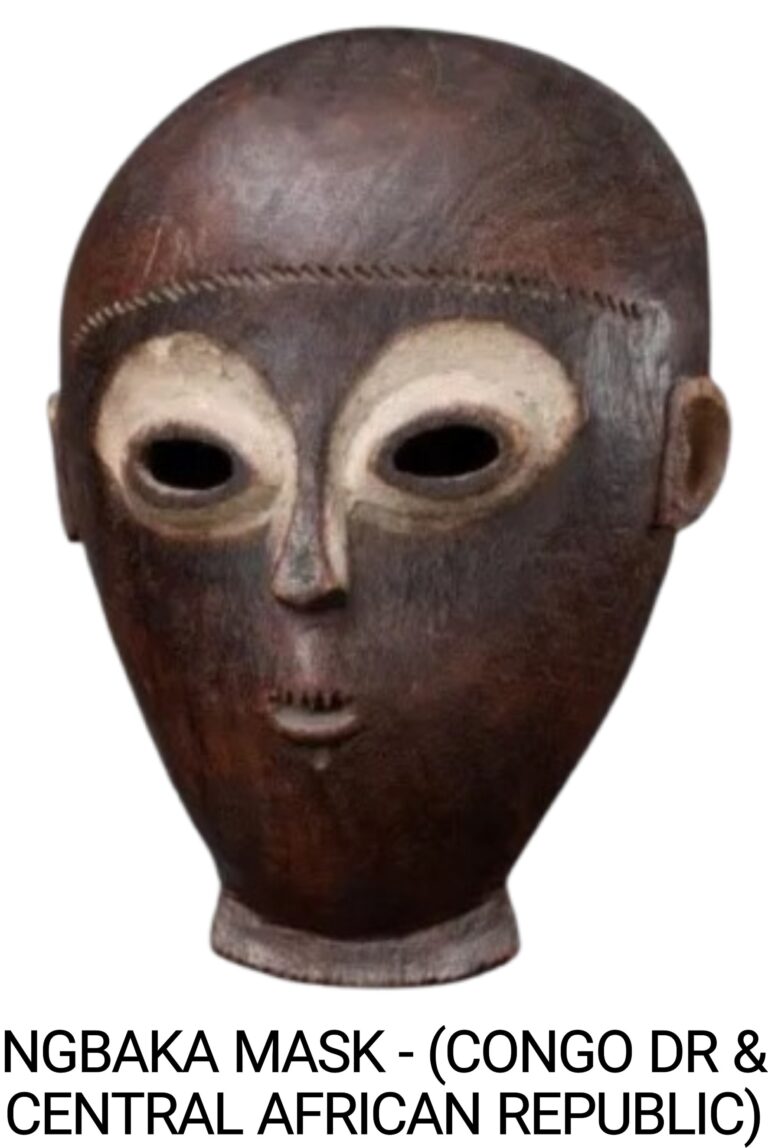
Let me be clear about one thing. In the traditional sense, I do not hold secrets. A secret, in this world, is knowledge kept by the initiates of a mask owning society. I am not an initiate of any masquerade society. I grew up in Nsukka, inside my culture, with the Okangba coming to my father’s parties and masked figures policing the village square. But the most protected knowledge was never mine to begin with. So nobody needs to worry that I am leaking classified information. I could not if I tried.
What I share is what an educated, deeply curious African can learn from inside his own culture, from carvers and elders, from watching performances closely, and from years of reading. That has its own value. It is the position of most Africans today, and of everyone in the diaspora who has a mask on their wall and wants to understand it.
The launch codes
Here is the picture I use. Imagine an enemy conquers your land and seizes your most powerful weapons. They put them on display in their museums as trophies. Now imagine that you still hold the launch codes. Do they own weapons, or do they own something they cannot use?
That is close to where we are, except it is the other way round. Europe holds thousands of our masks. What we lost is the knowledge of how to use them. Many of the societies that owned them have vanished. With the rise of Christianity and Islam, much of the old practice was abandoned. So we kept the memory of the hardware and lost the software. Even if every mask came home tomorrow, we would not fully know what to do with it.
So when people say I am giving away secrets, I ask them: what are those secrets doing for Africa today if nobody is allowed to talk about them and they die with the last elder?
Can it be used against us?
Some people worry that if outsiders learn what a mask means, they can activate it against Africans. I do not believe that. African spirituality is rooted in its language, its land and its bloodlines. Not every African can become a chief priest. Many roles are a calling, given by God and by the land, not something you buy or learn from a book. When colonial powers tried to choose kings, the real authority did not go with the crown. It cannot be stolen.
How I ended up doing this
I did not choose to be the mask guy. My background is in the church, and online I used to talk about careers and project management. One day I told a short story about a mask I own. It got more attention than anything I had posted before. I tried to move on and kept being drawn back. Interviews came, then students, then people sending me photos of their masks asking what they mean. Eventually I stopped resisting and began to study in earnest.
Will you find secrets in what I write? That depends on you. Some people find answers they have been looking for. Others find nothing new. But I am sure of this: there is not enough here to rob Africa of anything essential. If anything, I hope it gives the next generation one less reason to be ashamed of where they come from, and one more argument for bringing our masks home.
This piece comes from my book, Within Carved Lines: The Secret Meanings of African Masks. If it spoke to you, the book goes much deeper.