Ichi Scarification of the Igbo: What the Marks on the Forehead Meant
Ichi scarification is one of the most striking traditions in Igbo history, and one of the least understood. The marks were lines cut into the forehead and temples of men of standing. They were not decoration. They were a record of rank, written into the body for life.
Today you will see ichi mostly in old photographs, in carvings and on a handful of elders who still wear the marks. Accounts of the practice differ from one community to the next, so I will tell you what is widely agreed, and say plainly where the picture is less certain.
A rank written on the bodyICHI SCARIFICATION
What Ichi Scarification Was
Ichi refers to the facial marks cut on Igbo men, most often associated with the northern Igbo area, including communities connected with Nri and Awka. The marks were usually a set of parallel lines across the forehead and sometimes the temples. The cutting was done by a specialist with a blade, and the wounds were treated so that they healed into raised lines. The result was permanent. Nobody could take it from you, borrow it or fake it.
Early European travellers and colonial officers noted the marks in the nineteenth and early twentieth centuries, and their photographs are among the few records we have. But those records were made by outsiders. The people who wore the marks had their own words for them, and those words are what we should listen for.
Who Earned the Marks
In many accounts, ichi was linked to title taking, especially the Ozo title, one of the highest honours open to an Igbo man. A person who took the title had to be of good character, able to bear the cost of the ceremonies and approved by the community. The marks showed that he had done all of that. In some places a man could not receive them until he had completed his rites. In others the practice varied. If you hear a different version from your own town, trust it. Local custom decides.
The title was not bought in a day. A man moved through stages, showed that he could keep the peace and honour his word, and accepted limits on how he lived. He could no longer lie, cheat or act without regard for the community. Some versions say a titled man was treated almost as sacred. The marks were the visible half of a promise whose invisible half was behaviour.
Why the Cutting Was Part of the Meaning
The pain mattered. Igbo society valued the man who could carry weight, speak truthfully and stay calm. To sit through the cutting was to prove, in front of witnesses, that you could endure. But pain alone was not the point. The marks tied the man to a group. When strangers met, they could read his standing from his face before a word was spoken. It worked like an identity document that no office could issue. That is why a scarred forehead in a photograph from that era is a biography, not a pattern.
How Ichi Scarification Connects to Wider African Marking
Scarification exists across many African cultures, and it carries different meanings in each. Among some peoples it marks the passage into adulthood. Among others it marks lineage, beauty or protection. Ichi sits in the middle of that family. It is rooted in rank and belonging. If you want the bigger picture, read our piece on the history of scarification in Africa, and visit our cultures section to see how marking differs from people to people.
Ichi in Igbo Art and Memory
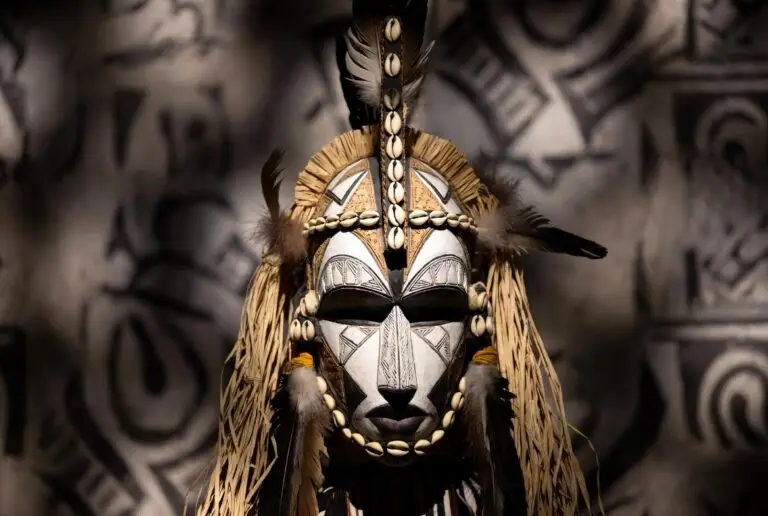
In some Igbo carvings, parallel lines on the brow echo the same idea. They tell the viewer that the face belongs to a person of rank, or to a spirit of standing. If you are looking at a carving and you see those lines, ask what they are saying. They may be the carver’s way of showing authority. Our mask identifier can help you begin asking the right questions.
Why the Practice Faded
By the early twentieth century, the practice was already under pressure. Missionary teaching treated the marks as pagan. Colonial schools and offices pushed young men toward clean faces and Western dress. Employers looked at a scarred face and saw a village man. Many families stopped marking their sons to spare them that. Within a few generations, ichi became rare. It did not die because the Igbo stopped valuing rank. It died because the world around them began to punish the sign of it.
What We Can Learn From It Now
There is a lesson here that goes beyond scars. A society once knew how to say who a man was without paperwork. It used the body as a record and the community as a witness. We have better medicine now, and nobody needs to be cut to prove worth. But we should not pretend that the old system had nothing to teach. It held rank and responsibility together. The mark meant you were accountable, because everybody could see you.
Treat photographs of ichi with care too. Behind each one is a particular man, a particular family and a particular title. They are not exotic faces. They are people’s records. When you share them, say whose they are if you know, and say where they came from.
Learn More About Marking Traditions
If you are researching marking traditions, start with the communities who still speak about them. Our African Heritage section collects what we have documented. We also discuss scarification on the SEVICS Africa YouTube channel, including the conversation on scarification and body modifications in Africa. Tell us in the comments what your own community remembers.