Free chapter. This is Chapter 3 of my book Within Carved Lines: The Secret Meanings of African Masks. I have opened a few chapters here so you can read them free. See all the free chapters.
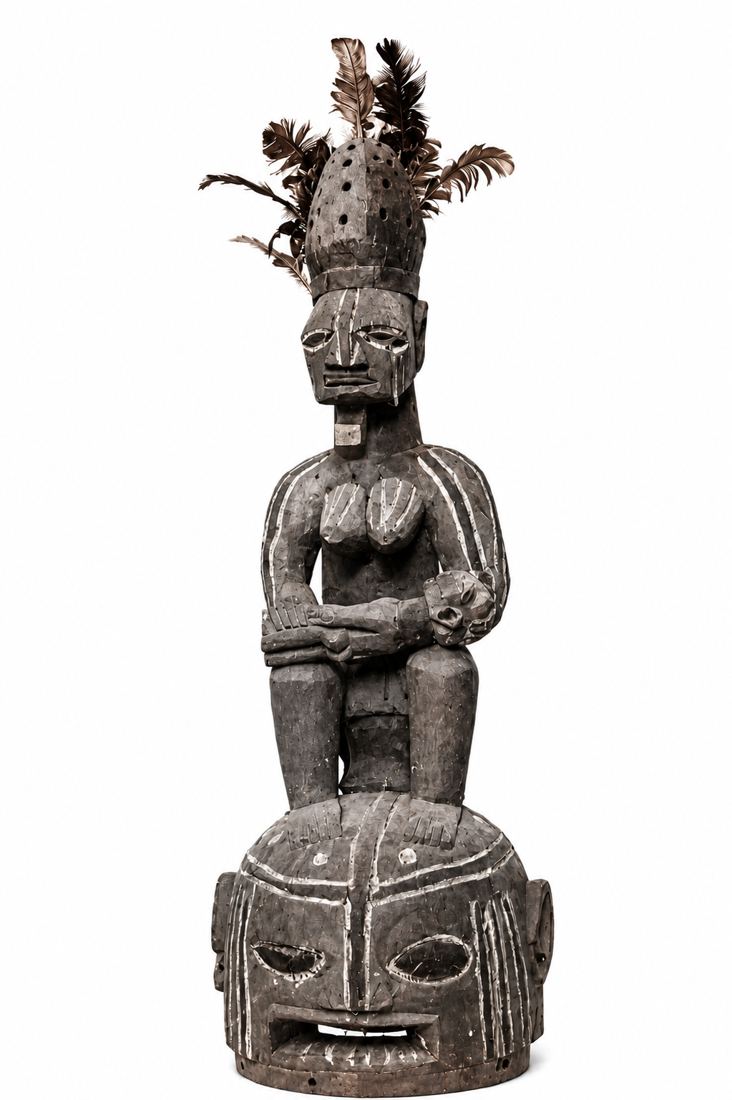
The question of whether African masks are “evil” seems absurd given their revered status within the cultures that created them. Evil implies something repulsive, undesirable, and unwanted. Yet, Africans cherished their masks, as did many other cultures around the world.
During the European colonization of Africa, masks became objects of intense European desire. The demand for African masks was insatiable, and it continues today, with collectors still scouring African villages for ancient and valuable pieces.
If African masks are not inherently evil, where does this perception originate? Certainly not from the Africans who create and revere them. Consider this: Christianity has a singular source of evil, Satan. Most traditional African belief systems do not recognize a direct equivalent. So, with countless distinct masks across the continent, where does the idea of their inherent evil come from? The answer is clear: European influence.
European traders initially came to Africa seeking resources, offering clothing, gin, and other goods in exchange. This trading mentality has persisted. A common European bargaining tactic was to emphasize the superiority of their goods and the inferiority of African products. This strategy, still used today, was highly effective. If they could convince Africans that their beautiful artworks were worthless, they could acquire them for next to nothing. Thus, the narrative of a “white Jesus” and the demonization of anything non Christian, or non European, was propagated.
Africans, believing these “pagan” masks would lead them to hell, often relinquished them to European Christians, who then took them home and commercialized them. These same “evil” masks are now preserved in Europe, generating great wealth for collectors, dealers and institutions, with little to no return to Africa.
The belief that African masks are evil was a clever marketing ploy, nothing more. This doesn’t mean that African masks lack spiritual significance. Some were indeed objects of worship and possessed spiritual qualities. But does this equate to evil? No.
Evil is defined as profound immorality and wickedness, often associated with a supernatural force. To attribute these qualities to a mask implies that it is a living entity with individual agency. Is a mask a person or spirit capable of independent action? There’s no evidence to support this. My perspective is straightforward: some masks have connections to spirits, much like cars are associated with brands. This association grants them certain attributes. But like brands, spirits exist uniquely and are never exclusively good or bad. Would you condemn a car as evil because it was involved in a fatal accident? Whatever argument you might offer for the car, or even a gun, could also be applied to a mask.
My intention is not to persuade you that African masks are inherently good. I simply want to offer a different perspective, encouraging you to see things in a new light. I want you to consider the beliefs of the Africans who created these masks. I also want you to recognize that many things you have learned are the result of sophisticated marketing strategies. Did you know that the widely held beliefs that breakfast is the most important meal and that red wine is good for the heart were both pushed hard by the companies that sold cereal and wine, long before any science could back them, and that the evidence for them is still thin? Coca Cola was initially marketed as a miracle cure. Today, it is content to be a beverage brand. What you have been told may have served its purpose in the past, but now is the time to choose what you believe. That choice is entirely yours.
Continue reading Within Carved Lines
There are twenty six chapters in the full book, covering the language of masks, colour, texture, the grammar of form, secret societies, women and masking, regional traditions, the diaspora, and how to identify, authenticate and care for an African mask.
Previous: Chapter 2, Am I Giving Away Secrets? | Next: Chapter 5, What Are African Masks? | All free chapters