Are African Masks Demonic? Separating Myth from Meaning
If you search this question, you will find strong opinions on both sides, and very little that explains where the question even comes from. Understanding that history is the first step to answering it honestly.
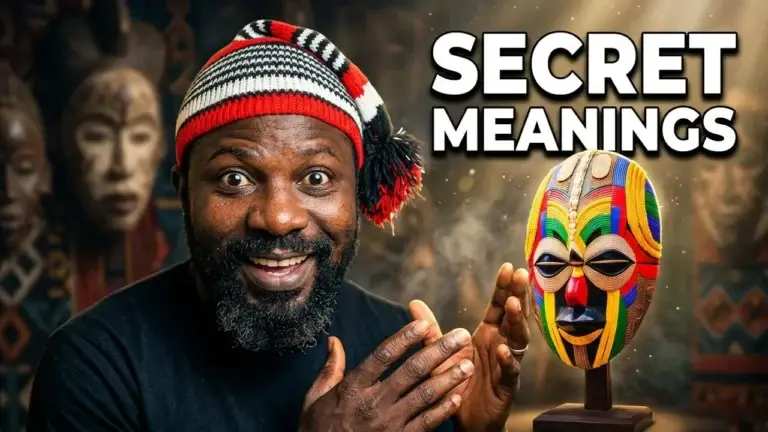
Watch on the SEVICS Africa channel: Traditional African Masks and Their Spiritual Powers
Where the question comes from
The idea that African masks are demonic did not originate within the traditional societies that made them. It came largely from missionary encounters, starting in the colonial period and continuing through modern Pentecostal and evangelical teaching across the continent, which frames traditional African spiritual practice as being in opposition to Christian faith. Under that framework, any object connected to ancestral or spirit veneration, including masks, drums, and certain carvings, gets classified as spiritually dangerous regardless of what it actually meant to the people who made and used it.
This is not a uniquely African story. Similar framing has been applied historically to other indigenous spiritual traditions around the world, wherever a new religion moved in and needed to explain why the existing practices should be abandoned. Understanding that pattern does not settle the theological question for any individual believer, but it does explain why the demonic label exists and why it is applied so broadly.
What masks actually meant in their original context
In most traditional African societies, masks were not made to represent evil. They were made to represent specific ancestors, nature spirits, or deities, and they were used in specific ceremonies: initiation rites, harvest festivals, funerals, and community judgment gatherings. A mask worn during a funeral rite was believed to help guide a spirit to the ancestral world. A mask worn during a coming of age ceremony marked a transition, similar in social function to a graduation or confirmation elsewhere. These were treated as serious, often sacred, objects, not as symbols of malevolence.
That does not mean every tradition viewed masks identically. Meanings vary enormously by region, ethnic group, and specific mask type. A mask that plays a protective role in one tradition may have a completely different function two hundred miles away. Generalising African masks as a single category with one meaning is itself part of the problem with how the demonic question gets asked.
The genuine theological disagreement underneath
Setting the history aside, there is a real and separate question that many Christians and Muslims across Africa and the diaspora wrestle with in good faith: whether engaging with objects tied to non Abrahamic spiritual practice, even decoratively, carries spiritual risk. This is not a fringe concern. It reflects a sincere theological position held by many believers, and it deserves to be taken seriously rather than dismissed as ignorance.
On the other side, many people, including many African Christians and Muslims, hold that a mask displayed as art or cultural heritage carries no more spiritual weight than a painting of a historical religious scene, and that the object’s danger, if any, lived in the ritual use and the belief system behind it at the time, not in the carved wood itself sitting on a shelf today.
Both of these are real, reasoned positions. Neither is a strawman.
What this means if you are deciding for yourself
If you are trying to decide how you personally feel about owning, displaying, or valuing a traditional mask, a few honest questions help more than a blanket label does. What tradition does this specific mask come from, and what was it actually used for. Are you engaging with it as cultural history, as decorative art, or as something you believe carries active spiritual significance. What does your own faith tradition teach about objects from other belief systems, and have you engaged with that teaching directly rather than through a secondhand rule.
The answer to are African masks demonic is not a single yes or no that applies to every mask, every tradition, and every person asking. It depends on which mask, which tradition, and which belief system is doing the asking. What is not accurate is treating an entire continent’s worth of distinct cultural and spiritual traditions as one undifferentiated category of spiritual danger. That framing tells you more about the assumptions behind the question than it does about the masks themselves.