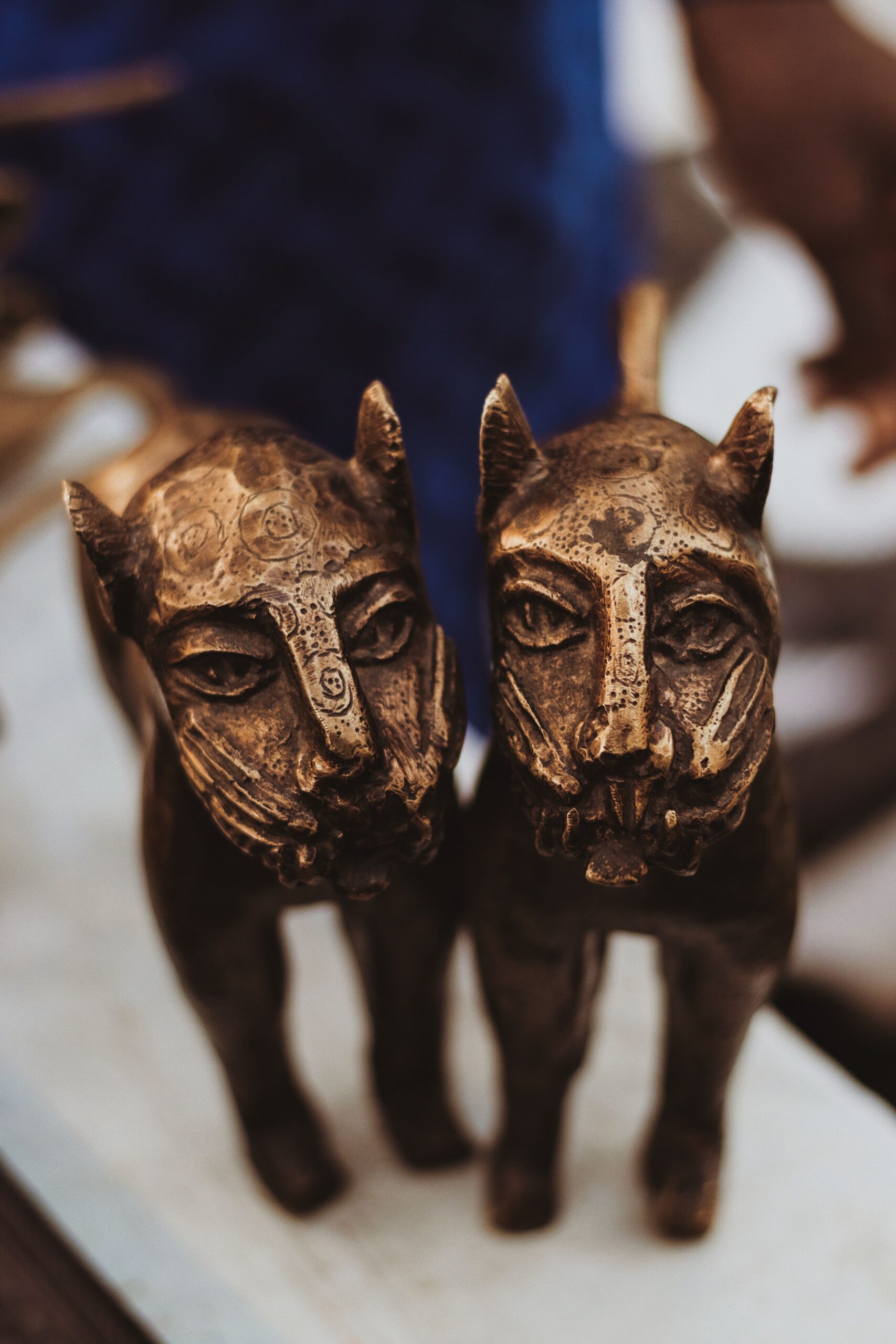
The Benin Bronzes: A Timeline of What Has Been Returned and What Still Is Not
Picture soldiers walking through the palace of the Oba of Benin with sacks and crates. It is February 1897. They pull brass plaques off walls where they have hung for generations. They pull ivory tusks carved with figures out of shrines. They do not ask permission because they are not asking anyone anything. By the time they leave, the palace is burning and thousands of works are on ships headed to Britain.
Sit with that image, because everything else here depends on it. The Benin Bronzes have been returned in pieces over the last few years, slowly and unevenly, and you cannot understand why that matters unless you first understand how they left.
This is not a story about “Africa” in some vague sense. This is a story about the Kingdom of Benin, in what is today Edo State, Nigeria. It is a story about the Edo people, the Benin royal court, and a theft that has taken more than a century to even begin correcting.
The Punitive Expedition of 1897
The Kingdom of Benin was not a footnote before 1897. It was a powerful, organized state with a royal palace, a professional class of bronze casters, and centuries of artistic tradition. The guild of bronze casters worked for the Oba alone. Their plaques and heads were not decoration. They were history, kept in metal because metal does not rot the way memory does.
In 1897, British forces launched what they called a punitive expedition. They burned Benin City. They looted the royal palace. Soldiers walked away with thousands of brass and bronze plaques, ivory carvings, and royal regalia. These objects were shipped to Britain, and many were sold off almost immediately to cover the cost of the expedition itself. From there they scattered. Today these works, known collectively as the Benin Bronzes, sit in museums and private collections across at least 161 institutions worldwide.
Think about that number for a second. One royal palace. One raid. One hundred and sixty one museums holding pieces of it, spread across continents, most of them nowhere near Benin City.
Why Restitution Took So Long
For most of the twentieth century, nobody in those museums was in a hurry. The objects were treated as acquisitions, not evidence of a crime. Nigeria asked. Edo traditional rulers asked. Scholars asked. The answers were slow, when they came at all.
What changed was pressure. Sustained pressure from Nigerian institutions, from the Edo royal court, from historians who kept documenting exactly what happened in 1897, and from a wider reckoning in Europe about colonial loot sitting in national museums. That pressure built for decades before it produced real movement.
How the Benin Bronzes Have Been Returned Since 2021
The 2020s are when things actually started to move.
Germany went first, and it went big. In 2021, Germany announced it would return all Benin objects held in German public museums. That was not a symbolic gesture. It was followed through. In 2022, Germany completed the formal transfer of ownership of more than 1,100 objects to Nigeria. Among them were 512 Benin Bronzes whose ownership the Ethnologisches Museum in Berlin transferred to Nigeria that August. That single transfer remains one of the largest acts of restitution in this whole story.
The United States followed a smaller but still meaningful path. The Smithsonian Institution’s National Museum of African Art transferred ownership of 29 Benin Bronzes to Nigeria’s National Commission for Museums and Monuments. The Smithsonian’s National Museum of Natural History, which also holds Benin Bronzes taken during the 1897 expedition, has continued pursuing further deaccessioning and return.
Then came the Netherlands. In 2025, the Dutch government returned 119 Benin Bronzes to Nigeria. At the time, it was described as the largest single return that had happened up to that point.
The pace did not slow going into 2026. In February 2026, the University of Cambridge transferred legal ownership of 116 Benin Bronzes to Nigeria’s National Commission for Museums and Monuments. As of this writing, the physical handover of those pieces is still being arranged, which is worth remembering. Legal ownership and physical possession are not always the same moment.
Switzerland added its own chapter. In March 2026, Switzerland agreed to eventually transfer ownership of 28 Benin Bronzes to Nigeria. That agreement was implemented in June 2026, when 18 pieces were physically returned. Fourteen came from the Ethnographic Museum at the University of Zurich. Two came from the Museum Rietberg Zurich. Two came from the Musee d’Ethnographie de Geneve.
More returns are expected before the end of 2026, with talks ongoing involving museums in Sweden, Britain, and Germany.
What Is Still Not Returned
Now the harder part. The British Museum in London holds roughly 900 Benin Bronzes. That is the single largest institutional holding anywhere in the world, larger than any of the collections that have already been returned or agreed for return.
The British Museum has said its hands are tied by law. Under the British Museum Act of 1963, it says it is legally barred from permanently giving these objects away. Loan arrangements have been discussed. A loan is not a return. A loan means the British Museum still owns what it took. You can call that progress if you want to be generous. I would call it a polite way of saying no for now.
Where the Returned Bronzes Are Going
Nigeria’s plan is to eventually house the returned bronzes near the restored royal palace in Benin City, which is exactly where their story began. That is the right instinct. These objects were not made for glass cases in foreign capitals. They were made for a royal court, cast by guild artisans working for an Oba, meant to be seen and understood inside their own context.
Until that dedicated infrastructure is ready, the returned works are being cared for in Nigerian museums rather than sent back abroad. That is a patient, deliberate choice, and it is the correct one. Rushing a homecoming before the house is ready helps no one.
Why This Should Matter to You
Here is the plain point. A crime happened in 1897. Repair is happening now, unevenly, decades late, but happening. Every bronze that comes home is a small correction to a very old wrong. Every museum that still says no, especially one holding 900 pieces behind a law it wrote for itself, is choosing to keep profiting from that wrong.
You do not need a museum degree to have an opinion about that. You just need to know what happened.
This history is not finished, and neither is the work of telling it right. If you want to follow where this campaign goes next and add your voice to the push for full restitution, visit our ongoing campaigns and see where you can help. You can also find deeper storytelling on this history on the SEVICS Africa YouTube channel. Watch, share, and stay with us. The palace in Benin City is still waiting for what belongs to it.
Watch the series
This topic is part of a video series on the SEVICS AFRICA YouTube channel. Find the playlists on African history, identity and returning home, and on owning an African mask, here. If you own a mask and want to know what it is, send photos through Identify a Mask.