The History of Scarification in Africa: Why the Marks Began and Why They Faded
My grandmother’s generation could read a face the way you read a signboard. Three lines here meant this town. A single cut there meant that lineage. A stranger walked into the market and people already knew where he came from before he opened his mouth.
My generation mostly cannot do that anymore. And the generation after us may never have to.
That shift, from a face that speaks to a face that is silent, is the real story behind the history of scarification in Africa. It is a story about identity, beauty, religion, empire, and law. It did not end in one moment. It is still ending now.
What Scarification Is
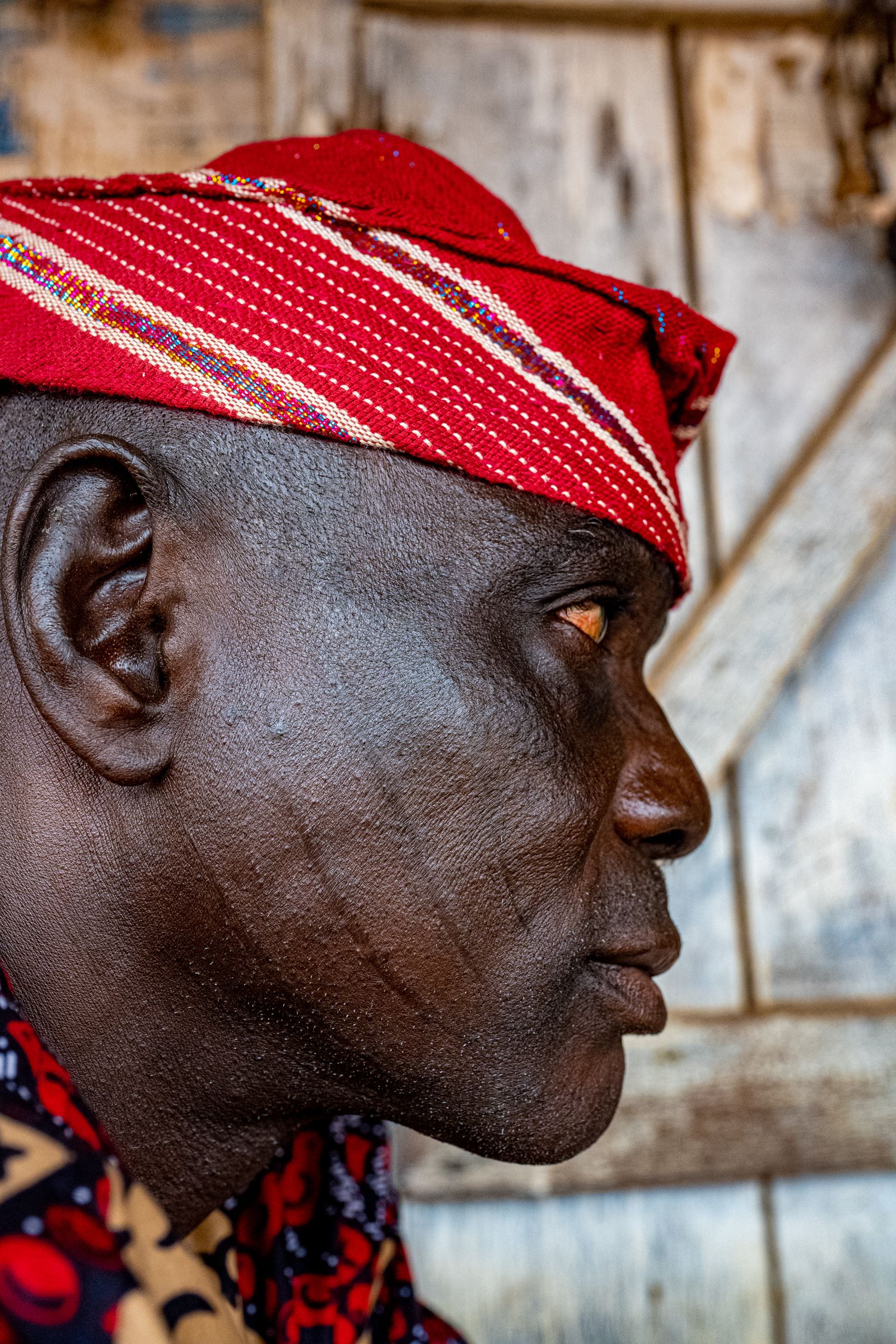
Scarification is the deliberate cutting of the skin to leave permanent marks. In some traditions the cuts are shallow and flat. In others, substances are rubbed in or the healing is managed so that raised scars, called keloids, form. The patterns can sit on the face, the chest, the back, the belly, or the arms.
It is not one practice. It is hundreds of practices, each with its own rules, its own specialists, and its own reasons. If you want the regional picture, read our comparison of African scarification by region.
The Oldest Evidence in the History of Scarification in Africa
How far back does it go? Skin does not survive in the ground, so the evidence comes from art.
The bronze objects from Igbo Ukwu in southeastern Nigeria, dated to around the ninth or tenth century, include human faces carrying lines that many scholars connect to ichi, the facial marks once worn by titled Igbo men. That gives the practice a documented depth of more than a thousand years in one region alone.
The famous copper alloy heads from Ife, made from around the twelfth to the fifteenth centuries, show fine vertical lines across the whole face. Scholars still debate whether these lines show scarification, a veil of beads, or an artistic convention. I mention the debate because honesty matters more than a tidy story.
Older still are rock paintings and figurines across the continent that suggest body marking. But the safe statement is this. Scarification in Africa is ancient, and it was practised by many peoples independently, not spread from one source.
Why People Marked Their Bodies
The reasons changed from place to place. But a few appear again and again.
Identity and belonging
Marks told you who someone was. Among the Yoruba, the different ila patterns could signal town or lineage. We explain those in Yoruba scarification and the ila lines. Among the Dinka of South Sudan, forehead lines marked initiation into adulthood and membership of a section. Our Dinka scarification guide covers that in depth.
Stages of life
For some peoples, marks were added in stages over a lifetime. Among the Ga’anda of northeastern Nigeria, girls received scarification in a series of sessions, called hleeta, as they moved toward marriage. Among some Nuba communities in Sudan, anthropologists recorded women receiving new marks at puberty, at first pregnancy, and after weaning a child. The body became a record of a life.
Beauty and courage
Scarification was beautiful. That needs saying plainly. Raised patterns were admired, touched, and praised in song. And enduring the cutting without crying was itself a proof of strength that the community respected.
Healing and protection
Some cuts were medicinal. Small incisions were made to rub in herbal preparations, a practice sometimes compared to inoculation. Other marks were meant to protect a child from death, especially in families that had already lost children.
How Scarification Showed Up in Art
Because marks mattered, carvers copied them. Many masks and figures across West and Central Africa carry scarification patterns on the cheeks, temples, and torso. For a collector, these lines can help identify where a piece comes from. We explore this in African mask symbols and their meanings.
Why Scarification Declined
So why are fewer and fewer young Africans marked today? There is no single cause. There are several, and they worked together.
Religion
Christian missions and, in some regions, Islamic teaching discouraged or condemned body cutting. Converts were often expected to leave the marks behind as a sign of a new life.
Colonial administration
Colonial officials frequently treated scarification as a sign of backwardness. Mission schools and government offices rewarded people who looked modern by European standards. Over a few generations, the marks went from a source of pride to a source of embarrassment for many families.
The city
In a village, your marks placed you among your people. In a big city like Lagos or Khartoum, they could expose you to mockery or discrimination. Many urban parents chose not to mark their children so that they could move freely.
Health
Shared blades and unsterile conditions carry real risks, including infection. Public health campaigns, especially after the spread of HIV, made many families rethink the practice.
Law
In Nigeria, the Child’s Rights Act of 2003 prohibits tattooing and skin marking of children. Enforcement varies by state, but the law reflects a clear shift in how the state sees the practice.
What Remains of African Scarification Today
The practice has not disappeared. In some rural communities it continues. Elders still carry their marks proudly. Some young people in the diaspora are returning to scarification as an adult choice, a way of reclaiming a heritage their parents set aside.
The marks also survive in photographs, carvings, songs, and memory. And that is where the danger lies. When the last people who can read a pattern are gone, the pattern becomes decoration. The meaning dies quietly.
That is why documenting this history matters now, while the elders can still tell us what the lines say. To understand how marks differ from tattoos, see scarification vs tattoos. For the wider picture, go back to our main guide on African scarification traditions and their significance.
Help Us Keep the Record
SEVICS Africa exists to keep stories like this from being lost. Read more in our Cultural Heritage section, learn about our work on the About page, and watch elders and experts tell these histories on the SEVICS Africa YouTube channel. If your family carries marks and you want to share their story, contact us. We would be honoured to listen.