Zande Yanda Figures: The Statues a Secret Society Used to Check a Warrior King’s Power
New: the 2nd edition of Within Carved Lines: The Secret Meanings of African Masks is out now. Get the book →
Several royal traditions documented in this book concentrate artistic power entirely in the hands of the throne. The Zande, 750,000 people spread across the Central African Republic, the Democratic Republic of the Congo, and Sudan, complicate that picture: royal patronage under the Avangara dynasty was genuinely significant in developing and moving art throughout the region, yet the objects that carried the most weight, the yanda statuettes of the mani secret association, belonged to a structure created specifically to counterbalance the king’s own political power. That tension, a warrior monarchy that funded the art while a rival society controlled its most potent form, is the throughline worth carrying through this piece. It means the same royal system responsible for Zande art’s reach across the region also produced, almost in self-defense, an entire alternate hierarchy of sacred objects it did not control.

Who Are the Zande?
The word azande means “the people who possess much land,” a name that recalls their history as conquering warriors. The Zande migrated during the 18th century from Sudan to the northern Democratic Republic of the Congo, settling along the Uele River, and today also live in the Central African Republic and Sudan, occupying a region of savanna and forest. In common with the neighboring Mangbetu, Zande men hunt and fish while women tend the fields. Politically, the Zande are ruled by a king whose succession passes to his eldest son, while younger sons govern the kingdom’s provinces; different members of a single royal dynasty, the Avangara, have ruled the Zande throughout their history.
Royal Patronage and the Society Built to Check It
Royal patronage was significant in the development and movement of art throughout Zande territory, but that political structure was counterbalanced by the mani secret association, created at the end of the 19th century specifically to check it. Mani celebrates the importance of woman, and its statuette, the yanda, is associated with the highest rank within the society, meaning the most consequential objects in Zande visual culture answered to an institution built in tension with, rather than in service of, the throne.
Yanda: Figures That Protect Mani’s Highest Rank
Yanda figures protect mani members from the dangers of illness, hunting, evil spirits, and other threats to daily life. Usually made from wood or fired clay, they often wear accessories such as bead collars, pendants, and coins, and the society’s chief would infuse a yanda with his power by blowing smoke on it and rubbing it with a paste, an act of ritual activation rather than simple carving. A yanda’s pyramid-shaped head is simple in form, with a diamond-shaped face, protruding eyes, and often iron rings through its ears and nose; the torso and neck are cylindrical or rectangular, the extremities short, and the outlines angular and abstract throughout. In some northern Zande areas, large pole-like figures were also erected, likely functioning as grave markers, a pattern shared widely across eastern Africa and the southern Sudan.
Rare Masks and the Luxury Arts of the Court
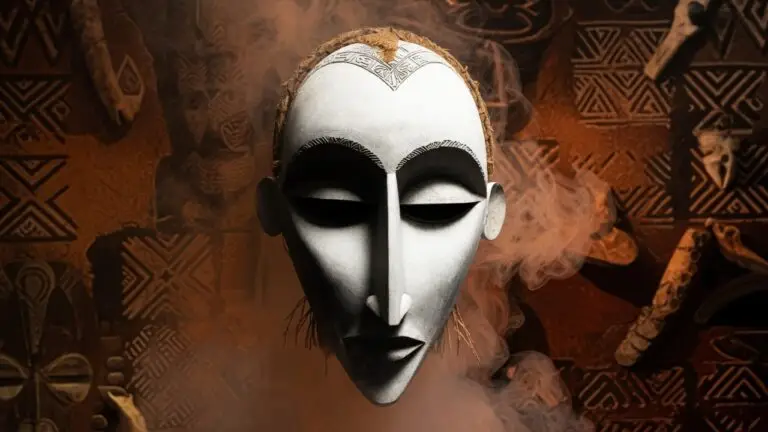
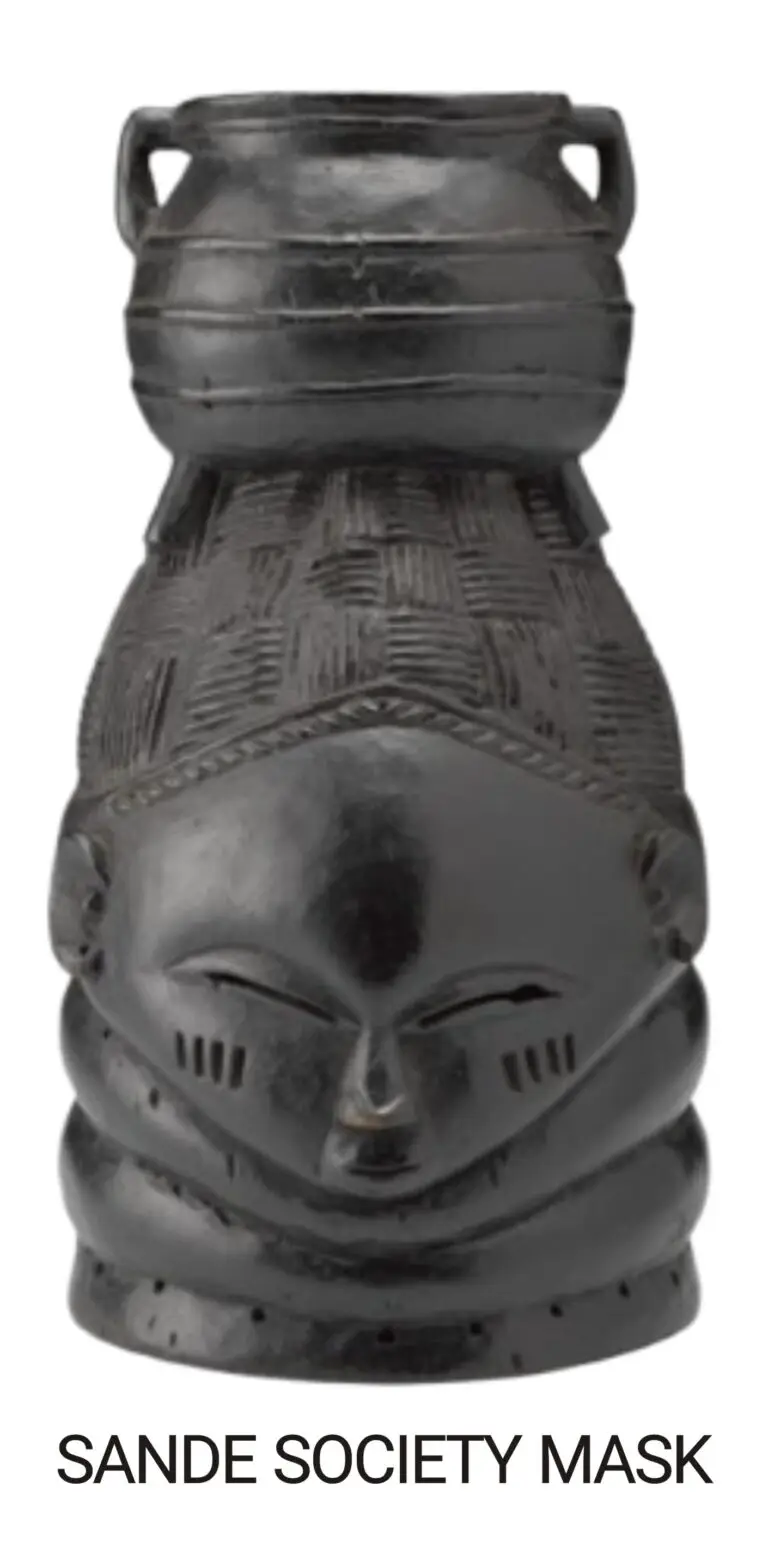
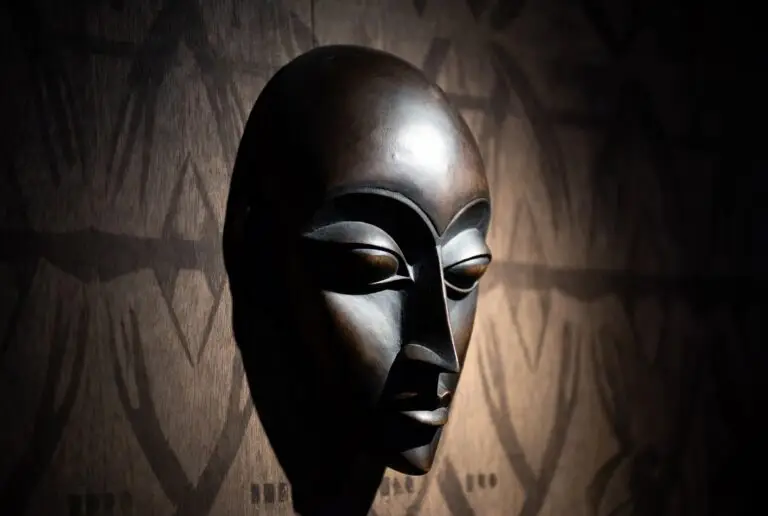
Beyond the yanda, Zande sculptors carved ancestor figures and animal forms with simplified features and enlarged heads, along with maternity figures. Stylized, refined objects rounded out the tradition: neck-rests, flyswats, ivory horns, and musical instruments including drums, sanzas, and curved harps decorated with a carved head and ending in a pair of legs. Masks, by contrast, are rare among the Zande, a scarcity that throws the yanda’s centrality into sharper relief.
Frequently Asked Questions
What does the word “Zande” mean?
Azande means “the people who possess much land,” a name that recalls the Zande’s history as conquering warriors who migrated from Sudan in the 18th century.
What is the mani association?
Mani is a secret association created at the end of the 19th century to counterbalance the political power of the Zande king, celebrating the importance of woman through its yanda statuettes.
What is a yanda figure for?
A yanda is a statuette associated with the highest rank of the mani society, believed to protect members from illness, hunting dangers, evil spirits, and other threats once activated with smoke and paste by the society’s chief.
Do the Zande use masks?
Masks are rare among the Zande. Their artistic tradition centers instead on yanda figures, ancestor and animal statuary, and finely decorated prestige objects.
See also: African Masks by Region and Tribe · Boa Masks: The War Face Whose Actual Job No One Can Agree On · Every Traditional African Mask You Should Know