Kongo Masks and Nkisi: The Same Container Can Heal You or Hunt You Down
New: the 2nd edition of Within Carved Lines: The Secret Meanings of African Masks is out now. Get the book →
Several fetish or power-figure traditions documented in this book assign one carved form a single, fixed job. The Kongo, spread across three countries at the mouth of the Congo River, built a system where the same category of object, the nkisi, could be assigned almost opposite jobs depending on what was packed inside it. One nkisi might hunt down a wrongdoer with the threatening presence of a spear-brandishing nkondi; another, filled with different “medicine,” would simply protect against sickness. That range within a single word, one container type capable of menace or of healing depending entirely on its contents, is the throughline worth carrying through this piece. It runs through Kongo funerary art, its nail-and-mirror fetishes, and its rare, judicially powerful masks, all variations on the same idea: that carved form and empowering substance are two separate decisions, and either one can change what an object becomes.

Who Are the Kongo?
The Kongo number about three million people, present across three countries: the Democratic Republic of the Congo, Angola, and the Congo Republic, occupying the region at the mouth of the Congo River. Numerous subgroups form the vast Kongo cultural complex, among them the Vili, the Woyo, and the Yombe, and these subgroups produce a diversity of artistic styles within a shared tradition, with Kongo art overall being among the best known on the continent.
Funerary Statues and the Complexity of Major Occasions
The Kongo demonstrate the full complexity of their traditions on major occasions such as the investiture of a chief or at funerals. Their pantheon was comparatively small: one all-powerful god who granted healing powers to the king, to the nganga, and to the heads of cults. Alongside textiles of great renown, the Kongo produced a funerary art of decorated steles and funerary statues in stone, very often depicting the chief seated cross-legged in a posture of reflection, placed on tombs to help the spirits of the dead join the world of the deceased. Wood sculptures represent royal wives, hunters, musicians, and healers in varied postures, kneeling in respect or seated nursing a child, rendered with round cheeks, a realistic face, and a smooth patina worked over elaborate geometric patterns and fine scarification. Maternity figures known as phemba were carved specifically for women who had lost a child and wanted another, sophisticated and graceful carvings thought to favor a happy outcome, their effectiveness judged by the dignity and youth of the figure and the jewelry that augmented its beauty and status.
Nkisi: The Same Word for Very Different Powers
Nail and mirror fetishes are a unique and important phenomenon of Kongo sculpture, and in the Kongo, all such fetishes are called nkisi, meaning “medicine.” Historically there were two types, public and private, some carrying vital democratizing roles as sources of empowerment for rural residents and individuals outside the court. At its most basic, an nkisi is a container for empowering materials, or bilongo, magical substances that may include blood along with animal, vegetable, and mineral matter, believed to invest the figure with power and let a devotee establish contact with the spirit; the medicines are typically secured in cavities in the stomach, head, or back. There are four main types: nkondi are fetishes of ill omen, usually brandishing a spear or knife; npezo are just as evil but less menacing in attitude; na moganga are benevolent figures that protect against sickness and dangerous spirits and help the hunter and warrior; and mbula protect against witchcraft. All nkisi can serve a variety of purposes and carry an ambivalent meaning, and some fetishes represent animals, including a two-headed dog or, occasionally, a monkey.
Rare Masks With Judiciary Power
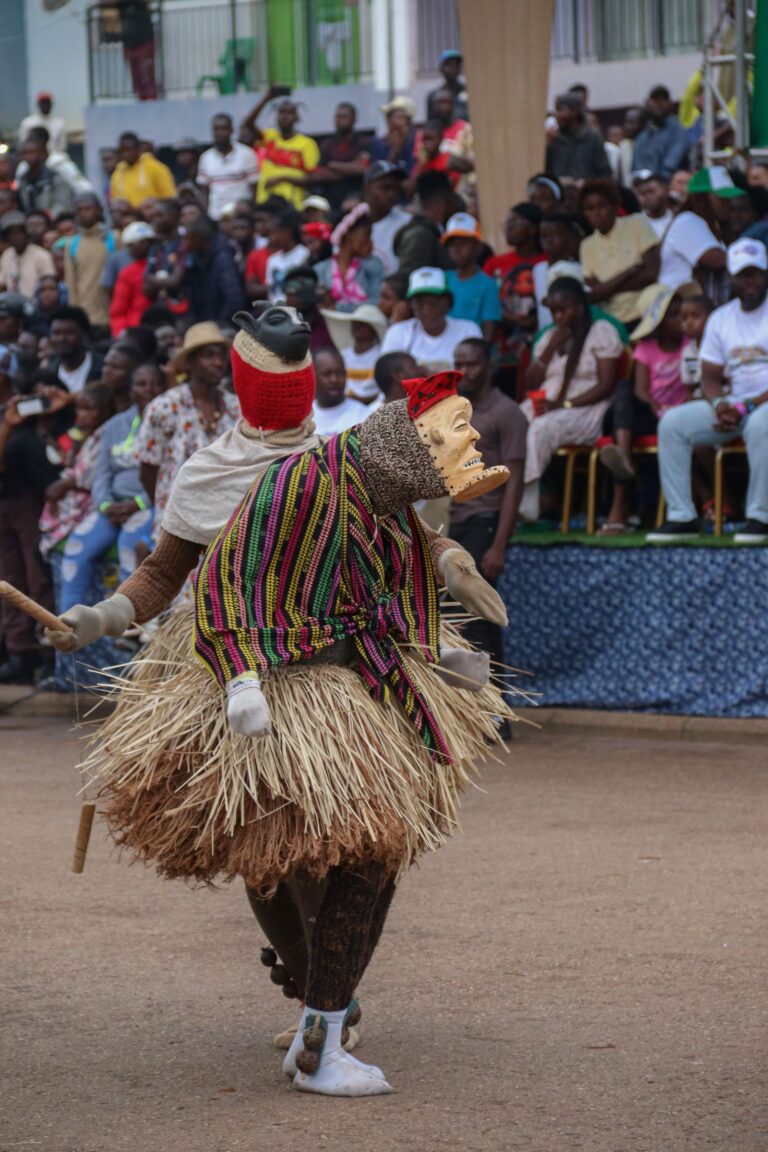
Masks are rare among the Kongo. They were worn during initiation ceremonies and at the funerals of important personalities, but also appeared to be embodied with judiciary powers, echoing the same capacity for real-world consequence found in the nkisi tradition, where a carved object’s role was never purely decorative.
Frequently Asked Questions
What does nkisi mean?
Nkisi means “medicine” in Kongo, and it refers to a container invested with empowering materials called bilongo, which can serve very different purposes depending on what is packed inside.
What are the four main types of nkisi?
Nkondi are fetishes of ill omen that brandish a spear or knife; npezo are similarly evil but less menacing; na moganga are benevolent protective figures; and mbula guard against witchcraft.
What were Kongo phemba figures for?
Phemba were commemorative maternity statues carved for women who had lost a child and wanted another, thought to favor a happy outcome.
Did the Kongo use masks?
Masks were rare among the Kongo. They appeared during initiation ceremonies and the funerals of important personalities, and also carried judiciary power.
See also: African Masks by Region and Tribe · Vili Masks: A Police Force in Paint, on the Atlantic Coast · Woyo Masks: A Married Couple’s Argument, Carved Into the Lid of a Pot · Every Traditional African Mask You Should Know