Bassa Masks: The Gela Dancer Who Performs Feminine Grace for an All-Male Society
New: the 2nd edition of Within Carved Lines: The Secret Meanings of African Masks is out now. Get the book →
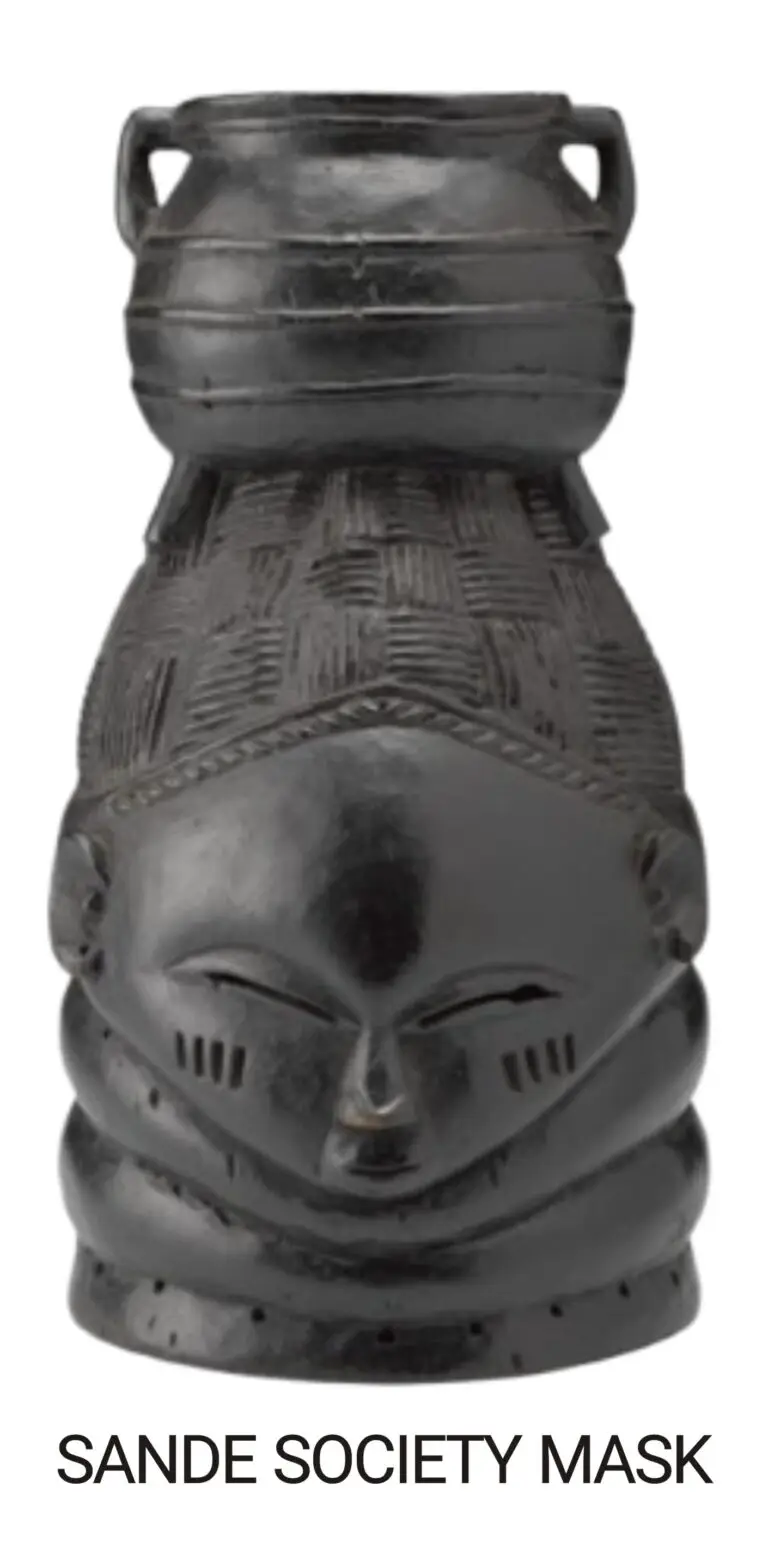
Several masking traditions documented in this book use a mask’s design to project fear, authority, or ancestral weight. The Bassa of Liberia’s central coastal region built a tradition around the opposite register entirely: a mask danced specifically with feminine and elegant grace, worn by men, for an all-male society, during some of the community’s most festive occasions. That deliberate performance of grace, chosen and cultivated rather than incidental, is the throughline worth carrying through this piece. It places the gela mask closer to a study in movement and elegance than to the confrontational or protective masks documented in many neighboring Liberian and Ivorian traditions in this book.

Who Are the Bassa?
The Bassa are one of the largest Kru-speaking peoples in Liberia’s central coastal region and adjacent hinterland, strongly influenced by their Mende-speaking neighbors, especially the Dan and the Kpelle. Their economy is built around rice, cultivated in small villages with populations of roughly two hundred people. Bassa artistic tradition has also been shaped by their northeastern neighbors, the Dan, who live across the border in Côte d’Ivoire, a cross-border stylistic relationship echoed by several other Kru- and Mande-adjacent peoples documented in this book.
Chu-Den-Zo and the Gela Mask
The Bassa maintain several female and male societies, among them chu-den-zo, to which the gela (geh-naw) masks belong. Bassa carvers are famed for these gela masks, worn during the no men’s society ceremonies, when the wearer moves with feminine and elegant grace rather than the aggressive or forceful movement associated with masks elsewhere in this book. The masqueraders entertain spectators specifically when initiated boys return from bush camp, when important guests visit the village, and on other festive occasions, tying the gela performance closely to moments of welcome and celebration.
Worn on the Forehead, Not Over the Face
The gela mask’s physical construction is distinctive among the traditions documented in this book. The dancer wears the mask attached to a woven framework, positioned on his forehead rather than over his face, and looks out through a slit in the fabric that forms part of a costume covering his head and upper body. Because the mask is fixed to this framework rather than worn directly against the skin, the interior of most surviving gela masks shows no signs of wear, a physical detail that quietly confirms how the mask was actually worn in performance.
Sculptures Shared with the Dan
Beyond the gela mask, Bassa sculpture bears a close similarity to Dan work, sharing a monumental, solemn quality combined with skillful carving. Figures of dogs, carved with a human face worked into the side, are known to exist alongside stools, though the specific purpose of the dog statue remains unknown, one of several details in this entry that the book leaves openly undocumented rather than guessed at.
Frequently Asked Questions
What is a Bassa gela mask?
A mask belonging to the chu-den-zo society, danced during no men’s society ceremonies with deliberately feminine and elegant grace, worn on the forehead and attached to a woven costume framework rather than fitted over the face.
When do the Bassa perform gela mask dances?
They entertain spectators when initiated boys return from bush camp, when important guests visit the village, and on other festive occasions.
Why do Bassa masks show little wear on the inside?
Because the mask is fixed to a woven framework worn on the forehead rather than pressed directly against the dancer’s face, so the interior surface experiences little contact or wear.
What other art do the Bassa produce?
Sculptures similar in style to Dan work, monumental and solemn despite skillful carving, including dog figures with a human face carved into the side, whose purpose is not known.
See also: African Masks by Region and Tribe · Every Traditional African Mask You Should Know · African Coming-of-Age Ceremonies: How Different Cultures Mark the Transition to Adulthood