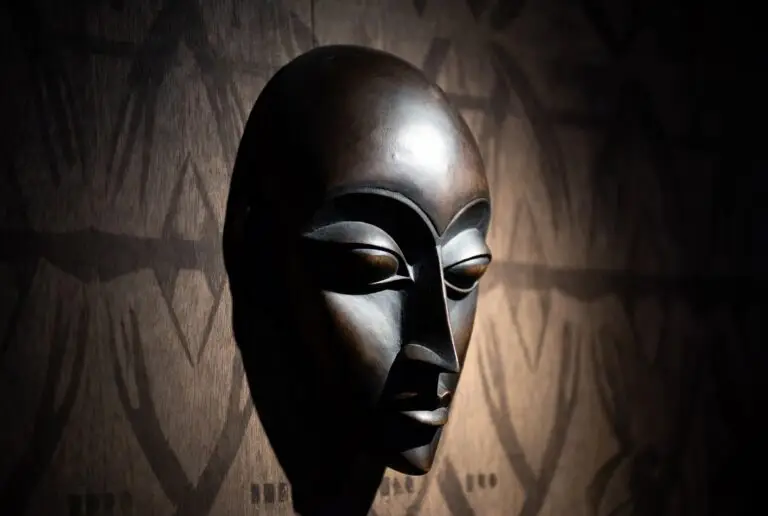
An African Masks Lesson Plan That Teaches Culture, Not Craft Clichés
Every year the same thing happens in classrooms around the world. A teacher announces that this week the class will study Africa. Paper plates come out. Glitter, feathers, and a few zigzag lines. At the end, thirty identical “African masks” go up on the wall, and not one child can tell you which people made masks, what they were for, or that Africa has more than fifty countries.
The teacher meant well. But the lesson taught the wrong thing.
This African masks lesson plan is my answer to that problem. It is built for teachers of children aged roughly eight to fourteen. It takes two to three sessions. And it teaches real cultures with real names, so that the craft at the end means something.
Why Teach African Masks at All?
Masks are one of the richest ways into African culture for young learners. They connect art, history, religion, music, dance, and social life in a single object. A child who understands one mask properly understands that African societies had law, education, and philosophy of their own.
The danger is that masks are also one of the easiest subjects to turn into a stereotype. So the plan below puts accuracy first.
Learning Objectives for This African Masks Lesson Plan
By the end, students should be able to:
- Name at least three specific African peoples and the masks they made.
- Explain that masks were used in performances with costume, music, and dance.
- Describe at least two purposes of masks, such as honouring ancestors, initiation, or keeping social order.
- Recognise that the same symbol can mean different things in different cultures.
- Create an original mask design that shows what they learned without copying a sacred object.
Session One: Meet the Masks
Start with a map
Open with a map of Africa. Ask students how many countries they think the continent has. Most will guess low. Then show them that Africa has fifty four countries recognised by the United Nations, and thousands of languages. This one fact resets the whole lesson.
Introduce three real traditions
Choose three masks from different regions. Here is a set that works well.
Chi Wara, Bamana people, Mali. A tall antelope headdress worn in pairs to honour the mythical being who taught people to farm. Great for discussing agriculture and hard work.
Sowei, Mende people, Sierra Leone. A polished black helmet mask worn by women of the Sande society during girls’ initiation. It is one of the few African masks traditionally worn by women. Great for discussing ideas of beauty and growing up.
Egungun, Yoruba people, Nigeria. A full body cloth masquerade that represents returning ancestors. Great for discussing family, memory, and respect for elders.
Show good photographs of each, ideally from museum websites. The Smithsonian National Museum of African Art and the Metropolitan Museum of Art both have strong online collections.
Discussion questions
- What do you notice first about this mask?
- Who do you think wore it, and when?
- Why might a community want a mask like this?
- Is there anything in our own culture that does a similar job?
That last question matters. Children connect Egungun to remembrance days, Chi Wara to harvest festivals, and Sowei to graduation. The comparison builds respect instead of distance.
Session Two: Reading the Symbols
Now teach students to read a mask like a text.
Use a simple chart with four columns. Eyes, mouth, colour, and decoration. For each mask, students record what they see and then guess what it might mean.
Then share the real meanings. Narrow eyes often show calm and wisdom. A small closed mouth often means self control. White clay is often linked to the spirit world. Horns can show strength from the wild.
Stress one big idea. The same sign does not mean the same thing everywhere. This is where students learn that Africa is not one culture.
For background reading, see our guide to African mask symbols and their meanings and our list of facts about African masks.
Session Three: Design an Original Mask
Set the right brief
Here is the key change from the usual lesson. Students do not copy a sacred mask. Copying a Sowei or an Egungun for a classroom wall turns a religious object into decoration.
Instead, students design an original mask for a celebration or value in their own community. They must use the visual language they learned. For example, if their mask celebrates patience, they might give it calm narrow eyes and a closed mouth, and explain why.
Materials
Card, paper mache, clay, or recycled materials all work. Encourage natural colours like white, red ochre, and black, and explain why those colours matter in many African traditions.
Presentation
Each student presents their mask in one or two minutes. They must say what it celebrates, which symbols they chose, and which African tradition inspired the idea.
For a hands on guide, see how to make an African mask.
Common Mistakes Teachers Should Avoid
- Saying “African mask” as if it were one thing. Always name the people.
- Calling masks scary or primitive. Use words like ceremonial, sacred, or powerful.
- Using the word tribe for everything. Peoples, communities, and societies are often more accurate.
- Teaching masks only in the past tense. Many masquerade traditions are alive today.
- Skipping the costume and dance. A mask without its performance is only half the story.
Assessment Ideas
You can assess learning through the symbol chart, a short written reflection, or the final presentation. A simple rubric could reward accuracy of cultural facts, clear explanation of symbols, and respectful language.
Extend the Lesson
Older students can research a single mask tradition and present it to the class. They can also explore questions about where African masks are kept today and why some communities want them returned. Our article on why African masks are not home decor is a good starting point for that discussion.
Free Resources From SEVICS Africa
We want teachers to get this right, and we want to help. Browse more classroom ready articles in our Education section. Let students try our free Mask Identifier. Show short videos from the SEVICS Africa YouTube channel to bring masks to life in class. And if your school would like a guest session or tailored materials, contact us.