Facts About African Masks: Twenty That Are Actually Specific
Almost every list of facts about African masks you will find online is the same eight sentences reworded. They were used in ceremonies. They represent spirits. They inspired Picasso. They are made of wood.
That is not information. That is a shrug. So here are facts about African masks that are specific, checkable, and mostly absent from those lists, drawn from the traditions themselves rather than from each other.
Facts about African masks that change how you look at them
1. The mask is almost never the spirit. In most traditions the carved object is a vessel that a spirit occupies temporarily, under specific conditions, in front of a specific community. Outside the performance it is wood. This single distinction dissolves most of the confusion around whether masks are dangerous.
2. Many are deliberately made light, not impressive. Carvers chose soft, fast working timbers like the silk cotton tree because a dancer had to carry the thing for hours in heat, sometimes running. A very heavy face mask is often a sign it was made to be sold rather than worn.
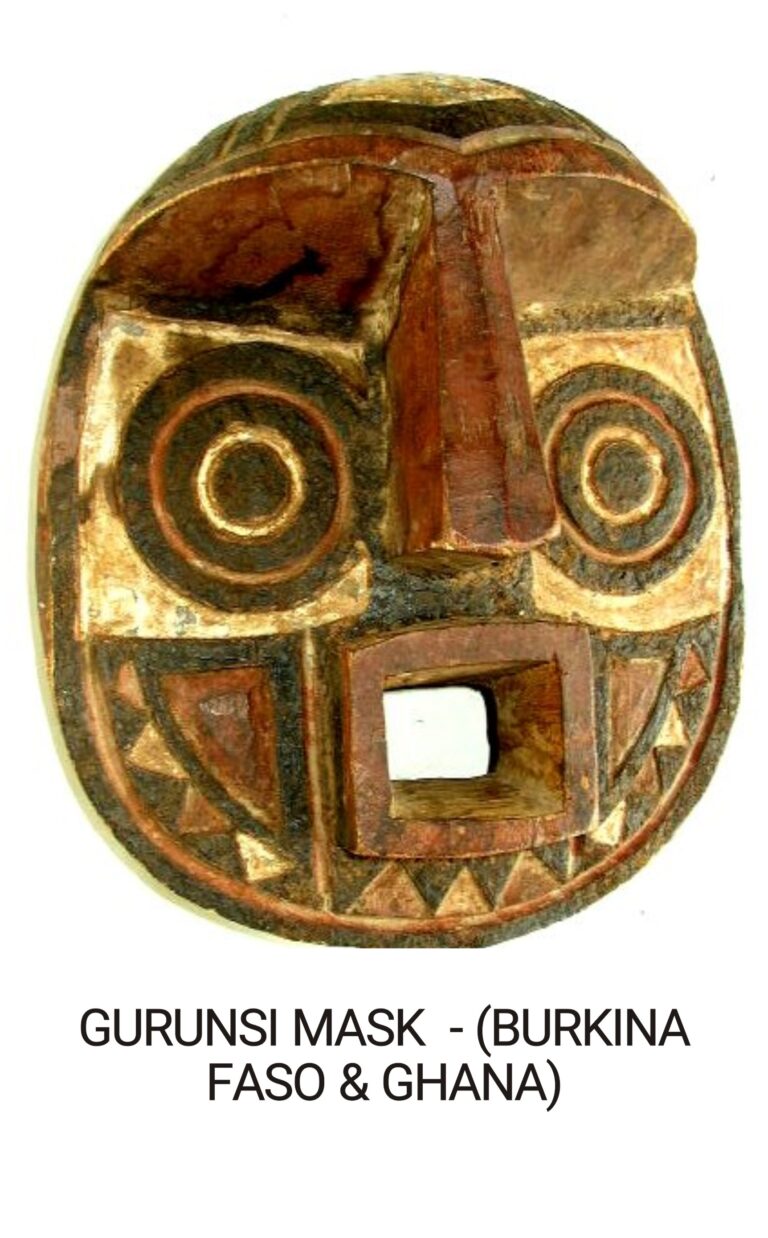
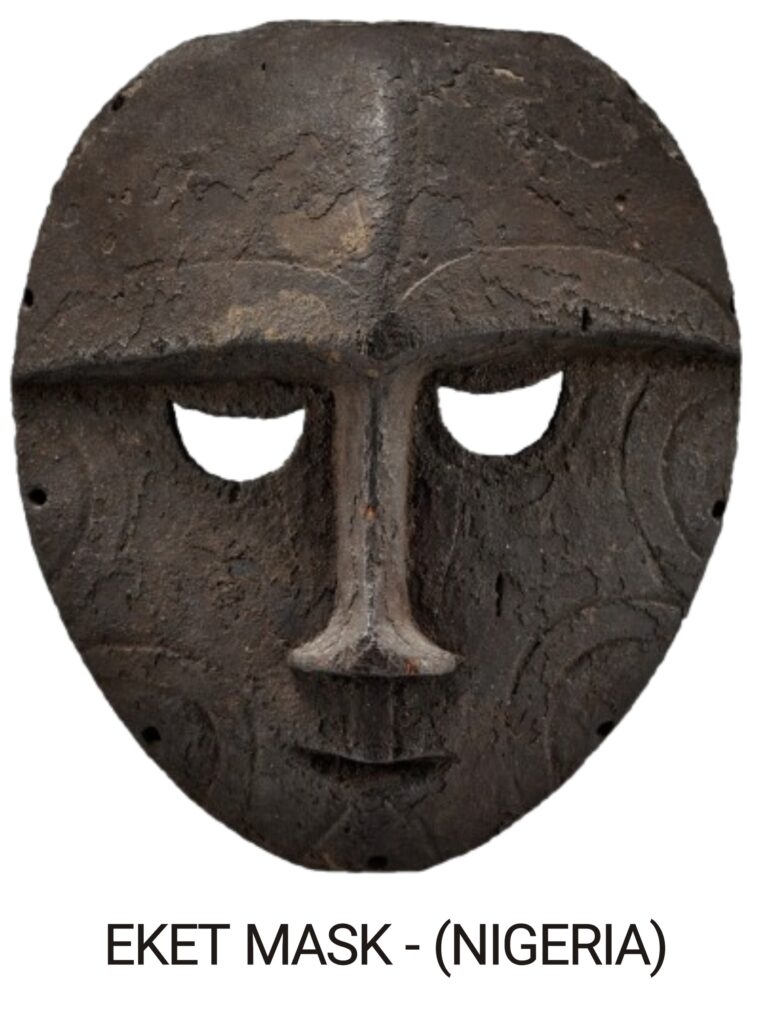
3. The dancer frequently cannot see. Eye holes on many masks are pinholes or narrow slits, and on some there are none at all. Guides walk the performer. The tradition did not consider the dancer’s vision a design priority, because the point was not for him to see.
4. One of the great mask traditions is danced by women. The Mende Sowei helmet mask of Sierra Leone belongs to the Sande society, and women both own and perform it. It is the exception that undoes the standard claim that African masking is exclusively male.
5. A mask can be a financial statement. Kuba royal masks are covered in cowrie shells and imported glass beads. Cowrie was currency. The audience could read the wealth of the office directly off the object.
6. Some masks are enormous and carried by teams. The Igbo Ijele can stand over three metres, requires a team to manage, and is inscribed on the UNESCO Representative List of Intangible Cultural Heritage. Most Igbo people will see it perhaps twice in a lifetime.
7. Skin covered masks exist and they are unnerving. In the Cross River region, the Ejagham stretched fresh antelope hide over a carved wooden form and let it dry tight. The realism is the point.
8. White usually means the dead. Kaolin, the white clay called nzu in Igbo, marks separation from ordinary life across an enormous range of unrelated traditions. A whitened face is telling you which side of the boundary it stands on.
9. Satire is a major category. Yoruba Gelede is genuinely funny, and its superstructures comment on traders, rivals, motorcycles and anything else the carver wants to mock. Not everything sacred is solemn.
10. Masks did the work of courts and police. Ekpo among the Ibibio and Ekpe in the Cross River enforced judgments. A society without a written legal code built a visible enforcer out of wood and fibre, and it worked.
Facts about the history that rarely get stated plainly
11. The word fetish is Portuguese, not African. From feitico, meaning a charm or made thing. It described what fifteenth century Portuguese traders thought, not what the objects were.
12. The sculptural tradition is at least two thousand years old. The Nok culture of central Nigeria was producing fired terracotta heads well before the common era.
13. Brass casting in Benin required a state. Lost wax casting needs a guild, a furnace, patronage and a metal supply. Cast brass in West Africa almost always signals a court behind it.
14. The most famous Benin mask is not bronze. The Queen Idia pendant masks are ivory, and they are hip ornaments worn at the waist, not face masks.
15. 1897 emptied a kingdom. The British punitive expedition to Benin City removed thousands of objects, many sold to defray the cost of the expedition.
16. Returns have actually happened. Jesus College Cambridge and the University of Aberdeen returned Benin objects in 2021. The Horniman Museum transferred seventy two in 2022, the Smithsonian twenty nine, and Germany signed agreements transferring ownership of well over a thousand.
17. Masks were burned by the thousand. Missionary campaigns across Igboland, Yorubaland and the Niger Delta required converts to surrender family objects, and public bonfires were organised and photographed.
Facts about reading an actual object
18. The bite bar is the best evidence. Many face masks were held partly by a wooden bar gripped in the teeth. A bar worn smooth, with the interior darkened by sweat, is very hard to fake and very easy to check.
19. Adze facets survive under the finish. A carver working with an adze leaves a faceted surface. Machine sanding does not. Raking light across the surface will show you which you have.
20. Most masks in Western homes never danced. They are twentieth century market carvings, some skilful, some not. That is not a scandal, but it does mean the anxiety many owners feel about them is misplaced.
What to do with all this
Facts about African masks are only worth collecting if they change what you do next. If you own something, the practical route is our decoding guide for owners and collectors and our guide to identifying African masks. If you want the map of who made what and where, start with African masks by region and tribe.
We film these traditions one people at a time on the SEVICS Africa channel on YouTube, because the recycled eight sentences are what fills the gap when nobody does the work.
If you run a school, museum or cultural programme and want this record built properly, our corporate support page explains how.
Do you own a mask like this?
Not sure what it is, where it comes from, or whether it was ever danced? Start with our free Mask Identifier.
If you want the full story, I offer an in depth reading of your mask. Readings start at around sixty dollars, and every one is quoted before anything begins.