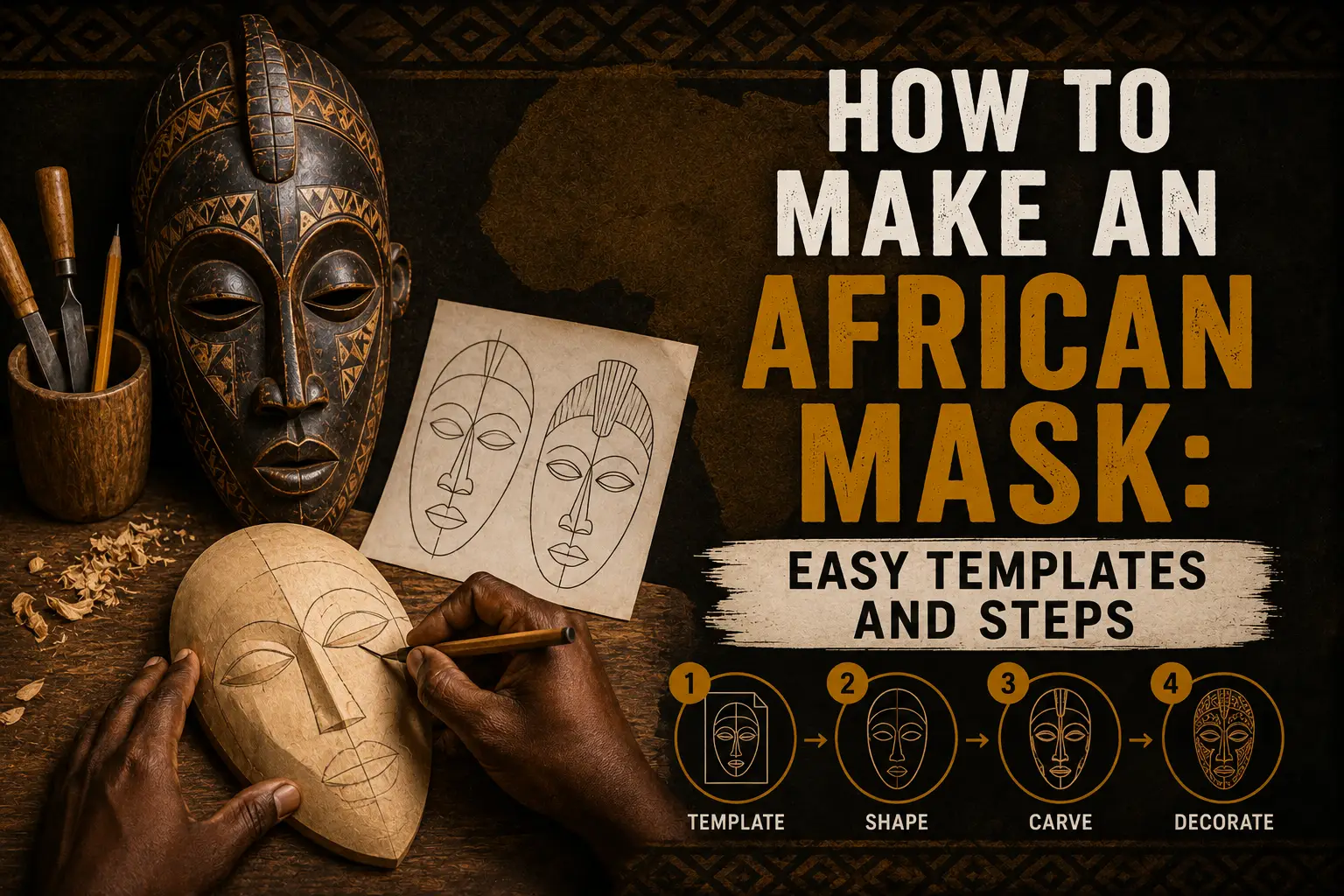
How to Make an African Mask: Easy Templates and Steps
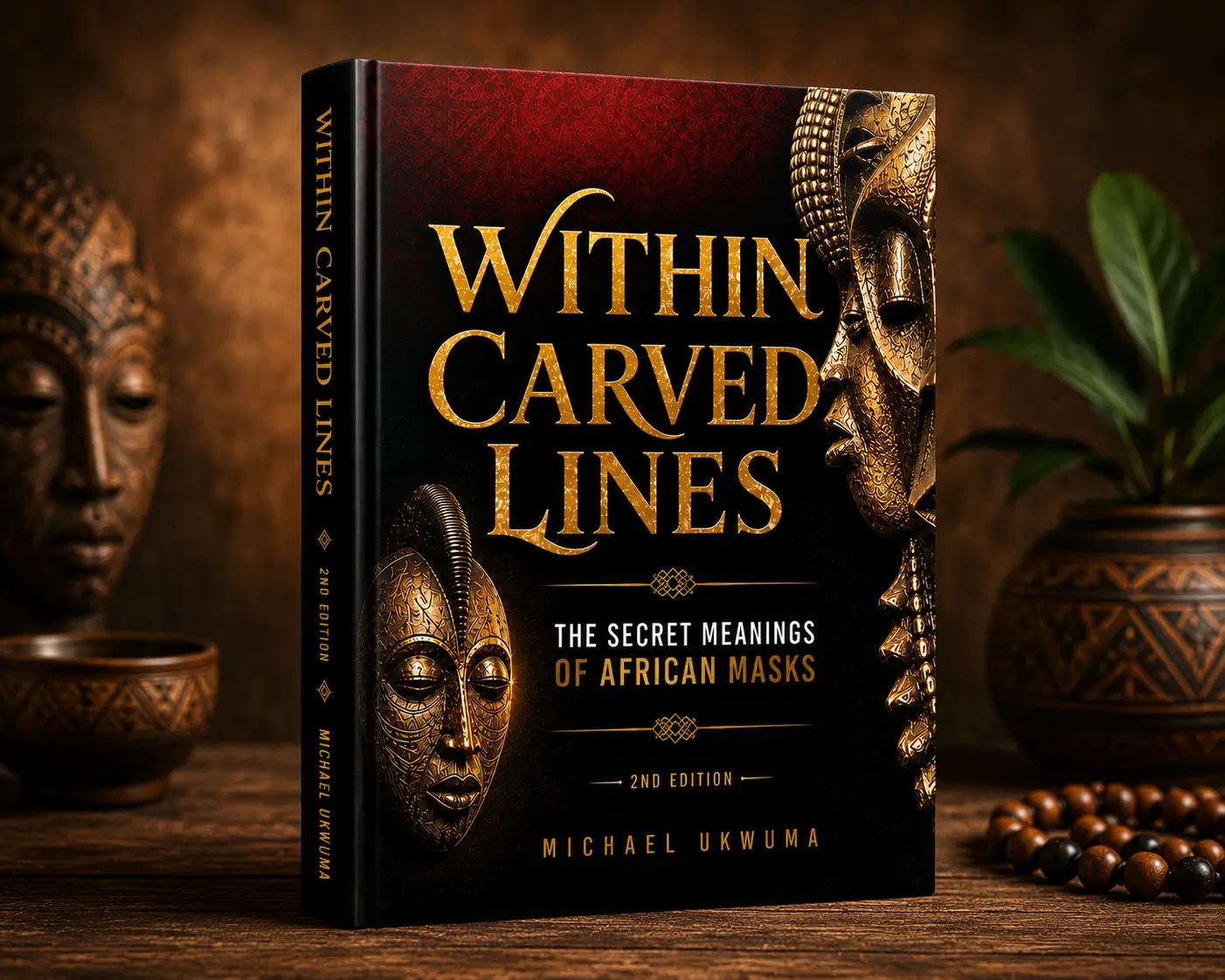
New: the 2nd edition of Within Carved Lines: The Secret Meanings of African Masks is out now. Get the book →
African masks make a genuinely good school project. Bold shapes. Real symmetry. Room for a kid to make it their own. Done right, it is also a small chance to teach real culture instead of a costume idea borrowed from nowhere in particular.
Watch on the SEVICS Africa channel: African Mask Making: History, Meaning and Secrets of Tradition
How to Draw an African Mask Step by Step
Start with the basic face shape. Most traditional masks are built on an oval, an elongated oval, or a heart shape. Draw this first as your outline. Add a centered vertical line as a light guide, so the features you add next stay even on both sides. Place the eyes as simple shapes, ovals, slits, or triangles, spaced evenly on either side of the center line. Add a nose and mouth, keeping them geometric and simple rather than realistic, since traditional masks favor bold, stylized features over lifelike detail. Add surface pattern next. This is where the creativity happens: parallel lines, dots, triangles, or grooves that look carved, radiating out from the features. Finish with a crest or headpiece on top, if you want to reference the animal crest style seen in some West African traditions. Our animal mask guide has real examples, including the bird crest.
For younger kids, simplify further. An oval, two eye shapes, a nose, a mouth, and a pattern of dots or lines is already a complete, respectable version of the exercise.
Templates and Outlines You Can Print
If drawing freehand feels like too much for the age group you are working with, a printed outline, a pre drawn face shape with placeholder guides for eyes, nose, and mouth, lets kids focus on coloring and pattern instead of getting the proportions right. Use the step by step shapes above to sketch your own outline in a few minutes, thick black lines and big simple shapes photocopy and print cleanly, and the same template can be reused across a whole classroom.
How to Make an African Mask With Cardboard
Cut a base mask shape out of sturdy cardboard. A cereal box works, though thicker cardboard holds up better under real handling. Cut or poke eye holes if the mask will be worn, positioned to match the wearer’s eyes. Paint the base color first and let it dry fully before adding detail. Add pattern with paint, markers, or cut paper shapes glued on. Punch a hole on each side and thread string or elastic through if the mask needs to be worn.
Cardboard survives a classroom of kids far better than paper alone, which is why it is the safer default choice.
Paper Plate and Paper Mache Versions
For younger kids, or a quicker project, cut eye holes into a sturdy paper plate, paint or color the surface, and glue on paper or fabric scraps for texture. Raffia style paper strips or yarn along the edges add dimension fast.
For a longer, multi day project, build a mask shape over a balloon or simple mold using paper mache strips, let it dry fully between layers, then paint once it has hardened all the way through. It takes longer, but the result holds up in three dimensions in a way paper and cardboard alone cannot.
Project Ideas for the Classroom
Pair the craft with a short lesson on one specific tradition, real photos of Dan masks or Yoruba Gelede masks work well, rather than presenting African mask as one generic style. Our guide to mask meaning and history is a good source for age appropriate background. Have students research and label which region or people their design draws inspiration from, turning the craft into a small research project on its own. Display the finished pieces as a classroom gallery wall, grouped by the region or tradition each one was inspired by.
One thing worth passing on to any teacher or parent using this project. Framing it as let us learn about a specific mask tradition and make our own inspired piece lands very differently, and more respectfully, than let us make a tribal mask, even though the craft itself is nearly identical either way.
Frequently Asked Questions
What materials do you need to make an African mask?
For a basic version, cardstock or cardboard, paint or markers, scissors, glue, and string or elastic if it needs to be worn. Raffia, yarn, or beads add texture if you want to go further.
What is the easiest African mask to draw?
A simple symmetrical outline, an oval face with basic geometric eyes, nose, and mouth, plus a repeating pattern of lines or dots, is the most beginner friendly version and still captures the visual spirit of the style.
See also: African Mask Meaning, Symbolism and History and Animal Themed African Masks
Go deeper into the stories behind the masks you just read about. Within Carved Lines uncovers the history, symbolism, and ritual meaning of Africa’s traditional masks — now fully revised in its second edition.
Get Your Copy