Igbo Masquerade Meaning: Why Mmanwu Is a Spirit, Not a Costume
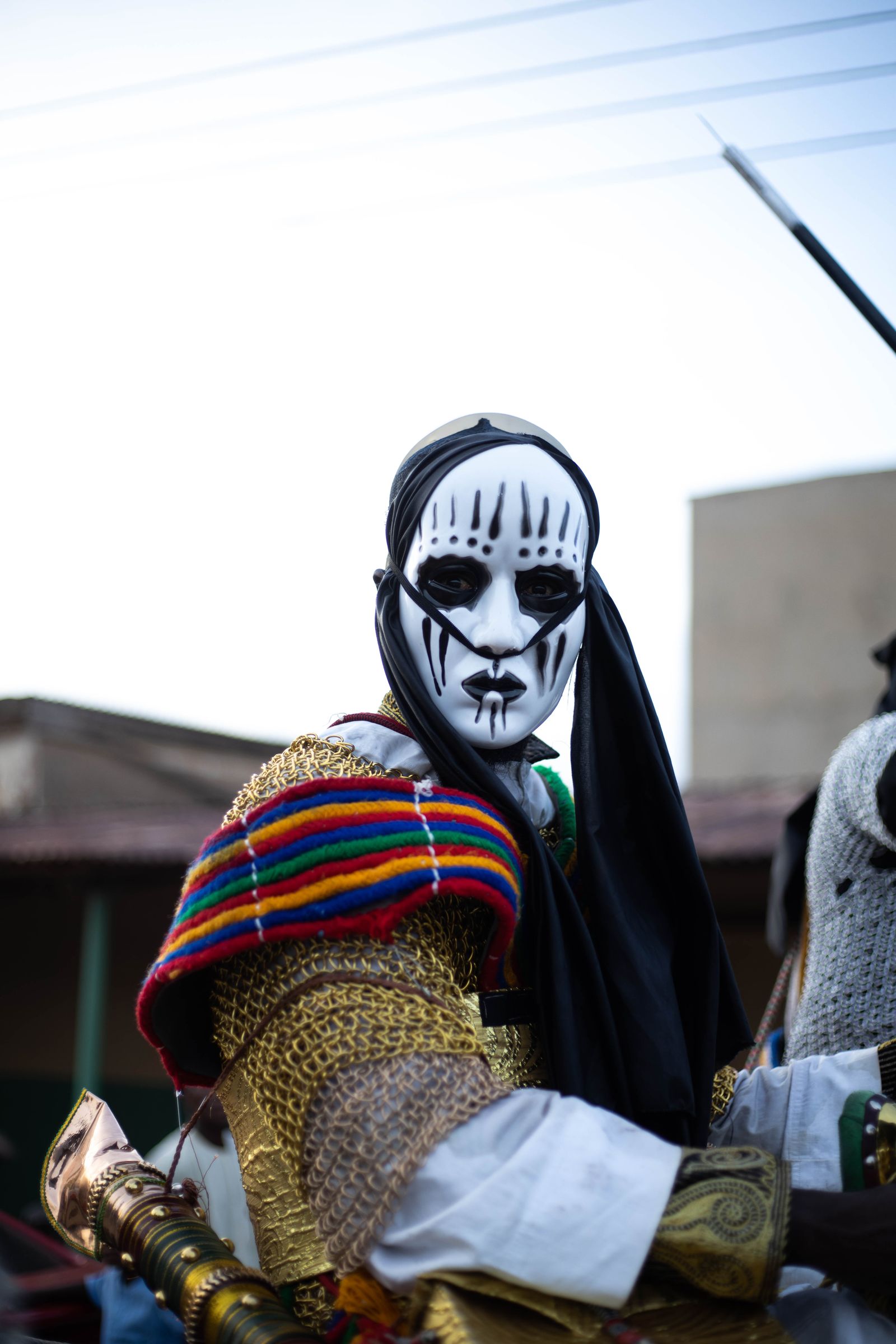
If you want to understand Igbo masquerade meaning, start by dropping one word. The word is costume. A costume is something a person wears to become someone else for an evening. An Igbo masquerade is something else entirely. It is a spirit that has come into the village, and the cloth, the painted face and the raffia are the form it takes so the living can stand near it.
Ask a child in an Igbo community where the masquerade comes from and you may hear that it comes from the ancestors, or from the land of the dead, or from the bush. You will rarely hear that it comes from a man’s house. That answer is the whole point. The culture has agreed, over centuries, that what walks into the arena is mmanwu. The word itself means spirit. When you remember that, the rules begin to make sense.
Mmanwu is a spirit, not a costumeIGBO MASQUERADE
What Mmanwu Actually Means
Mmanwu is the Igbo word for masquerade, and it carries the sense of a spirit made visible. Within Odinani, the traditional Igbo way of understanding the world, the dead do not leave. They move to another place and keep an interest in the living. The masquerade is one of the ways they return. It arrives at festivals, at the funerals of important people, at harvest time and at moments when a community needs to be reminded of what it owes its ancestors.
This is why the performance is never casual. A masquerade does not entertain the way a concert does. It judges, blesses, warns and sometimes corrects. A village that has behaved badly may be rebuked by a spirit that cannot be answered back. A village that has done well may be honoured with a dance that everyone remembers.
Who May See What, and Why the Secrecy Matters
Not everyone stands in the same place when a masquerade appears. In most communities, membership of the masquerade society is for initiated men. Women and uninitiated boys watch from a distance and are not meant to know who is under the cloth. Many outsiders read this as exclusion. Inside the culture it is protection. The mystery is what keeps the spirit a spirit. Once a person starts saying ‘that is so and so’, the performance loses its power for everyone.
I should say plainly that practice differs from town to town. What is allowed in one community is forbidden in the next. Some masquerades may be approached. Some carry whips or canes and must be given a wide path. Some appear only at night. When you meet one, the safest rule is the one every Igbo child learns early. Keep your distance, stay quiet, and follow the lead of the people who live there.
Three Masquerades, Three Meanings
Agbogho Mmuo, the Maiden Spirit
Agbogho Mmuo means maiden spirit. In northern Igbo communities she appears with a pale face, a fine coiffure and graceful steps, and she honours the ideal young woman. The detail that surprises outsiders is that the dancers are men. That is not a joke or a disguise. The performer gives his body to the spirit, and the spirit dances the beauty it remembers.
Ijele, the Giant
Ijele is the largest and most prestigious of the Igbo masquerades, associated especially with Anambra. It is a towering structure of cloth and ornament carried by one strong performer, and it comes out on important occasions, such as the funeral of a person of high rank. When it moves, the crowd moves with it. Nobody mistakes it for a costume.
Mgbedike and Okoroshi, Strength and Water
Some masquerades are about force. Mgbedike speaks to strength and courage, while Okoroshi is linked with water spirits in parts of Igbo land. Different faces, different duties. That is the lesson. Mmanwu is not one thing. It is a whole language of spirits, and each one has its own job.
Why an Igbo Masquerade Is Not Performed for Tourists
More and more masquerades now appear on social media, in festivals and in videos. Some of that is healthy. It keeps young people connected. But a masquerade filmed for views is not the same as a masquerade working for a village. The first can be enjoyed. The second must be respected. If you are visiting, ask who invited you and what the day is for. Do not ask who is inside.
The carved wooden masks you see in museums and shops sit in a related but different category. Many Igbo masquerades use cloth, raffia and painted faces rather than the carved helmets people associate with other cultures. So when someone says ‘African mask’, ask which people, which spirit and which purpose. Without those three answers, you do not yet have a meaning.
How to Read Igbo Masquerade Meaning for Yourself
When you see a masquerade, ask four plain questions. What is it called? What occasion brought it out? What does it carry or wear that others do not? Who among the elders speaks for it? The answers will tell you more than any guidebook. They will also show you how much depends on place and lineage.
If you want to go deeper, our Mask Database records masks and the cultures behind them, and our cultures section shows who made what and why. If you own an object and need help understanding it, try the mask identifier.
The Spirit Is Not the Man
Here is what I want you to take from this. When an Igbo elder tells you the masquerade is not a person, he is not asking you to believe something silly. He is describing a social agreement that has held communities together. Because the spirit is not the man, the man can be corrected by it, humbled by it and trusted with it. Take that away and you do not have a more honest tradition. You have a smaller one.
We cover these living traditions on the video side too. Watch the masquerade films on the SEVICS Africa YouTube channel, and explore the wider story in our African Heritage section.