Tribal Marks in Nigeria: What the Lines on a Face Were Saying
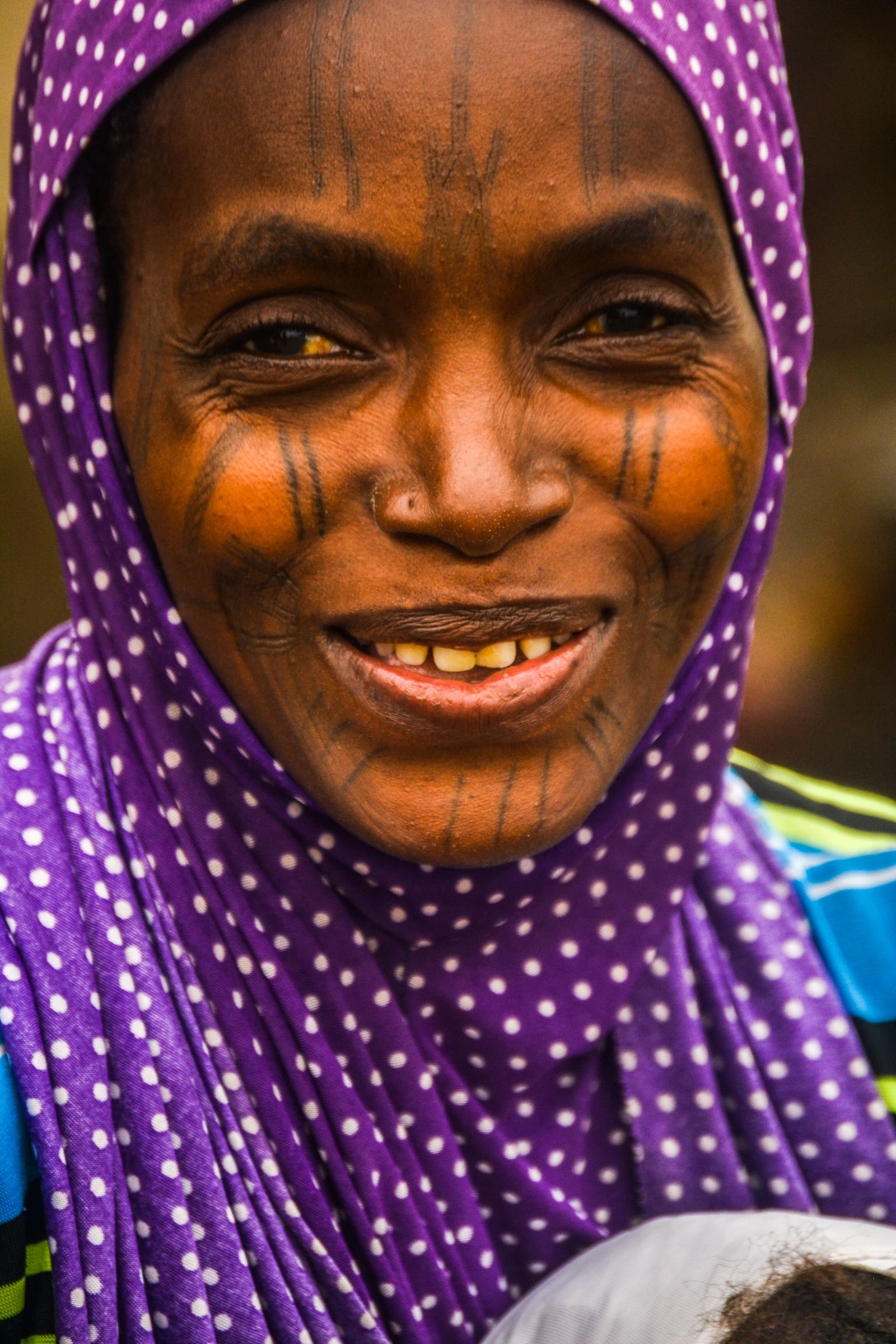
Picture an old woman in Ibadan with three short lines on each cheek. Children stare at them. Nobody explains them. They are simply part of her face, the way her laugh is part of her voice.
Those lines are a sentence. They tell anyone who can read them where she comes from and whose daughter she is. That is the heart of tribal marks in Nigeria. They were never decoration alone. They were a language written on skin.
So what did the different marks mean? Who wore them? And why do you see them mostly on older faces today?
Let’s dig in. Shall we?
What tribal marks in Nigeria actually are
Tribal marks are deliberate cuts made on the face or body, usually in childhood, and allowed to heal into visible lines. The Yoruba call them ila. Among the Igbo, the facial marks of titled men in the Nri area were called ichi. Hausa speakers often use the phrase zanen fuska, which simply means face marking.
The word “tribal” is the English label. Inside the cultures themselves the marks were tied to lineage, town, title and sometimes to a specific family story. Two Yoruba children from different towns could carry very different patterns. A trained eye could tell them apart at a glance.
The Yoruba ila: a family name you could see
No group in Nigeria is more closely linked with facial marks than the Yoruba. The variety is wide, and each pattern has a name.
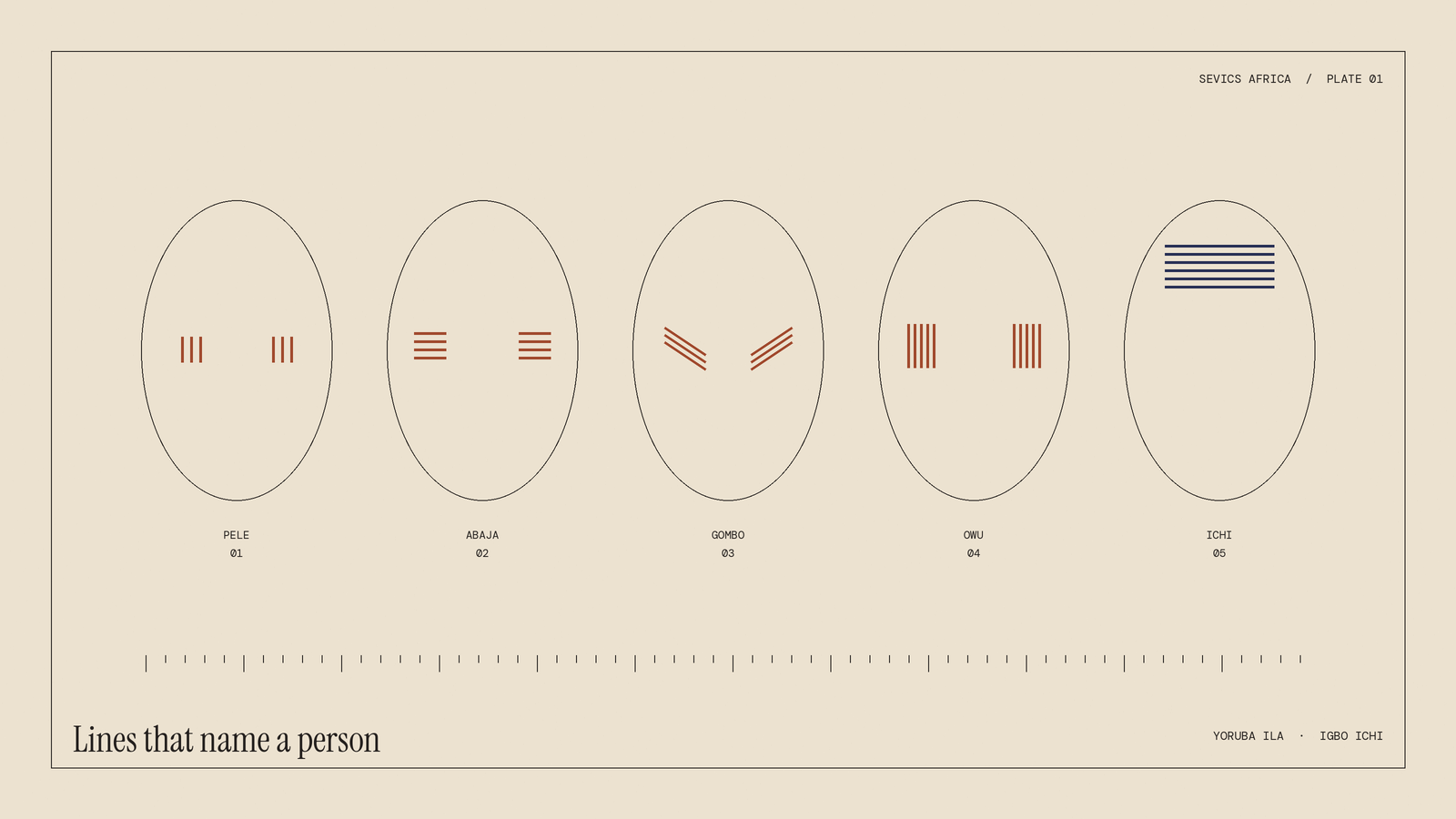
Pele is the simplest. Three short vertical or horizontal lines on each cheek. It was common in Ife and among many Oyo families.
Abaja comes as sets of lines, often three or four horizontal strokes stacked on each cheek, sometimes with vertical lines above them. Abaja was strongly associated with Oyo lineages.
Gombo, also called Keke, combines straight and curved lines that run toward the corners of the mouth. It is one of the most recognisable Ogbomoso patterns.
Owu marks are linked to the Owu people, now centred around Abeokuta.
These patterns told a stranger which town you belonged to and which family claimed you. In a time before identity cards, that mattered. It mattered at markets, at weddings, and when someone was lost far from home.
If you want the full story of the Yoruba patterns, read our longer piece on Yoruba scarification and the ila lines that named a person.
Igbo ichi: marks you had to earn
Igbo practice was different. Most Igbo people did not carry lineage marks on their faces. Ichi belonged mainly to men of the Nri and Awka area who took high titles, especially the Ozo title. The marks were fine lines cut across the forehead and temples. To an observer they could look like a carved texture on the face.
This matters because it shows that tribal marks in Nigeria were not one practice. For the Yoruba, a mark often came with birth into a family. For ichi bearers, the mark came with achievement and spiritual responsibility. It said that this man had been initiated into a level of authority, and that he carried obligations to the land.
The same lines appear on old Igbo Ukwu bronze figures and on many Igbo masks. You can read more in our post on ichi scarification among the Igbo.
Northern Nigeria: Hausa, Kanuri and others
In the north, facial marks were also widespread. Hausa families in different emirates had their own patterns. Some were long thin lines running from the temple toward the jaw. Others were short marks near the eyes or mouth. Kanuri people in the Borno region were known for multiple fine lines across the cheeks and forehead.
Here too the marks helped identify town and lineage. They also carried ideas about beauty. A well cut set of lines on a young woman’s face was admired. A clumsy cut was a lifelong embarrassment for the family that paid for it.
I am careful here, because northern patterns varied from town to town and family to family. If your family carries marks from the north, the best source is still the oldest person in your family who can tell you what they mean.
Why families cut the marks
People give many reasons, and more than one could be true for the same child.
Identity and belonging. The mark told the world whose child this was. In a large market town, it could help return a lost child to the right compound.
Protection. Some families believed that marks protected a child from spirits. A child thought to be abiku, a spirit child who keeps dying and returning, might be marked so the spirit companions would not recognise it and call it back.
Healing. Small cuts called gbere among the Yoruba were used to rub medicine into the body. These are different from lineage marks, but people often confuse them.
Beauty. Many communities considered certain marks attractive. Songs and praise poems mention them.
History of war and raids. You will often hear that marks helped families recognise their own people during the era of slave raids and civil wars. This is a widely held explanation. It is hard to prove for every pattern, but it is part of how many families remember the practice.
Why the practice is fading
Walk through Lagos or Ibadan today and you will see marks mostly on older people. Several things changed.
Schools and cities mixed people from many backgrounds. A mark that once brought belonging could now attract jokes and discrimination. Many people with marks have spoken about being teased in school or judged at job interviews.
Christianity and Islam both discouraged some of the spiritual reasons behind the marks.
The law changed too. Nigeria’s Child’s Rights Act of 2003 prohibits tattooing or making skin marks on a child. Not every state has enforced it in the same way, but the direction is clear.
And yet, many people who carry marks today wear them with quiet pride. Some artists and models have made them visible again. The lines that once embarrassed a schoolchild are now, for some, a link to grandparents they loved.
How to talk about tribal marks respectfully
If you meet someone with facial marks, here are a few simple rules.
Do not touch. It is a face, not an exhibit.
Ask with curiosity, not pity. “What do your marks mean?” is fine. “Did it hurt?” as an opening line is not.
Do not assume the person chose them. Most received them as children.
Do not assume they regret them either. Let them tell you.
What the lines are still saying
Many of the people who carry these marks are now old. When they are gone, the meaning of their lines can go with them, because so few families ever wrote it down.
That is why we document these traditions. Not to bring the knife back. To make sure the meaning does not die with the last people who carry it.
If you teach, or you simply want to learn more, explore our Education section and our wider guide to the history of scarification in Africa. We also talk about body marking traditions on the SEVICS Africa YouTube channel. And if your family carries marks with a story, tell us through our contact page. We would love to hear it.