Idoma Masks: The Water Spirit Who Answers a Woman’s Prayer for a Child
Among the Idoma, roughly 550,000 people living where the Benue and Niger rivers meet, the return of the dead is not a metaphor for memory. It is the central, organizing claim of the entire religious system, the belief from which nearly everything else, which societies exist, what their masks are for, who is allowed to own one, ultimately follows. The resurrection of the ancestor is described plainly as playing a vital social function, and the masks discussed in this piece exist because that resurrection needs a visible, physical form to take when it happens in public.
That claim, the dead genuinely coming back rather than simply being remembered, is the throughline worth carrying through everything below. It explains why Idoma masks are tied so closely to justice and genealogy, and it explains why one particular spirit, invoked specifically to help a woman conceive, sits at the emotional center of a tradition otherwise organized around ancestors and the dead.
Who Are the Idoma?
Living at the confluence of the Benue and Niger rivers, the Idoma are predominantly farmers and traders, growing yams, millet, and sorghum, crops placed at the very heart of their festival calendar. As farmers with a long market tradition, the Idoma occupy a region of neighboring ethnic groups who have intermarried extensively with one another over generations. The Idoma believe in a creator god, but day-to-day religious authority is distributed across several distinct societies, each entrusted with a different cult and a different responsibility within the wider system.
Three Societies, Three Jobs
That distribution of religious labor is worth spelling out, because it shapes everything downstream. The alekwu society is responsible for the cult of the periodic resurrection of the ancestor, the central religious claim already described above. The secret society of the aiuta is charged with maintaining order, its membership drawn from village chiefs and dance groups who remain, notably, under the ongoing control of the community’s elders rather than operating independently. The oglinye society groups together the royal lineage specifically, and it is oglinye’s members who hold the right to own the masks, a detail that ties mask ownership directly to lineage and rank rather than opening it to the wider community.
Anjenu: The Spirit Invoked for Fertility
Alongside ancestor resurrection, the Idoma maintain a cult devoted to Anjenu, the spirit of nature, celebrated through figures kept in dedicated shrines. Anjenu is a protective spirit understood to live in the water or the forest, capable of appearing to people in dreams, and generally benevolent: favoring commercial transactions, helping to cure illness, and, above all, aiding female fertility. Men specifically invoked Anjenu when they wanted their wives to become pregnant, a use that gives this particular spirit a warmth and intimacy distinct from the more formal, justice-oriented register of the ancestor cult described elsewhere in this piece. Figures associated with Anjenu carry protruding conical breasts and navels, faces usually painted with white pigment, a stylistic characteristic the Idoma share with their Igbo neighbors, and seated statues holding one or several children are believed to incarnate fertility directly, a theme recurring widely across this region.
Masks Built for Mortuary Justice
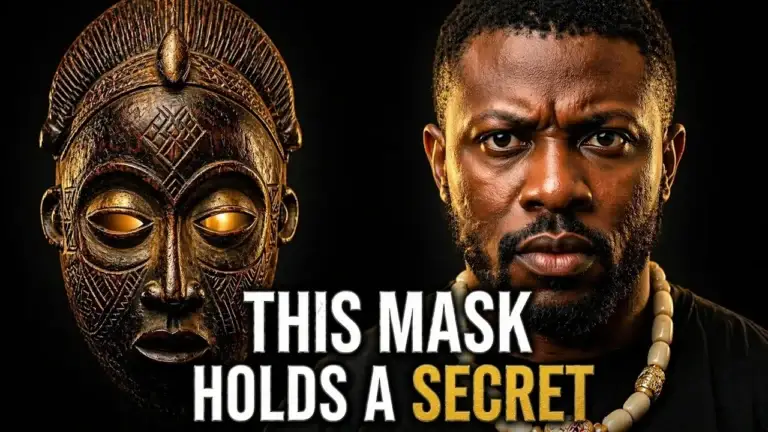
The Idoma also make face and helmet masks, and the bush spirit Anjenu, in this water-and-forest-dwelling form, is honored during ceremonies involving mortuary masks with white faces, silted eyes, and teeth impregnated with kaolin. Beyond the fertility-focused figures already described, Idoma masks take various forms all connected, whether in this world or the next, to the exercise of justice. The manifestation of masked ancestors signals their presence returning into the world of the living, and that return is described as the key underlying element of Idoma religious thought as a whole. Sitting at the very heart of the society, the ancestors serve as special mediators between the Idoma and the surrounding supernatural forces, and their appearance provides the occasion for the public recitation of genealogies and history, incarnating the collective memory of the Idoma people rather than the memory of any one household. Face masks specifically are worn by dancers during funerals, marked by distinctive scarification patterns, an open mouth, and a smooth coiffure.
Why the Dead Return
Read together, the alekwu resurrection cult, the aiuta enforcement of order, and the oglinye lineage’s exclusive right to own masks describe a single coherent system rather than three separate customs loosely grouped together. The dead return because the community needs them to: to settle disputes through the exercise of justice, to validate a lineage’s claim to history through public genealogical recitation, and, in Anjenu’s gentler register, to answer a private prayer for a child. Idoma masking, in other words, spans the full distance between the most public form of communal memory and the most private form of personal hope, held together by the same underlying conviction that the dead have not actually left.
Frequently Asked Questions
What is the alekwu society responsible for?
Alekwu oversees the cult of the periodic resurrection of the ancestor, the central religious belief underlying nearly all of Idoma masking and social life.
Who is allowed to own an Idoma mask?
The oglinye society, which groups together the royal lineage, holds the right to own the masks, tying mask ownership directly to rank and lineage rather than to the wider community.
Who is Anjenu?
Anjenu is a benevolent nature spirit living in water or the forest, who favors commercial transactions, helps cure illness, and above all aids female fertility. Men invoked Anjenu specifically when hoping for their wives to conceive.
What do Idoma mortuary masks look like?
They typically have white faces, silted eyes, and teeth impregnated with kaolin, worn by dancers during funerals and marked by distinctive scarification, an open mouth, and a smooth coiffure.
See also: African Masks by Region and Tribe · Igbo Masks: Thousands of White Spirits, and the Maiden Who Fights Ugliness With Beauty · African Coming-of-Age Ceremonies: How Different Cultures Mark the Transition to Adulthood · Every Traditional African Mask You Should Know