
Kwanzaa Principles: The Seven Values and Their African Roots
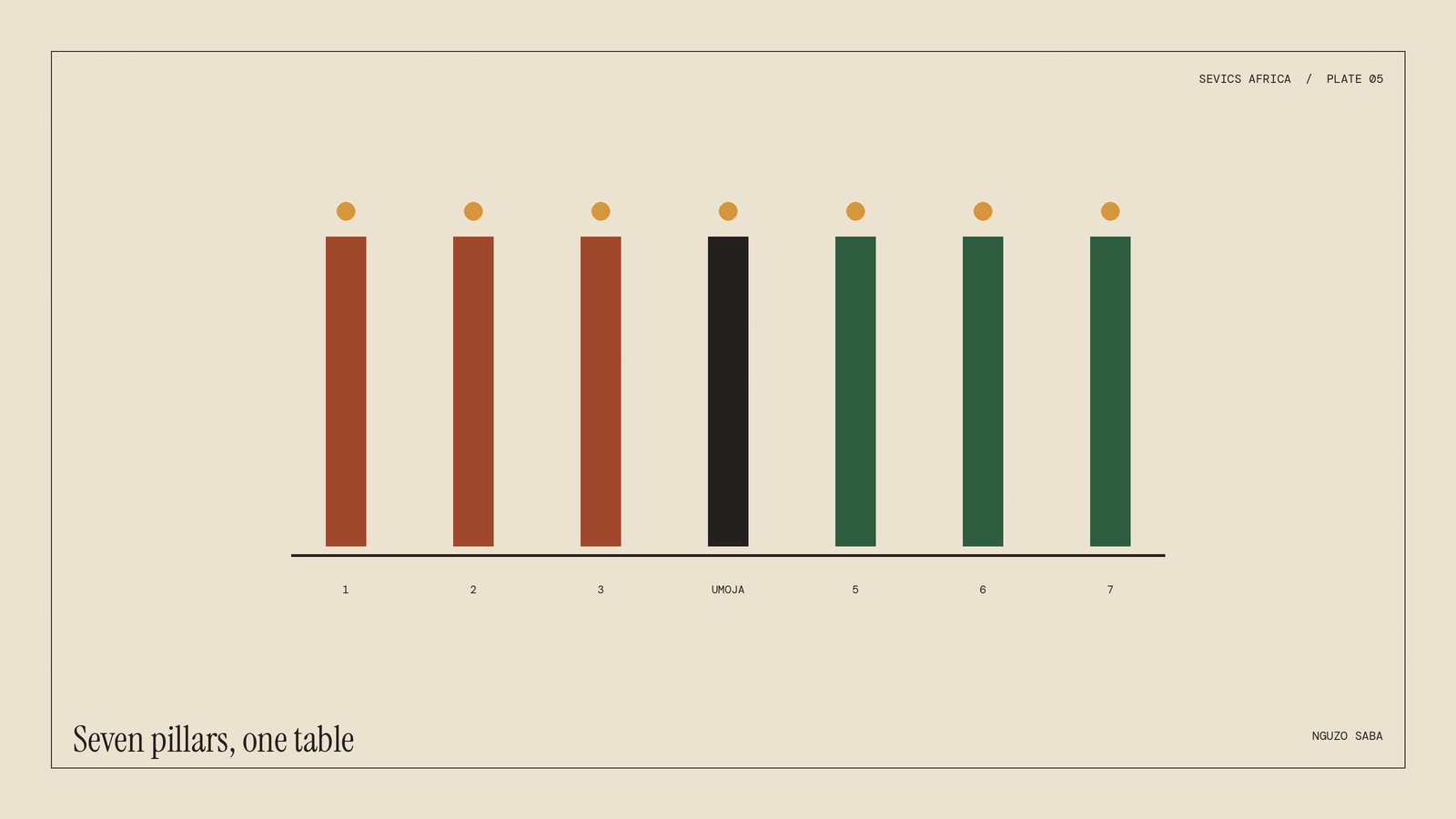
Every December, families across the United States and the wider diaspora light a candle holder with seven candles. Three red. One black. Three green. Each night, a new candle. Each candle, a new principle.
Many people know Kwanzaa as a holiday. Fewer know what the Kwanzaa principles actually say, or where they come from. Some people dismiss it as invented. Others treat it as ancient. The truth sits between the two, and it is more interesting than either.
So what are the seven principles? What do they mean? And what do they owe to the continent?
Let’s dig in. Shall we?
Where Kwanzaa came from
Kwanzaa was created in 1966 by Maulana Karenga, a scholar and activist in the United States. It runs for seven days, from December 26 to January 1.
Karenga wanted African Americans to have a celebration rooted in African values rather than borrowed from elsewhere. He did not copy one single African festival. Instead, he drew on the shape of harvest celebrations found across the continent and gave them a modern form.
The name comes from the Swahili phrase matunda ya kwanza, meaning “first fruits.” Swahili was chosen because it is spoken across a wide area of East and Central Africa, and in the 1960s it carried a strong Pan African meaning.
So Kwanzaa is new. But the ideas inside it are old.
The seven Kwanzaa principles
The seven principles are called the Nguzo Saba, Swahili for “seven pillars.” One is honoured on each day.
1. Umoja (Unity)
Unity in the family, the community, the nation and the race, held together on purpose.
This is the first candle, and it is the black one in the centre. Unity comes first because nothing else holds without it.
2. Kujichagulia (Self Determination)
The right to define ourselves, name ourselves, create for ourselves and speak for ourselves.
This is the principle closest to the heart of our own work. Until the lion learns to write, the hunter will keep telling the story. Kujichagulia says that the lion must write.
3. Ujima (Collective Work and Responsibility)
Building the community together, and treating a neighbour’s problem as our own problem to solve.
4. Ujamaa (Cooperative Economics)
Owning and running shops and businesses together, and sharing what they earn.
The word ujamaa will be familiar to anyone who knows East African history. Julius Nyerere used it as the name of his political and economic philosophy in Tanzania. Whatever you think of how that policy turned out, the word carries the idea of family as an economic unit.
5. Nia (Purpose)
Making the building of the community a shared calling.
6. Kuumba (Creativity)
Leaving the community more beautiful and more useful than we found it.
7. Imani (Faith)
Belief in our people, our parents, our teachers and our leaders, and in the justice of the struggle.
The African roots behind the Kwanzaa principles
Here is where it gets interesting for anyone who cares about African heritage. None of these principles is foreign to African societies. Each one has a living echo on the continent.
First fruits festivals are everywhere. The Igbo celebrate Iri Ji, the New Yam Festival, where no one eats the new harvest until it has been offered and blessed. The Zulu have the Umkhosi Wokweshwama, the first fruits ceremony of the king. The Ashanti hold the Odwira, a festival of purification and renewal tied to the yam harvest. Kwanzaa borrows this shape. Gather. Give thanks. Remember the ancestors. Recommit to the community.
Collective work is the age grade. Ujima describes what Igbo age grades did for centuries. Men and women of the same age group built roads, cleared paths, settled disputes and supported members in trouble. We explain how in our post on the Igbo age grade system.
Unity is Ubuntu. “A person is a person through other people.” Umoja and Ubuntu say the same thing in different languages.
Self determination is naming. Across Africa, naming a child is a serious act. Names carry history, prayers and identity. Kujichagulia is that same act, done at the level of a people. Our post on African naming ceremonies shows how deep this goes.
The symbols
Kwanzaa also uses seven symbols placed on a table.
The mkeka, a mat, is the foundation. It stands for tradition and history.
The kinara holds the seven candles. It stands for the ancestors.
The mishumaa saba are the seven candles themselves.
The mazao are crops, fruits and vegetables. They stand for the harvest and the reward of collective work.
The muhindi are ears of corn, one for each child in the home.
The kikombe cha umoja is the unity cup, used to pour libation to the ancestors.
The zawadi are gifts, usually given to children, and ideally handmade or educational.
The unity cup deserves a moment. Pouring libation for the ancestors is one of the most widespread practices on the continent. Many Igbo families still pour palm wine or water and call on those who came before. Kwanzaa did not invent that. It carried it across the ocean.
Why this matters for teachers
If you teach, Kwanzaa is an easy entry point for students into African values and history. But teach it honestly. Say that it was created in 1966. Say that it is rooted in, but not copied from, African harvest festivals. Then use it to open the door to real African festivals, real languages and real peoples.
Do not let it become the only thing your students learn about Africa. Let it be the first thing.
A candle for each principle
On the last night, all seven candles burn together. Unity sits in the centre. Self determination, collective work, cooperative economics, purpose, creativity and faith stand around it.
Whether or not your family celebrates Kwanzaa, those principles are worth holding. They belong to a long African conversation about how a community survives.
For classroom ready material on African heritage, visit our Education section and our guide on how to teach African masks in schools. For festivals in motion, watch our New Yam Festival films on the SEVICS Africa YouTube channel.