Bulu Masks: Becoming the Gorilla to Fight Poison
New: the 2nd edition of Within Carved Lines: The Secret Meanings of African Masks is out now. Get the book →
Several protective rituals documented in this book ask an initiate to carry a symbol or wear a mask that represents a guarding spirit. The Bulu, who occupy the border region between Cameroon and Gabon and form part of the wider Fang group, asked for something more direct: through the ngi ritual against sorcery and poisoning, an accepted candidate came to identify with ngi itself, the gorilla, a genuinely fearful animal chosen specifically for the danger it represented. That identification, becoming the feared animal rather than merely invoking it, is the throughline worth carrying through this piece. It reframes the human-faced masks the Bulu are known for: objects tied not to a gentle protective spirit but to an association built around channeling real fear into a defense against a very concrete threat.

Who Are the Bulu?
The Bulu occupy the border region between Cameroon and Gabon and form part of the Fang group, living not far from the Kwele, with whom they share cultural similarities. That geographic and cultural proximity places the Bulu within a wider network of Central African forest peoples whose ritual and artistic traditions overlap and borrow from one another.
The Ngi Ritual: Becoming the Gorilla to Fight Poison
The Bulu practiced a ngi ritual specifically against sorcery, and in particular against poisonings, a concrete and immediate danger rather than an abstract spiritual threat. Ngi is the gorilla, chosen as a fearful animal, and the ritual’s candidate identifies with that animal once he has been accepted into the association built around it, taking on something of its feared power as protection.
Bulu Masks: Human Faces in Black and White
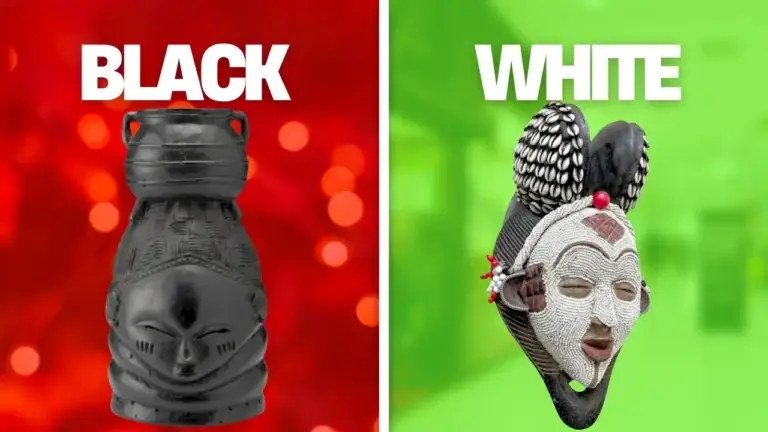
Most Bulu masks take the form of a human face, some carved with horns, and are built from geometrically formed human heads colored predominantly in white and black. The restraint of that palette, set against a ritual organized around one of the forest’s most feared animals, gives Bulu masks a visual directness that matches the practical urgency of the ngi ritual itself.
Frequently Asked Questions
Who are the Bulu related to?
The Bulu form part of the Fang group and live near the Kwele, with whom they share cultural similarities, in the border region between Cameroon and Gabon.
What is the ngi ritual?
Ngi is a Bulu ritual practiced against sorcery and poisoning specifically, named for the gorilla, a feared animal that an accepted candidate comes to identify with.
What do Bulu masks look like?
Most Bulu masks take the form of a human face, some with horns, built from geometrically formed heads colored mainly in white and black.
Why is the gorilla significant to the Bulu?
The gorilla, or ngi, was chosen as a fearful animal specifically for the ngi ritual against poisoning, and initiates identify with it after being accepted into the association.
See also: African Masks by Region and Tribe · Ekuk and Gon Masks of the Kwele: The Beete Ritual Against Witchcraft · Every Traditional African Mask You Should Know