Tuareg Ehel: The Carved Furniture That Marked You as Upper Class in the Sahara
New: the 2nd edition of Within Carved Lines: The Secret Meanings of African Masks is out now. Get the book →
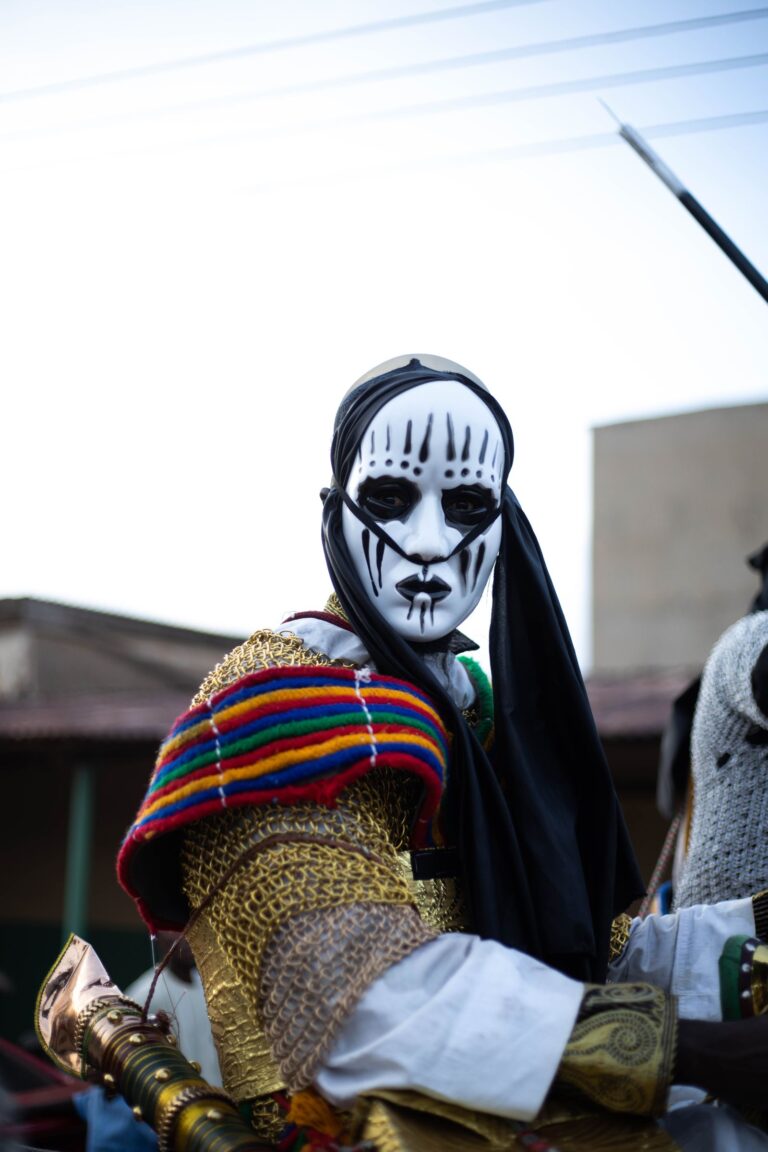
Several traditions documented in this book use a mask or a costume to mark status or identity. The Tuareg, a tribal people of the Sahara numbering more than 300,000 across Algeria, Tunisia, Mali, Libya, Burkina Faso, and Niger, marked status differently, through carved household furniture: elegant cushion supports called ehel, made exclusively by a hereditary blacksmith guild, were part of the basic furnishing found in any upper-class Tuareg tent and nowhere else. That marking, class distinction carved into furniture by a specific hereditary craft guild rather than displayed through a mask, is the throughline worth carrying through this piece. It sits next to another Tuareg inversion familiar to outsiders: among the Tuareg, it is men, not women, who wear the veil.

Who Are the Tuareg?
The Tuareg speak a Berber language, Tamashek, and have their own alphabet. In ancient times, the Tuareg controlled the trans-Saharan caravan routes, taxing the goods they helped convey and raiding neighboring tribes, until the French subdued their raiding during the colonial period. Tuareg society distinguishes among nobles, vassals, and serfs; slave-stealing expeditions have been abolished, but the black descendants of former slaves still perform menial tasks, and social status is determined through matrilineal descent. Converted by the Arabs to Islam, the Tuareg have retained some of their older rites, and many Tuareg starved during droughts in the 1970s, with others migrating to cities as the political division of Saharan Africa since the 1960s made pastoral life increasingly difficult to maintain.
The Veil Worn by Men, Not Women
Among the Tuareg, it is men, not women, who wear a headdress with a veil, an inversion of the gendered veiling more commonly associated with the wider Islamic world. The custom persists as one of the clearest visual markers of Tuareg identity across the several countries where Tuareg communities live.
Ehel: Carved Furniture as a Class Marker
After leather, wood is perhaps the most important material in Saharan daily life, used for the poles and beams of the nomads’ tents, from which are hung bags, saddles, bows, whips, bed frames, dishes, cups, milking bowls, spoons, mortars, and pestles. Among these objects, elegantly sculpted cushion supports called ehel stand out as important items in any well-appointed household. They were carved by members of the enaden, a guild of blacksmiths who have been instrumental in creating precisely the objects that have forever distinguished the upper classes of Tuareg society from its many vassal populations. Ehel form part of the basic furnishing found in any upper-class Tuareg’s tent, where they are used to pin the mat-woven walls against the exterior tent poles, turning a practical structural function into a visible marker of social rank.
Frequently Asked Questions
Who wears the veil among the Tuareg?
Men, not women, wear a headdress with a veil among the Tuareg, an inversion of more familiar gendered veiling customs.
What is an ehel?
An ehel is an elegantly sculpted cushion support, an important furnishing item found in any well-appointed upper-class Tuareg tent, used to pin the mat-woven walls against the exterior tent poles.
Who carved Tuareg ehel?
Ehel were carved by members of the enaden, a hereditary guild of blacksmiths responsible for many of the objects that distinguished the Tuareg upper classes from vassal populations.
How is social status determined among the Tuareg?
Tuareg society distinguishes among nobles, vassals, and serfs, and social status is determined through matrilineal descent.
See also: African Masks by Region and Tribe · Songhai Empire: The Largest Empire in African History You May Not Know · Kingdom of Mali: Sundiata Keita, the Golden Trade Routes, and a Lost Empire