How to Tell If an African Mask Is Authentic: A Practical Checklist
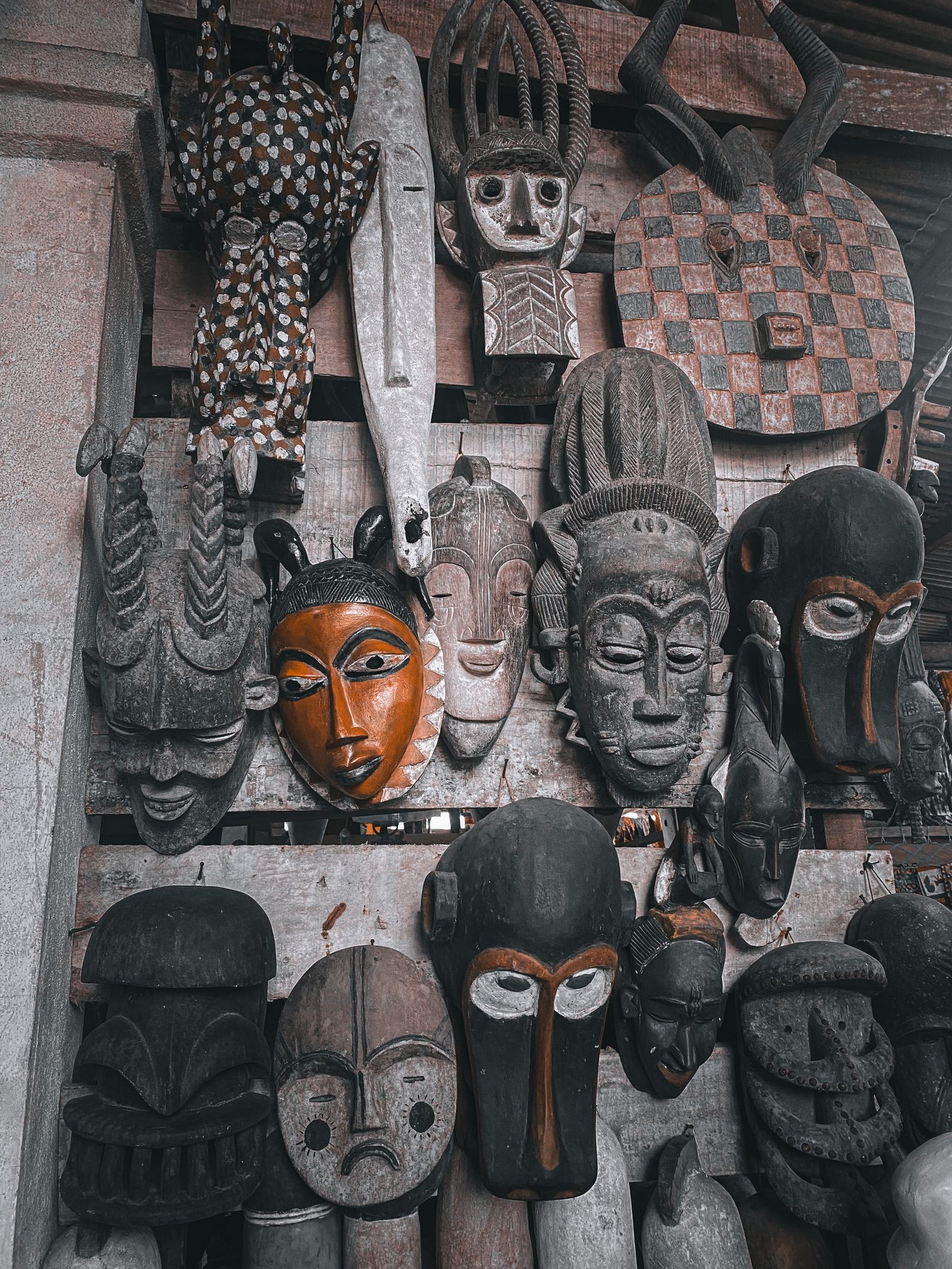
Picture a man holding a mask he bought for a good price. It is glossy. It is dark. It has a perfect face and came from a market stall near a tourist hotel. He has one question. ‘Is it real?’ He wants to know how to tell if an African mask is authentic.
That is the question everyone asks. If you want to know the answer, I have to start with an honest answer. There is no single test. No expert can look at one photo and give you certainty. But there are clear signs that point one way or the other, and you can learn to read them.
Let’s go through them. Slowly.
First, decide what you mean by authentic
People use the word to mean three different things. Be clear which one you want.
Made by the community, for the community
This is a mask carved by a trained carver and danced at a real ceremony. It has a job. It had a place in a masquerade, a funeral, an initiation or a harvest. Collectors often call this a used or ritual mask.
Made in a traditional style for sale
Carvers still make masks in the old forms for visitors, collectors and cultural groups. These masks can be well made and honest. They are not fakes. They are new work in an old tradition, and they should be sold as that.
Made to deceive
This is the real problem. A mask is aged artificially, given a false history and sold as old. That is a fake in the true sense.
Write down which kind of mask you are looking at. It changes how you judge everything else.
How to tell if an African mask is authentic at home
Look at the carving marks
Traditional carvers worked with an adze and knives. Look inside the mask, where nobody polishes. You should see small, slightly uneven cuts that follow the grain. Machine made marks look too regular. Sandpaper makes everything smooth in the same way. Real tool marks have personality.
Look at the inside edge and the mouth area
A mask that was worn has been touched by a human body. Check the inner rim and any bite bar for smoothness and dark staining from sweat and handling. The wear should be where a person would hold or rest the mask. If the wear is evenly spread, or only on the outside, be careful.
Look at the patina in the recesses
Patina is the layer that builds up over time from smoke, oil, dust and use. It collects in the deep parts of the carving. The raised parts show more rubbing. Fake patina is often brushed on evenly, and shoe polish is the classic shortcut. If the entire mask shines the same colour, ask why.
Look at the pigment and kaolin
Many masks carry white kaolin, red camwood powder or plant based colours. These sit on the surface unevenly and can flake. Bright, flat, paint shop colours are a warning sign. So is a mask that is too clean to have been danced.
Hold it and feel the weight
A dancer has to wear a mask for hours. Most carvers hollow the back so it is light. A very heavy mask, or one made from wood that looks too fresh, deserves a second look. Some types are meant to be heavy, so learn the style first.
Check for insect holes and cracks
Real age often shows small cracks and old insect tunnels. Fake ones may have neat drilled holes that look the same size and spacing. Nature does not drill in rows.
Signs you cannot judge from a photo
Do not trust anyone who gives you a verdict from one picture. Photos hide weight, smell, tool marks and the feel of the wood. They also hide the thing that matters most. A mask without a history is just a carving.
Provenance is the strongest evidence
Ask where the mask came from. Who collected it? When? From whom? Is there an old photo, a receipt, a museum label or a field note? Provenance does not prove authenticity by itself, because paperwork can be faked too. But a mask with a believable, documented history is in a different category from one that appeared yesterday with a good story.
Also ask a harder question. Should it have left its community at all? Some masks were taken without consent. If you own one, you carry that question too. We wrote about this in what it means to own an African mask outside Africa.
A simple checklist
- Tool marks inside look uneven and natural.
- Wear sits where a body would touch the mask.
- Patina is deeper in the recesses than on the high points.
- Pigment looks hand made and a little uneven.
- Weight and style match the community it claims to come from.
- You can trace a history, even a partial one.
If you tick most of these, you may have something worth studying. If you tick few, you may still have a well made modern piece. Just call it by its right name.
Get help from people who know
We built tools for exactly this. Start with our mask identifier, then read our guide on how to decode your traditional African mask. You can also visit our page on understanding your African mask today.
SEVICS Africa keeps a public database of African masks with attribution grades, because honest grading protects both buyers and communities. If you want to see these objects explained on screen, follow the SEVICS Africa YouTube channel.
Send us photos of your mask and tell us where you got it. We will tell you what we can see, and what we cannot.
If you are still learning the main types, start with our guide to traditional African masks and their meanings, then come back here to test what you own against it.