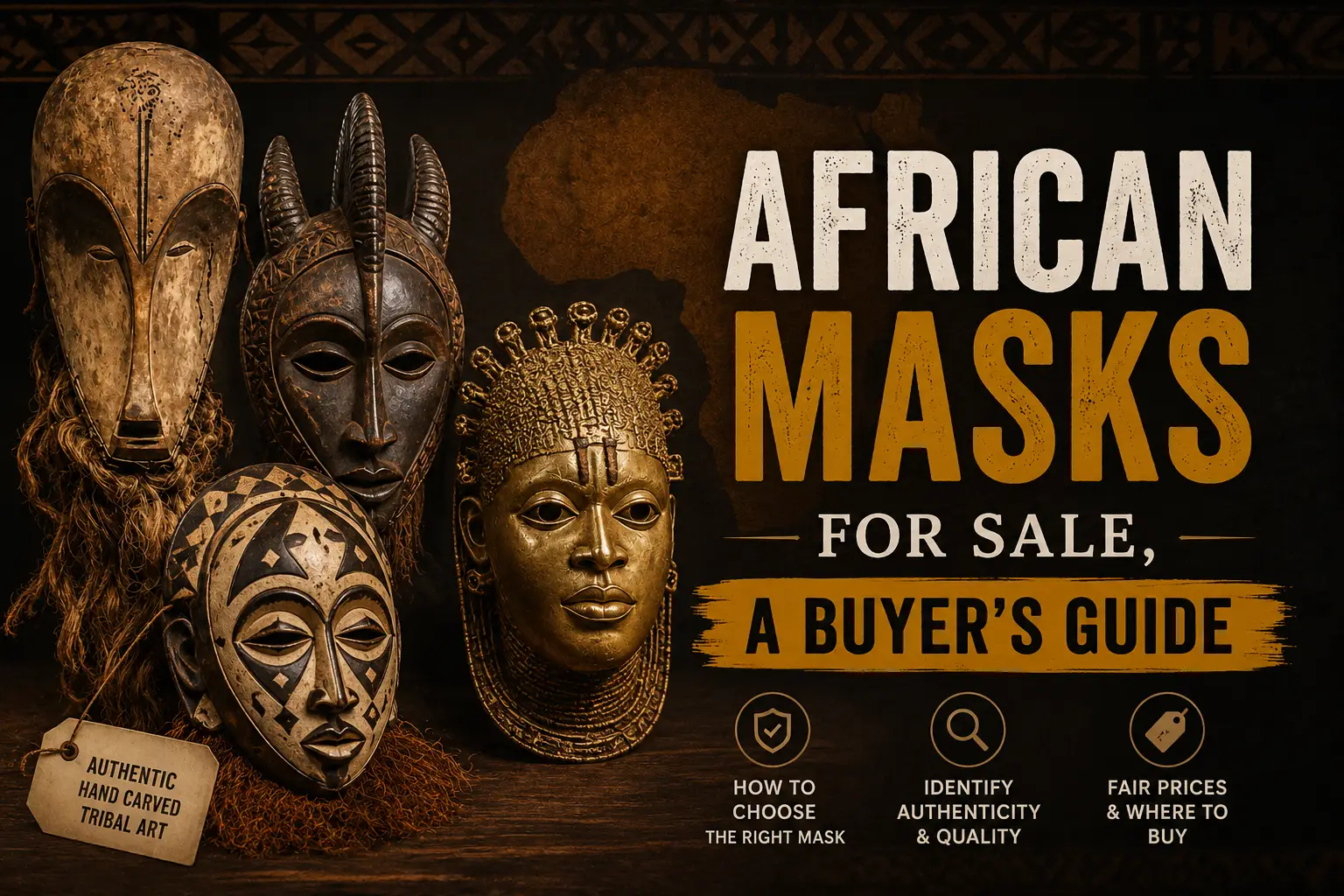
African Masks For Sale, A Buyer’s Guide
New: the 2nd edition of Within Carved Lines: The Secret Meanings of African Masks is out now. Get the book →
Say you want to buy an African mask. Good. Before you spend a cent, know one thing. That search term covers everything from a twenty dollar decorative carving at a home goods store to a mask that sold for $4.4 million at auction. Nearly everything you will actually find sits at the bottom of that range, and there is nothing wrong with that. Just know what you are paying for.
How Much Does An African Mask Cost?
Mass produced decorative masks run $15 to $60. Made in volume, workshop carved, built for the export decor market. Fine as decor. Do not expect ceremonial material or a real history behind them.
Hand carved artisan pieces run $60 to $400. A named carver or workshop made each one individually, and you can usually see the variation between pieces. Most people looking for something with more meaning than mass market decor should expect to land here.
Vintage or documented ceremonial pieces run $400 to several thousand dollars, occasionally far more. Real age. Documented use. Sometimes an actual auction or gallery record behind them. Genuine pieces at this level are rare and should come with real proof, not just a seller’s word.
If a listing calls something antique or ceremonial but prices it like the first tier, that mismatch tells you something on its own.
Where To Buy An Authentic African Mask
A few paths, roughly ordered by how much vetting happens before the piece reaches you.
Artisan cooperatives and fair trade importers work directly with carvers and usually pay them fairly. They can typically tell you who made a piece and where. This is generally the most honest way to buy.
Reputable African art dealers, the kind with a real track record and a physical shop or gallery, tend to stand behind what they sell and can speak knowledgeably about where a piece came from.
Cultural fairs, festivals, and museum shops often carry vetted pieces, sometimes with the artisan’s story attached.
General online marketplaces are the most convenient option and the least vetted. Read the warning signs below before you buy here.
Be careful with any listing claiming genuine antique or ceremonial status with no real provenance behind it. A documented chain of ownership is the exception in general marketplace listings, not the rule.
Finding African Masks For Sale Near You
If you would rather see and handle a piece before buying, a few places to check. African art galleries in larger cities often carry a curated selection and can talk you through what you are looking at. Cultural fairs and festivals, especially ones connected to African diaspora communities, are a good place to buy directly from artisans or importers with a real story to tell. University African studies programs sometimes run gift shops or seasonal sales connected to fair trade partners. Fair trade retail stores specifically vet their supply chains for ethical sourcing.
If none of these are convenient locally, buying from a fair trade importer online is a reasonable substitute. Just apply the same scrutiny you would to any online purchase.
Red Flags When Buying African Masks Online
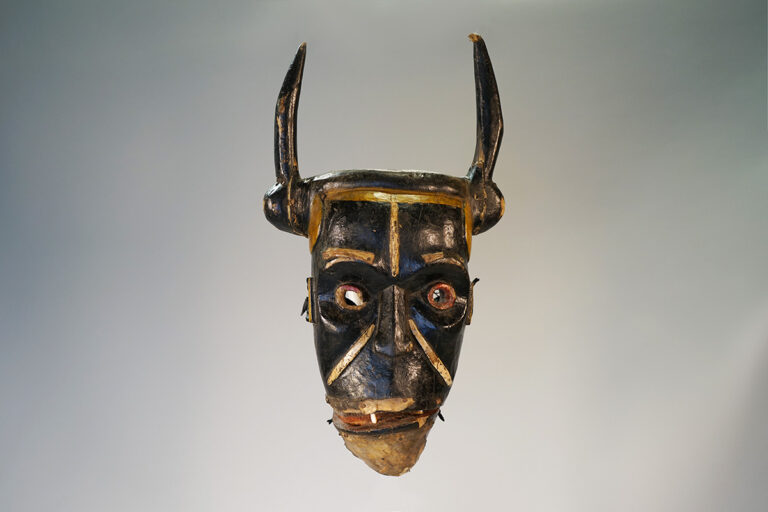
The same photo used across multiple different listings is a sign the seller is reselling generic stock rather than describing one actual piece. Vague or missing provenance on anything described as antique, vintage, or ceremonial is a warning sign, since a real history should be describable in specifics, not just asserted. Prices too low for the claimed age or rarity should raise a flag, because genuine old or ceremonial pieces do not show up at bargain prices. No information at all about the artisan or region of origin, even on a mass market decorative piece, is a bad sign. Some mask forms are reproduced more heavily than others and deserve extra scrutiny: the Baule Goli mask‘s kple kple discs and the Kifwebe mask of the Songye and Luba are both among the most widely copied African mask styles on the market, precisely because their striking geometric look sells well outside any ceremonial context.
New Versus Vintage Versus Antique, What The Words Actually Mean
These terms get used loosely in casual listings, but they carry real meaning worth holding sellers to.
New or decorative means made recently, specifically for sale, with no ceremonial use history. This describes most masks on the market, and there is nothing wrong with that as long as it is labeled accurately.
Vintage generally means older, though not necessarily antique, and specific age claims should still come with some supporting detail.
Antique conventionally means roughly a hundred years old or more. A genuinely antique African mask, especially one with documented ceremonial use, is a serious collector’s item and should be priced and authenticated accordingly. See The Mask That Sold For $4.4 Million for what that can look like at the extreme end.
Accurate labeling protects buyers and honestly represents the artisan’s work either way. A well made new decorative piece does not need to be misdescribed as something it is not to have value.
Frequently Asked Questions
Is it disrespectful to buy an African mask?
Not by itself. These objects have been made for trade as well as ceremony for a long time, and buying through a fair trade channel genuinely supports the artisan who made it. What is worth avoiding is treating every mask as generically tribal without asking where it actually comes from. Read African Mask Meaning, Symbolism And History for how to ask better questions about a piece.
How can I tell if a mask is real wood and hand carved?
Look for tool marks, natural grain, and small differences between pieces that are supposedly matching. A perfectly uniform surface, with identical twins in the same listing, usually means a machine made it, not a person.
Go deeper into the stories behind the masks you just read about. Within Carved Lines uncovers the history, symbolism, and ritual meaning of Africa’s traditional masks — now fully revised in its second edition.
Get Your Copy