Capacity Building for Community Based Organisations: What Actually Helps
Picture a youth group in Enugu that loses a grant it has already won.
The work is good. The young people are committed. The community trusts them. But when the funder asks for a simple financial report, nobody can produce one. Receipts are in three different phones. The treasurer has travelled. The bank account is in the founder’s name.
The money does not come.
That picture is not rare. Across Nigeria and across the continent, strong community groups fail not because their mission is weak, but because their systems are. This is why capacity building for community based organisations matters. It is not glamorous. It is the difference between a group that lasts and a group that disappears after one good year.
Let’s dig in. Shall we?
What capacity building for community based organisations means
The phrase is used so often that it has started to sound empty. So here is a plain definition.
Capacity building is the work of strengthening an organisation so it can do its job well, consistently, and without depending on one person. It covers the people, the systems, the documents and the habits that hold an organisation together.
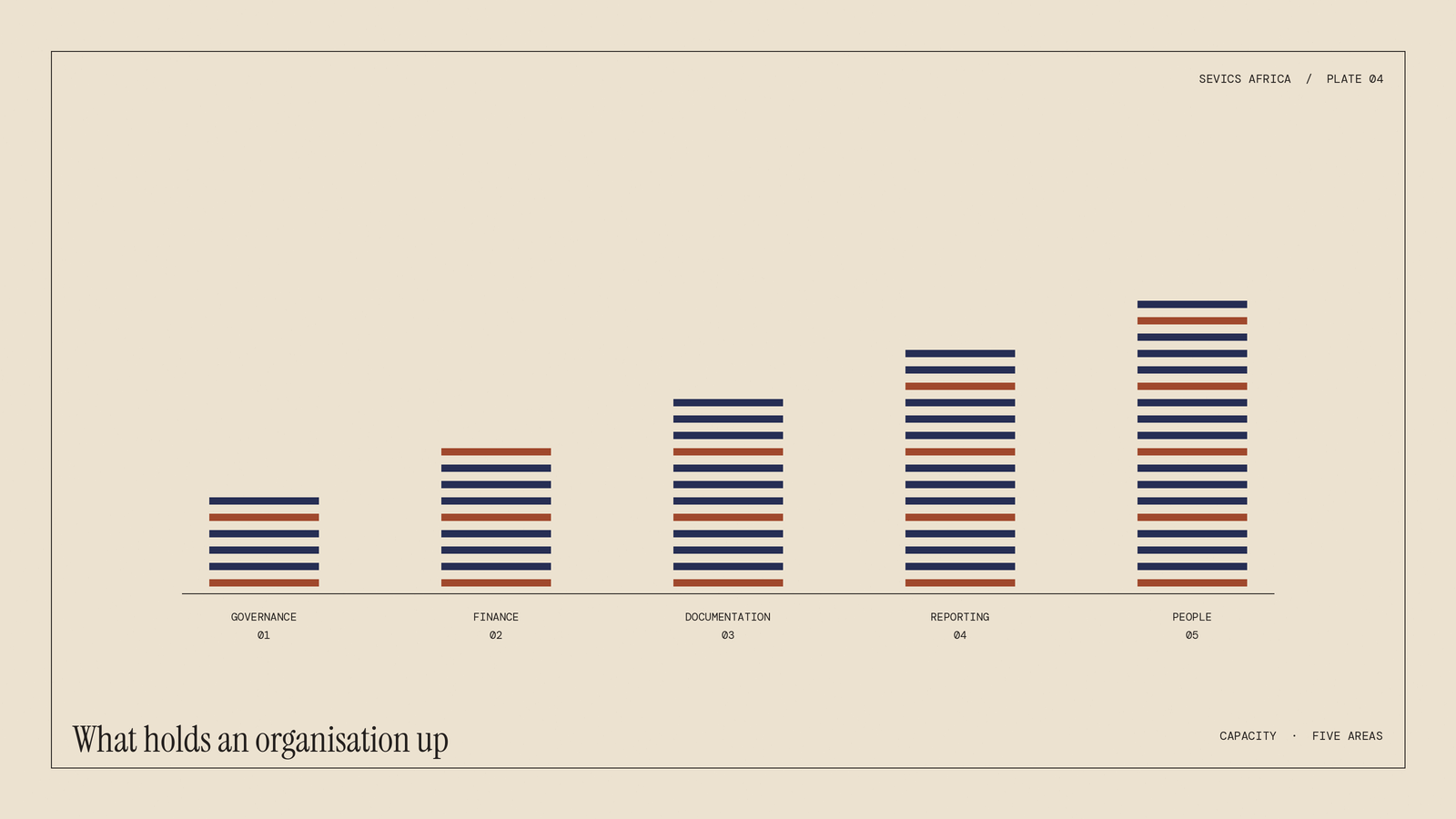
For a community based organisation, that usually means five areas.
1. Governance: who decides, and who checks
Many community groups begin with one passionate founder. That is natural. But a group that depends on one person is fragile.
Good governance means there is a clear structure for decisions. A board or committee that meets. Written roles. A way to resolve disputes. A way to replace leaders when needed.
African communities already know this model. Igbo villages used age grades and councils. No single man made every decision. We wrote about how that worked in our piece on the Igbo age grade system. The principle has not changed. Power that is shared is power that lasts.
Start here: Write down who your decision makers are and how often they meet. Then actually meet.
2. Financial systems: where the money goes
This is where most groups break.
Funders, members and the community all want to know one thing. Where did the money go? If you cannot answer quickly and clearly, trust drains away.
Basic financial capacity includes a bank account in the organisation’s name, not a person’s. Two signatories. A simple record of every income and expense. Receipts kept in one place. A monthly check by someone who did not handle the money.
None of this needs expensive software. A well kept spreadsheet and a folder of receipts will carry a small organisation a long way.
Start here: Move every naira, cedi or shilling into an organisation account. Then record everything.
3. Documentation: if it is not written, it did not happen
Community groups often do excellent work and record none of it. Then, when a funder or partner asks for evidence, there is nothing to show.
Documentation means keeping records of what you do. Attendance lists. Photos with dates and consent. Short notes after each activity. Stories from the people you serve, told in their own words.
This is also cultural work. Our elders carried knowledge in memory. When they died, much of it went with them. Organisations face the same risk. Write it down.
Start here: After every activity, write five lines. What happened, who came, what changed, what went wrong, what next.
4. Reporting: telling your story honestly
Reporting is documentation shaped for a reader. A funder report. An annual summary for members. A short update for the community.
Good reports are honest. They say what worked and what did not. They use numbers where they have them and stories where numbers fall short. They never invent results.
Many groups fear reporting because they think it must be perfect. It does not. It must be true and on time.
Start here: Pick one report you owe someone. Write the first draft this week, even if it is short.
5. People: building more than one leader
The final area is people. Who else in your organisation can do what the founder does? Who can write a report, manage the account, or speak to a funder?
Capacity building means deliberately training others. Pair a younger member with an older one. Rotate responsibilities. Let someone else lead the next meeting.
This is the hardest part for founders. Letting go feels risky. But an organisation that cannot survive its founder’s absence is not yet an organisation. It is a personal project.
Start here: Name one task you do alone. Teach it to someone else this month.
Why companies should care
If you run a company operating in Africa, community organisations around you are part of your environment. They train the young people you will hire. They hold the trust of communities you depend on.
Supporting their capacity is one of the most useful things a company can do. Money helps. But a grant to a group with weak systems may simply vanish. Funding governance training, financial setup or documentation support often does more lasting good than funding one more event.
We wrote about this in our guide to cultural heritage sponsorship for companies.
How SEVICS Africa works on this
Corporate and community support is one of the core areas of our work. We provide capacity building for community based and corporate organisations, covering governance, systems, documentation and reporting. The income from that work helps fund our community programmes in heritage, education and leadership.
You can read more about our approach in What Is SEVICS Africa?
The group that lost the grant
Now picture that same youth group a year later. They have opened an organisation account. They have chosen a second signatory. They write five lines after every activity. They apply again.
This time, when the funder asks for a report, it is ready.
That is what capacity building looks like. Not a workshop certificate. A report that is ready when someone asks for it.
If your organisation or company wants support with governance, systems or reporting, contact us and tell us where you are stuck. You can also see what we are working on through our campaigns page and the SEVICS Africa YouTube channel.