Ligbi Masks: The Islamic Masquerade That Dances at the End of Ramadan
New: the 2nd edition of Within Carved Lines: The Secret Meanings of African Masks is out now. Get the book →
Nearly every masking tradition documented in this book answers to ancestors, nature spirits, or the authority of a chief. The Ligbi, an Islamized trading and artisan people who moved from western Ghana into northern Côte d’Ivoire, built theirs around something else entirely: a Muslim religious calendar, timing their most important public masquerade to the end of Ramadan, the month of fasting, when the do or lo society brings out its dancers to express the community’s joy that the fast has ended. That calendar, Islamic rather than agricultural or ancestral, is the throughline worth carrying through this piece. It makes the Ligbi one of the clearer examples in this book of a masking tradition adapted to sit comfortably inside an Islamic religious framework, danced at the close of Ramadan and at the funerals of distinguished Muslim holy men rather than at harvest or initiation.

Who Are the Ligbi?
Related to the Senufo, among whom they live, the Ligbi moved from western Ghana into Côte d’Ivoire, where they now form Islamized communities working as traders and artisans among non-Muslim groups across extensive areas of the country’s north. Central to Ligbi religious life is an institution called do or lo, whose most visible public expression is colorful masquerade dancing. Though the custom is in decline today, it is still practiced on important Islamic holidays, especially at the end of Ramadan, when the feast surrounding the masquerade continues for several days, with prayers and sacrifices alternating for a full week before the assembled village leading up to it.
Do or Lo: A Masquerade for the End of the Fast
The performance of the do or lo maskers is accompanied by drums, singing, and dancing, and it expresses specifically the joy of the faithful that the period of fasting has ended. That framing matters: this is not a harvest celebration or a rite tied to the agricultural calendar found among many of the other West African traditions in this book, but a masquerade whose entire occasion is religious observance under Islam. The masks are danced during the funerals of distinguished Muslim holy men as well, extending the do or lo society’s role from marking the end of communal fasting to honoring specific respected individuals within the same religious framework.
Two Mask Types, One Borrowed From the Senufo
With its lateral wings, the primary Ligbi mask shows the clear influence of the Senufo kpelie mask, a debt the Ligbi’s close relationship to the Senufo makes unsurprising. Even so, the downcast, curved eyes and the specific use of pigments on Ligbi masks are distinctly their own. To complete the mask for performance, oil and make-up are applied, and during the dance itself the masks are adorned with gold and silver jewelry, a level of ornamentation that turns each appearance into a genuinely festive, wealth-displaying event rather than a plain ritual object simply being worn.
Yangaleye: The Hornbill’s Face
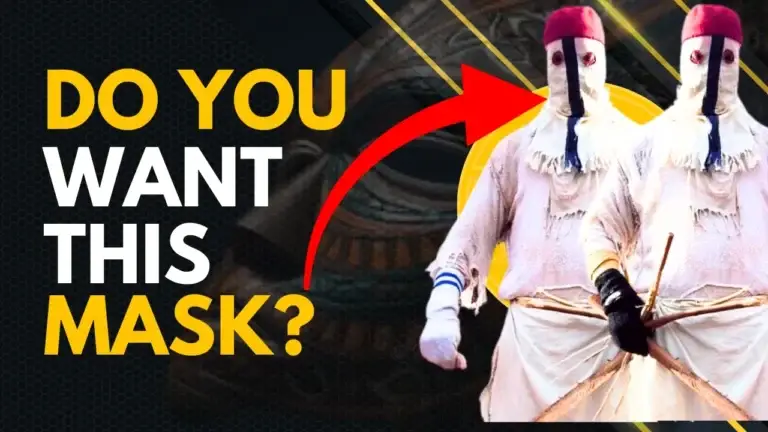
The second Ligbi mask type, called Yangaleye, combines human features with the powerful bill of the hornbill bird. The Ligbi attach great importance to this bird, considering it one of the mythical primeval animals, an attendant on the souls of the dead, and a symbol of fertility. Yangaleye masks are also popular among the do society and are danced during the funerals of distinguished Muslim holy men and to mark the end of Ramadan, performed in pairs and in perfect unison by maskers greatly admired for the grace of their movement. The Ligbi extend that admiration to the hornbill itself, whose behavior and family life they consider exemplary, a rare case in this book of a masking tradition explicitly praising an animal’s social conduct as a model worth imitating.
A Tradition in Decline
The do or lo masquerade, though still practiced on the most important Islamic holidays, is described plainly as being in decline. That trajectory places the Ligbi tradition alongside several others documented in this book facing pressure from broader religious and social change, though here the pressure runs through a somewhat different channel: a masking custom that had already made its peace with Islam, folding a longstanding masquerade practice into the Islamic calendar rather than persisting in tension with it, still finds its continuation increasingly difficult to sustain today.
Frequently Asked Questions
Why do the Ligbi dance masks at the end of Ramadan?
The do or lo masquerade specifically expresses the community’s joy that the period of fasting has ended, timing the tradition’s most important public performance to the Islamic religious calendar rather than to a harvest or ancestral occasion.
What is a Yangaleye mask?
Yangaleye combines human features with the bill of a hornbill bird, an animal the Ligbi consider mythical, an attendant on the souls of the dead, and a symbol of fertility, danced in pairs during Ramadan’s end and at Muslim holy men’s funerals.
How does the Ligbi mask relate to the Senufo kpelie mask?
The primary Ligbi mask’s lateral wings show clear Senufo kpelie influence, reflecting the Ligbi’s close relationship to the Senufo, though its downcast curved eyes and use of pigment remain distinctly Ligbi.
Is the Ligbi masquerade tradition still practiced?
It survives but is in decline, still performed on important Islamic holidays, especially at the end of Ramadan, though less widely than before.
See also: African Masks by Region and Tribe · Senufo Kpelie Mask: The Face Mask of Ancestors and Initiation · Every Traditional African Mask You Should Know · African Coming-of-Age Ceremonies: How Different Cultures Mark the Transition to Adulthood