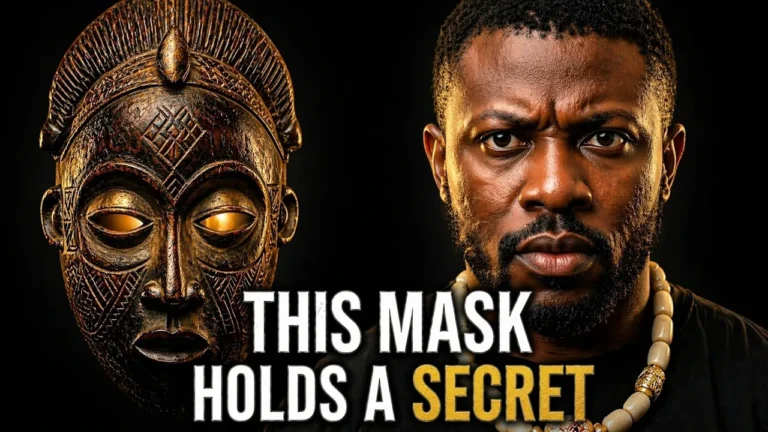
We Masks: A People Whose Name Means Forgiveness Carved Faces Built to Terrify
New: the 2nd edition of Within Carved Lines: The Secret Meanings of African Masks is out now. Get the book →
Several masking traditions documented in this book carry names that describe what a group does or where it lives. The We of Côte d’Ivoire and Liberia carry a name that describes something closer to a value: the word means “men who easily forgive.” Their masks, built around gaping jaws and tubular eyes specifically to frighten, sit in direct tension with that self-description, a forest-dwelling people whose art trades in intimidation while their collective name insists on the opposite temperament. That tension, a name built on forgiveness paired with a mask built on fear, is the throughline worth carrying through this piece. It runs straight through the We’s use of masquerades as tools of social regulation, an art form whose intimidating surface serves an orderly, restrained purpose underneath.

Who Are the We?
Modern ethnology groups the Wobe and Guere together under the single name We, though the people themselves continue to use their older, separate names. The We population is estimated at 100,000, spread across Côte d’Ivoire and Liberia. Rice, yams, taro, manioc, maize, and bananas are the primary crops grown, though farming and hunting have been largely replaced for many by labor in diamond camps or on rubber plantations. Confederations govern both ethnic groups, the largest being a warrior confederation led by a military chief who also acts as civil authority, alongside family units that play an important role in day-to-day We social life.
A Name That Means Forgiveness
The art of the Guere and Wobe peoples is stylistically connected, and both groups are often collectively referred to as We, a word that translates to “men who easily forgive.” The name describes a disposition rather than a location or occupation, framing the group’s collective self-image around restraint and reconciliation rather than conflict.
Masks Built to Frighten
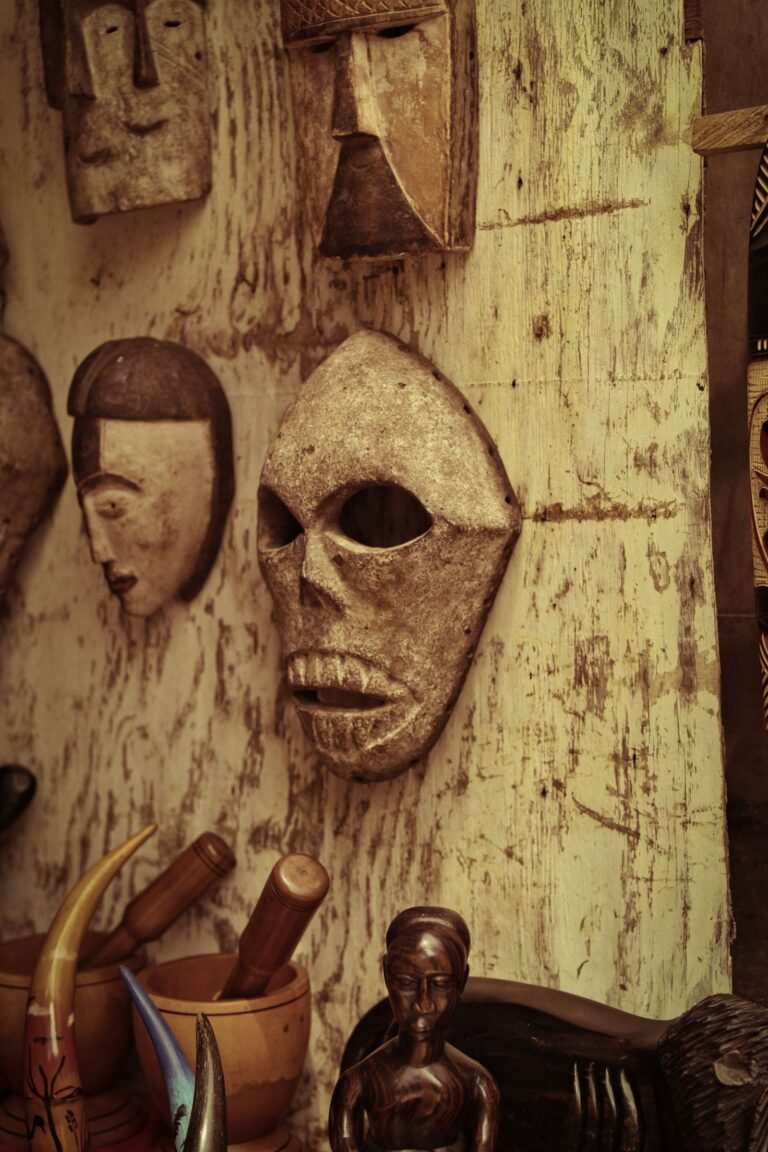
Like the neighboring Dan, the We use a wide variety of masquerades that hold an important regulatory position within their small, egalitarian communities. Most We masks were created specifically to frighten, built with gaping jaws and tubular eyes, a style that stands apart from the sophisticated, gentle, and often refined art of the neighboring savanna-dwelling peoples. We masks are further characterized by an enlarged triangular nose and an open mouth, features that push the face toward deliberate menace rather than naturalistic representation. We statues, by contrast, are rare, leaving masks as the tradition’s dominant sculptural form.
Family-Owned Masquerades in Egalitarian Communities
We masks are owned by families and used by individual lineage members, embedding the objects directly into kinship structure rather than treating them as communal or society-wide property. They appear in contexts of social control, in boys’ circumcision camps, and in entertainment, a range that spans discipline, initiation, and performance within the same set of objects. That breadth reflects the egalitarian character of We communities, where the same intimidating mask can enforce order at one moment and provide entertainment at another, without needing a specialized institution to mediate between the two roles.
Frequently Asked Questions
What does the name “We” mean?
We describes the collective name modern ethnology gives to the Guere and Wobe peoples together, meaning “men who easily forgive,” even though the people themselves continue to use their separate traditional names.
What do We masks look like?
They are typically built with gaping jaws, tubular eyes, an enlarged triangular nose, and an open mouth, a combination designed specifically to frighten rather than to charm.
Who owns We masks?
They are owned by families and used by individual lineage members, rather than held communally or restricted to a single society.
What are We masks used for?
They appear in contexts of social control, in boys’ circumcision camps, and in entertainment, giving the same masking tradition a role in discipline, initiation, and performance.
See also: African Masks by Region and Tribe · The Dan Mask of West Africa: Purpose, Symbolism, and Regional Variations · Guro Masks: The Zamble, and a Style Forged Between the Baule and the Dan · African Coming-of-Age Ceremonies: How Different Cultures Mark the Transition to Adulthood