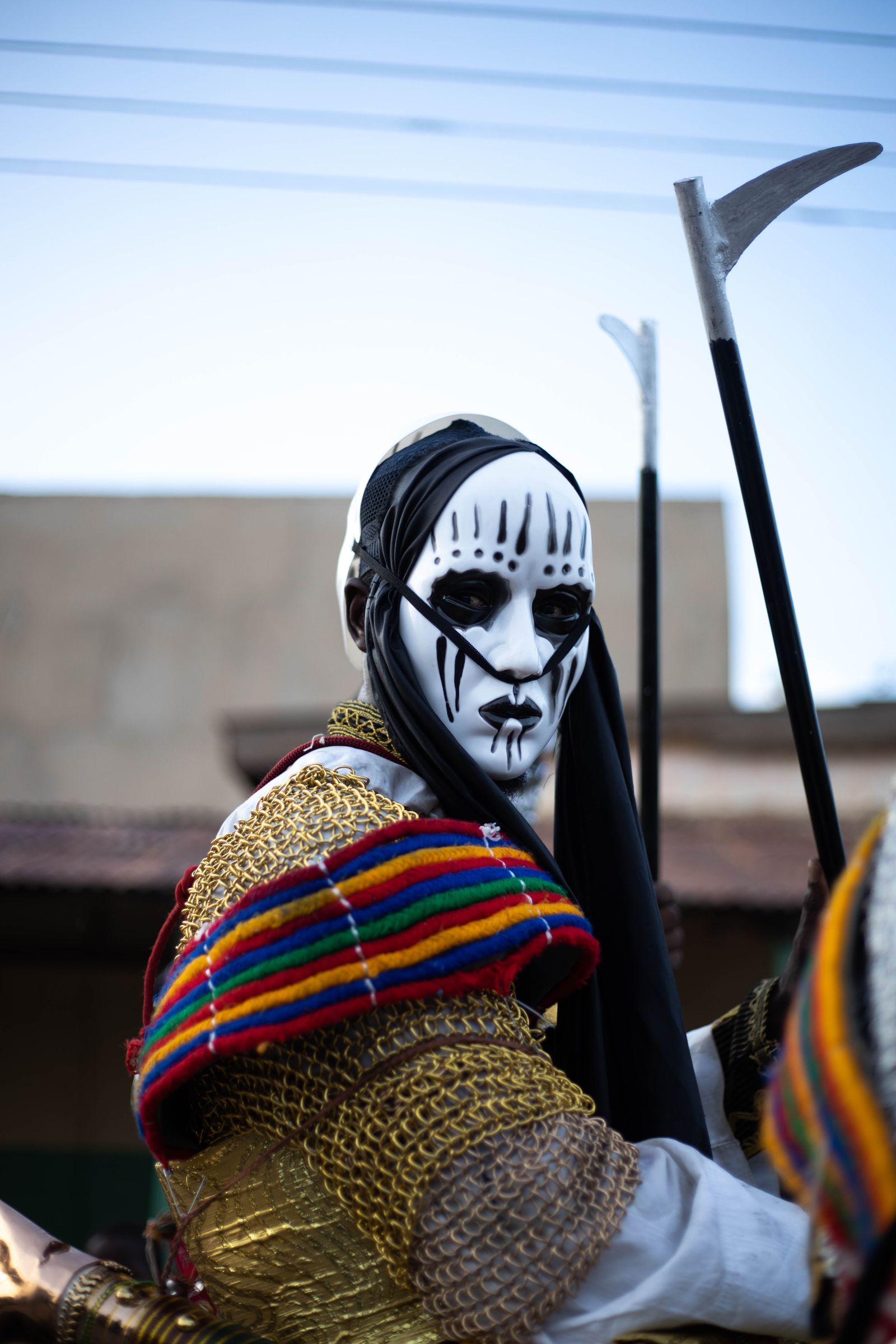
Yoruba Masks: Gelede, Egungun and Epa, and What Each One Is For
The drums start before you see anything. Then the crowd parts, and a figure comes through covered from head to foot in layered cloth. You cannot see a hand. You cannot see a face. Somebody near you says the ancestor has come home. Nobody laughs.
That is the thing outsiders miss about Yoruba masks. They are not objects first. They are events. The wood, the cloth, and the paint only make sense inside a festival, a lineage, and a set of beliefs about the dead, the mothers, and the community.
The Yoruba of southwestern Nigeria and parts of Benin and Togo have many masquerade traditions. Three stand above the rest in fame and in the number of carvings they produced. Gelede, Egungun, and Epa. Each one does a different job. Let me take you through them.
Why Yoruba Masks Are Called Masquerades, Not Just Masks
Each Yoruba masquerade has its own name, its own society, and its own rules. But the logic underneath is shared. A spirit or a social force becomes visible for a time. The person inside does not matter. What matters is what appears.
This is why a Yoruba mask in a museum case is only half of the thing. The other half is the costume, the song, the drum language, and the crowd.
Gelede: Masks That Honour the Mothers
Gelede comes mainly from the western Yoruba, among the Ketu, Egbado, and neighbouring groups. It honours awon iya wa, which means our mothers. The phrase refers to women in general, to female ancestors, and to the powerful elder women whose spiritual force can protect or destroy a town.
Gelede is danced by men. They often perform in pairs, wearing carved headpieces on top of the head rather than over the face. The face of the dancer is covered with cloth, and the mask sits above like a crown.
What Gelede masks look like
The face on a Gelede mask is usually calm, with heavy lidded eyes and a composed expression. Above it, the carvers let themselves go. You can find snakes, birds, market women carrying loads, drummers, and even scenes from modern life such as motorcycles and sewing machines. Gelede is famous for commenting on the world as it is.
The night and the day
A Gelede festival often begins at night with Efe, a masquerade whose singer delivers songs full of praise, warning, and sharp satire. Nobody important is safe from it. The daytime Gelede dances follow, with paired dancers in bright costumes. The whole festival is about keeping peace with the mothers so that the town can prosper.
Egungun: The Ancestors Return
If Gelede is about the mothers, Egungun is about the dead. Egungun masquerades bring lineage ancestors back to visit the living. Many Yoruba describe them as ara orun, people from the otherworld.
Egungun is strongly tied to the old Oyo kingdom, and from there it spread widely. An Egungun festival usually happens once a year, and different lineages bring out their own ancestral masquerades.
Cloth before wood
Here is what surprises many collectors. Most Egungun are made of cloth, not wood. Layer upon layer of fabric, often expensive and imported, sewn into panels that swirl when the masquerade spins. Some Egungun do carry a carved wooden head on top, but the cloth is the main event. The richer the lineage, the more spectacular the costume.
Why nobody may touch them
The person inside an Egungun must never be seen. Contact with the masquerade is dangerous, and attendants with whips or sticks keep the crowd at a distance. This is not theatre. For the people watching, the dead are among them, and the rules are real.
Epa: The Heavy Masks of the Northeast
Travel northeast to Ekiti and the Igbomina area and you meet Epa. These are some of the largest and heaviest masks carved anywhere in Nigeria.
An Epa mask has a pot shaped helmet at the bottom, usually carved with a stylised face, and a tall superstructure on top. That superstructure might show a warrior on horseback, a mother surrounded by children, a hunter, a king, or a priest. The scenes celebrate the heroes and founders of the community.
A test of strength
During the Epa festival, young men wear these masks and leap onto a raised mound. If the dancer fails, it is a bad sign for the town. If he succeeds, the community is reassured. The weight of the mask is part of the meaning. Carrying the ancestors is supposed to be hard.
The carvers who made the name
Epa carving produced some of the most celebrated Yoruba artists of the twentieth century. Bamgboye of Odo Owa and Areogun of Osi Ilorin are two names you will meet in any serious book on Yoruba sculpture. Their work sits in major museums today.
How to Tell Yoruba Masks Apart
If you are standing in front of a carving and wondering which tradition it belongs to, start here.
- Does it sit on top of the head with a calm face and a lively scene above? Think Gelede.
- Is it mostly cloth, or a small carved head meant to sit above a full body costume? Think Egungun.
- Is it a heavy helmet with a pot shaped base and a large figure group on top? Think Epa.
There are also many local masquerades that do not fit any of these neatly. That is normal. Yoruba culture was never one uniform thing.
The Bigger Picture of Nigerian Masquerade
Yoruba masks are one thread in a much wider Nigerian story. The Igbo, the Ibibio, the Ijo, and many others built their own masquerade systems with their own rules. If you want the national view, read our guide to Nigerian masks and masquerade traditions. For the faces themselves, our piece on Yoruba scarification and the ila lines explains the marks you will sometimes see carved into Yoruba masks.
Learn More With SEVICS Africa
Every one of these masquerades is still alive somewhere. Every one has elders who know more than any museum label. That is the heritage we are working to protect. Explore more stories in our Cultural Heritage section, see how you can support the work on our About page, and watch the masquerades come alive on the SEVICS Africa YouTube channel.