Yombe Art: The Kongo Kingdom Offshoot That Became Its Finest Sculptors
New: the 2nd edition of Within Carved Lines: The Secret Meanings of African Masks is out now. Get the book →
Several traditions documented in this book borrow a neighbor’s visual language and adapt it modestly. The Yombe, 350,000 people spread across both Congo Republics and Angola, did something more thorough: once an integral part of the Kongo kingdom, they inherited its entire artistic repertoire, maternity figures, seated kings, prestige objects, nail and mirror fetishes, and then produced the greatest concentration of maternity figures and stone statuary anywhere in the forested Lower Zaire River region. That inheritance taken to its highest expression, a shared Kongo vocabulary that the Yombe refined into some of the finest sculpture on the continent, is the throughline worth carrying through this piece. It explains why Yombe art looks so immediately familiar to anyone who knows Kongo carving, and why, within that familiar language, Yombe work is so often singled out as its most accomplished form.

Who Are the Yombe?
Yombe territory is covered in thick forest that must be cleared through slash-and-burn techniques before planting, work typically done by men, leaving cultivation of plantains, manioc, maize, beans, peanuts, and yams to the women. Surplus crops are sold in regional markets for cash, and goats, pigs, chickens, and dogs are also raised, while fishing on the Congo River and its tributaries supplies an important source of dietary protein. Men are additionally responsible for hunting, weaving, carving, smithing, and smelting, while women produce clay pots for domestic use.
An Offshoot of the Kongo Kingdom That Refined Its Own Art
The forested Lower Zaire River region holds the greatest concentration of maternity figures and stone statuary in black Africa, and the vast Yombe area sits at the focal point of that concentration, home to numerous individual carving styles. The Kongo kingdom shaped Yombe art directly, since the Yombe were, at one point in their history, an integral part of that kingdom. Artistically prolific, the Yombe produced some of the finest sculpture in all of Africa, working in the same thematic register as the Kongo: maternity figures, seated kings, objects of prestige, and nail and mirror fetishes.
Phemba: Maternity Figures for Fertility and Divination
Yombe female phemba statues were used in divinatory practices and associated with fertility rites, representing women in seated, cross-legged, or kneeling poses, with pointed or round coiffures, necklaces of glass or coral beads, a cord tied around the breasts, jewelry, and filed teeth. Women hold an important symbolic place among the Yombe, considered not only a nurturing force but also seers and guardians of the spirit, and the maternity figures are carved from wood in a realistic style that is genuinely rare within African sculpture as a whole.
Nail Fetishes, Rare Masks, and the Luxury Arts of the Court
Yombe mirror and nail fetishes carry an aggressive expression, typically an open mouth showing filed teeth, continuing the same nkisi tradition found among the wider Kongo. Rare, realistic masks were worn during important communal ceremonies, an uncommon form set against the wealth of statuary. The art of the royal court shows up in objects of luxury: commanders’ staffs, flyswats, scepters, swords, and musical instruments including drums, trumpets, and whistles. The mvuala scepter is ordinarily surmounted by a refined female figure, and some examples contain relics, folding the same ancestor-and-power logic found in Yombe fetishes into an object of court regalia.
Frequently Asked Questions
How are the Yombe related to the Kongo?
The Yombe were once an integral part of the Kongo kingdom and inherited its artistic themes directly, including maternity figures, seated kings, prestige objects, and nail and mirror fetishes.
What is a Yombe phemba figure?
Phemba are female maternity statues used in divinatory practices and fertility rites, carved in a realistic style and shown seated, kneeling, or cross-legged with elaborate coiffures and jewelry.
Did the Yombe use masks?
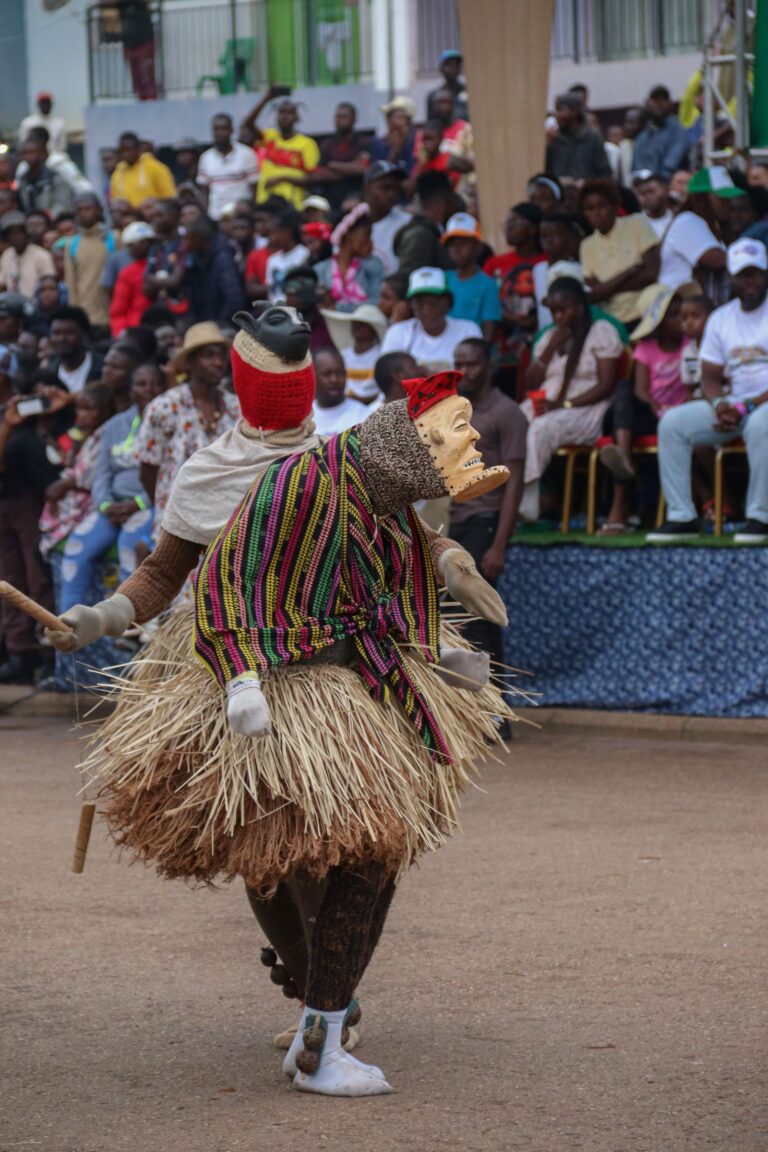
Masks were rare among the Yombe, worn during important communal ceremonies, in contrast to their much larger tradition of maternity figures and fetishes.
What is a mvuala scepter?
A mvuala is a court scepter ordinarily surmounted by a refined female figure, sometimes containing relics, used as an object of royal luxury and regalia.
See also: African Masks by Region and Tribe · Kongo Masks and Nkisi: The Same Container Can Heal You or Hunt You Down · Vili Masks: A Police Force in Paint, on the Atlantic Coast · Woyo Masks: A Married Couple’s Argument, Carved Into the Lid of a Pot · Every Traditional African Mask You Should Know