Types of African Masks: The Five Formats That Explain Almost Everything
Most people looking at African masks are sorting them by the wrong thing. They sort by country, or by how frightening the face looks, or by whether the wood is dark. None of that is how the objects were actually organised by the people who made them.
The useful way to sort them is by how the thing sits on the body. That single question, where does it go, tells you more about a mask than its nationality does. So here are the types of African masks that actually exist as categories, what each one is for, and what changes when the mask moves from the face to the top of the head.
The five types of African masks, sorted by where they sit
Every mask tradition on the continent uses some combination of five formats. Learn these and you can place an unfamiliar object within seconds.
1. The face mask
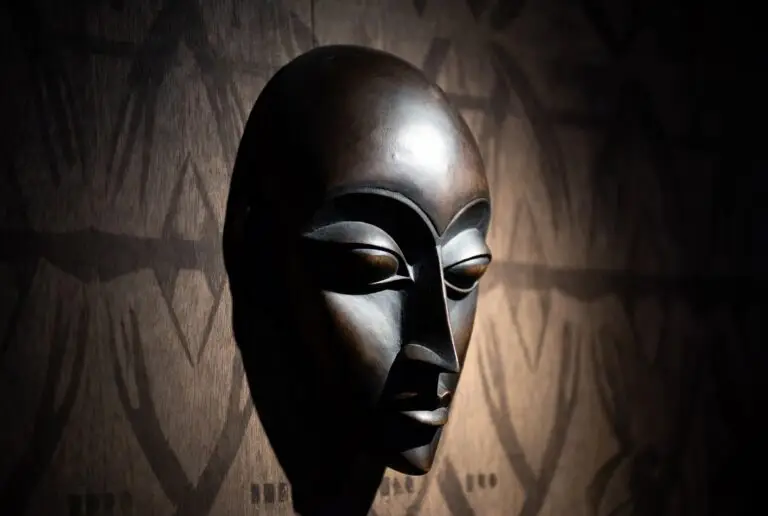
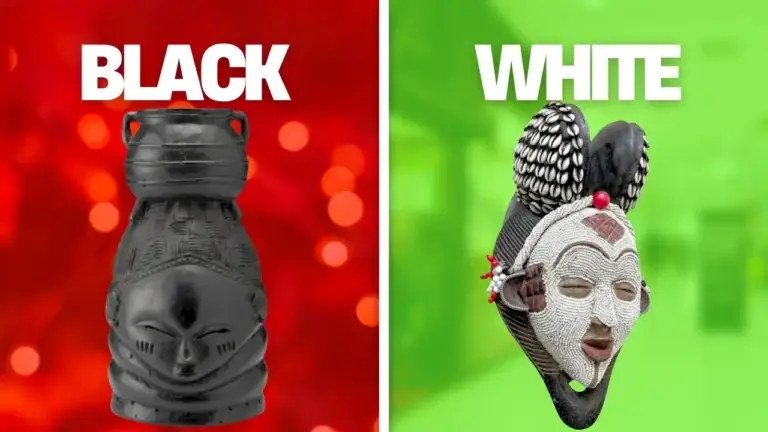
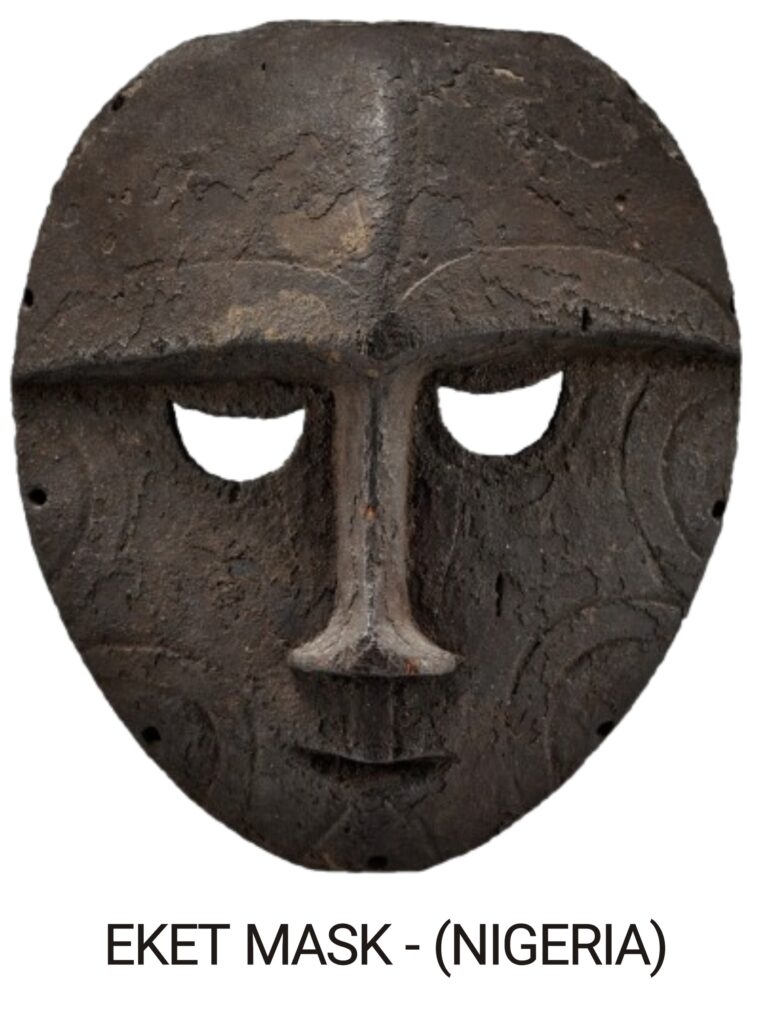
Covers the face only, held by cord, or by a bite bar gripped in the teeth, or both. This is the format people picture when they hear the word mask. Dan masks from Liberia and Cote d’Ivoire, Punu white faced masks from Gabon, Songye kifwebe, Igbo Agbogho Mmuo. The face mask gives the dancer the narrowest field of vision and the greatest intimacy with the audience. When you see eye holes drilled as small slits or pinholes, the tradition is telling you the dancer was not meant to see well. He was meant to be seen.
2. The helmet mask
Encloses the entire head like a bucket, resting on the shoulders. The carver hollows it from a single block, which means a helmet mask starts as a much larger and heavier piece of timber than a face mask. Mende Sowei helmets from Sierra Leone, the only major African mask tradition danced by women, are the best known. Kuba Mwaash aMbooy and Bwoom from the Congo are helmets. So is Ogbodo Enyi among the Izzi and Afikpo in Nigeria.
3. The crest and headdress
Sits on top of the head, usually on a basketry cap tied under the chin, with the dancer’s face covered separately by cloth or fibre. This is the format that allows enormous vertical sculpture, because the weight sits on the crown of the skull rather than hanging off the face. Bamana Chi Wara antelope crests from Mali. Kurumba antelope headdresses from Burkina Faso. Ekoi and Ejagham skin covered headdresses from the Cross River. Yoruba Gelede.
4. The shoulder mask
The rarest format and the most physically demanding. The structure rests on the dancer’s shoulders and rises above his head, so he is carrying the whole weight on his upper body while moving. The Baga Nimba from Guinea is the defining example, a monumental maternal figure with a bent neck and four legs that straddle the dancer. Very few traditions attempted this.
5. The full structure
Barely a mask at all in the ordinary sense. Igbo Ijele is the extreme case, a tiered construction several metres tall, covered in mirrors, cloth and dozens of small figures, needing a team to manage. At this scale the object stops being something a person wears and becomes something a community operates.
Sorting by what the mask is for
Format tells you how. Function tells you why, and there are roughly five of those too.
Initiation. Masks that appear when young people cross into adulthood, teaching and testing them. Mende Sowei, Chokwe Mwana Pwo, Senufo Kpelie.
Funerary. Masks that escort the dead and release the living from grief. Dogon Dama masks, Hemba So’o, Ijele for a great elder.
Judicial and social control. Masks that police. Ekpo among the Ibibio, Ekpe in the Cross River, Bobo Dwo. A society without a written code needs a visible enforcer, and it built one out of wood and fibre.
Agricultural and seasonal. Masks that bring bush spirits into the village to renew the farming year. Bwa and Nuna plank masks in Burkina Faso, repainted annually.
Entertainment and satire. Genuinely a category, and often the largest one. Gelede is satire. Many twentieth century masquerades are comic. Not everything sacred is solemn.
What the categories do not tell you
Two warnings, because a taxonomy is a tool and not a truth.
First, a single mask can move between functions across its life. A mask carved for initiation can end up in a funeral, then in a village festival, then in a dealer’s crate. Function is contextual, not intrinsic.
Second, the tribal labels attached to these types were largely fixed in place by European collectors and colonial administrators who needed tidy categories for catalogue cards. Real style regions bleed into each other. Neighbours borrow. The Malinke took a hyena face from a neighbouring power association. The Lwena work in a style almost identical to the Chokwe. Treat the label as a starting point, never as a verdict.
If you want the geography behind these categories, our guide to African masks by region and tribe maps them out, and our overview of the traditional African masks worth knowing works through the major examples one by one.
How to use this on an actual object
Pick up the mask. Ask where it sat. Look for the evidence, because the body leaves marks.
A face mask that was danced has a worn bite bar, or attachment holes stretched into ovals by cord, or a darkened interior where sweat and skin worked into the wood over years. A helmet mask has wear around the lower rim where it met the shoulders. A crest has holes or lashing points around its base where it was tied to a cap. A mask with none of these, with a clean flat interior and neat unworn holes, never went anywhere. That is not a failure, it just means you are holding a carving rather than a costume component.
Our guide to identifying African masks takes this further into pigment, tooling and patina.
Why the categories are worth learning
Because the alternative is looking at four hundred distinct traditions as one undifferentiated pile of African art, which is exactly what the museums did for a century and exactly why so little of it is understood. A person who can say helmet mask, initiation, probably Mende is already reading. A person who says tribal mask is still just looking.
We work through these traditions one people at a time on the SEVICS Africa channel on YouTube. If you teach, run a museum programme, or manage a cultural budget, our corporate support page explains how this documentation gets funded and how institutions can use it.