Eket Masks: The Policemen Who Answer to No One But the Dead
New: the 2nd edition of Within Carved Lines: The Secret Meanings of African Masks is out now. Get the book →
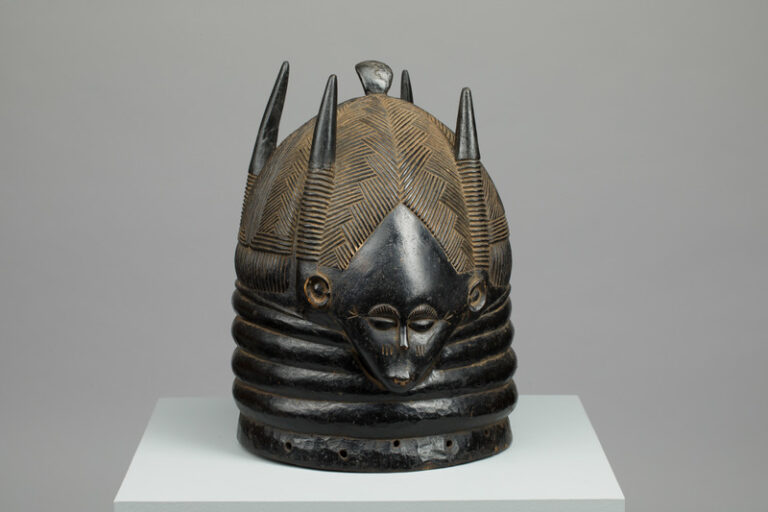
Several masking traditions documented in this book give masked performers real social authority, the power to enforce a rule, collect a debt, or settle a dispute. The Eket, an Ibibio subgroup of farmers numbering roughly one million in Nigeria’s Cross River region, built something with an unusually sharp edge: an actual policing function carried out by masked members of the ekpo society, whose identities were almost always known to the community, yet who were rarely held to account, because accusing an ekpo member risked the anger of the ancestors he was believed to represent. That gap, between knowing who is under the mask and still being unable to challenge what he does, is the throughline worth carrying through this piece. It turns the ekpo mask into a genuine instrument of unaccountable power, dressed in ancestral authority rather than hidden behind true anonymity.
.jpg)
Who Are the Eket?
The Eket are an Ibibio subgroup of farmers who, unlike their Cross River neighbors, do not fish. Palm oil, extracted and sold to external markets, is the main economic staple of the region. Every Eket village is governed by a group of elders and the heads of extended families, and their decisions are enforced by members of the ekpo society, who act formally as messengers of the ancestors rather than as ordinary village officials.
Ekpo: Masked Messengers of the Ancestors
The ekpo society requires its initiates to sponsor feasts for the town, a practice that fosters an appearance of redistributing wealth by providing the poor with food and drink. In effect, this arrangement allows underlying disparities in wealth to persist while creating a visible ritual of generosity around them. Ekpo members are always masked when performing their policing duties. Although their identities are almost always known within the community, fear of retribution from the ancestors prevents most people from accusing members who overstep their limits, a dynamic the book describes plainly as effectively committing police brutality with near impunity.
A System That Protects Its Own Enforcers
What makes the Eket case distinctive among the masking traditions in this book is not that ekpo members hold real enforcement power, several other societies documented elsewhere do too, but that the protection built around them runs through belief rather than secrecy. Anonymity is not really the mechanism at work, since everyone generally knows who serves. Instead, the mask reclassifies the wearer as a vessel for ancestral authority, and challenging his conduct becomes, in effect, a challenge to the ancestors themselves, a far riskier proposition than simply naming a man.
Panel Masks, Moon Masks, and the Ogbom Cult
The ekpo society uses several distinct types of masks, among them polychrome panel masks, described as unique in Africa, consisting of two panels with one supported by the other at the top. There are also round masks used for the yam and yam harvest festival, characterized by a moon shape, or consisting of two superimposed disks, or a single disk topped by an anthropomorphic head. A related organization, the idiong society, is made up of diviners who often also belong to ekpo; their oval masks are very characteristic, with eyes pierced in a crescent moon shape and frontal bands recalling the palm fiber or goatskin crowns given to every new initiate. Another association, econg, named after the god of war, uses marionettes rather than masks in its ceremonies. The ogbom society, meanwhile, celebrates Isong, goddess of the earth and spouse of the god of heaven, source of fertility among humans, animals, and plants; its great masquerades feature headdresses topped by figures standing as high as thirty inches, though the fuller details of the ogbom cult remain, in the book’s own account, not well known.
Frequently Asked Questions
What does the ekpo society do?
Ekpo members enforce village decisions made by elders and heads of extended families, acting as masked messengers of the ancestors, and require initiates to sponsor town feasts that create a visible show of wealth redistribution.
Why couldn’t people hold ekpo members accountable?
Even though members’ identities were almost always known, fear of ancestral retribution discouraged most people from accusing an ekpo member who overstepped his authority, effectively shielding enforcers from consequences.
What are Eket panel masks?
Polychrome masks described as unique in Africa, made of two panels with one supported by the other at the top, used by the ekpo society.
What is the ogbom society?
A cult celebrating Isong, the earth goddess and source of fertility, whose great masquerades feature headdresses topped by figures up to thirty inches tall, though its fuller ritual details are not well documented.
See also: African Masks by Region and Tribe · Ibibio Masks: The Beautiful Dead and the Ugly Dead, Dancing on Separate Nights · Every Traditional African Mask You Should Know · African Coming-of-Age Ceremonies: How Different Cultures Mark the Transition to Adulthood