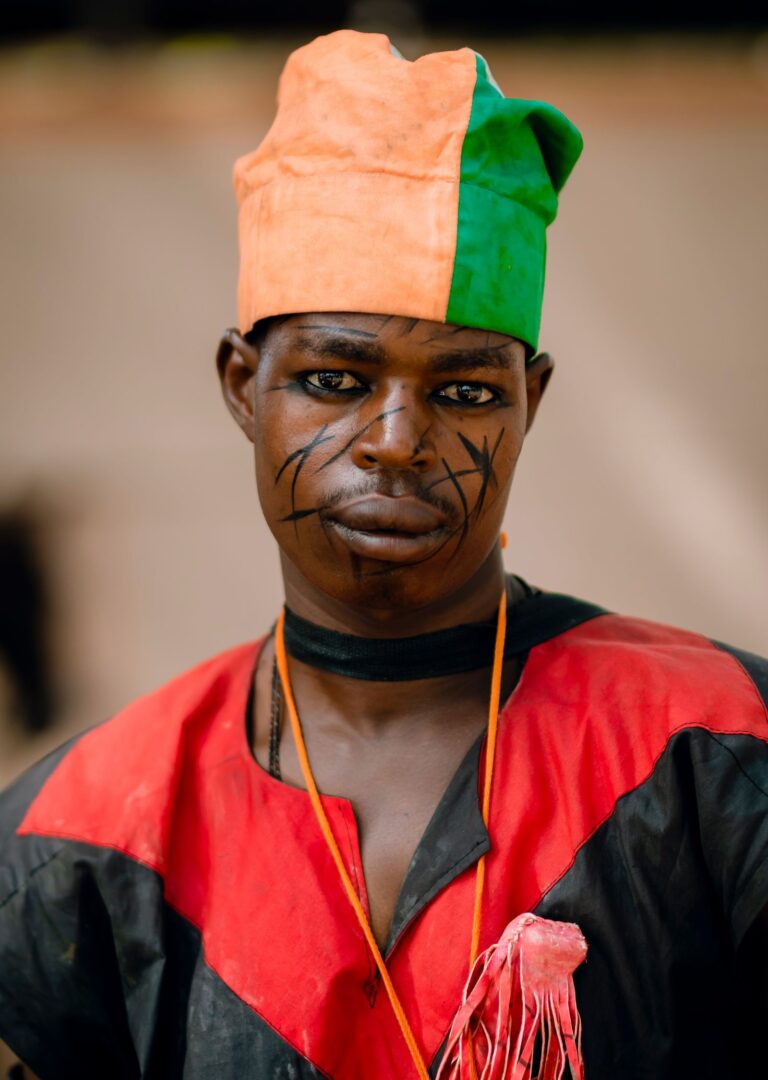
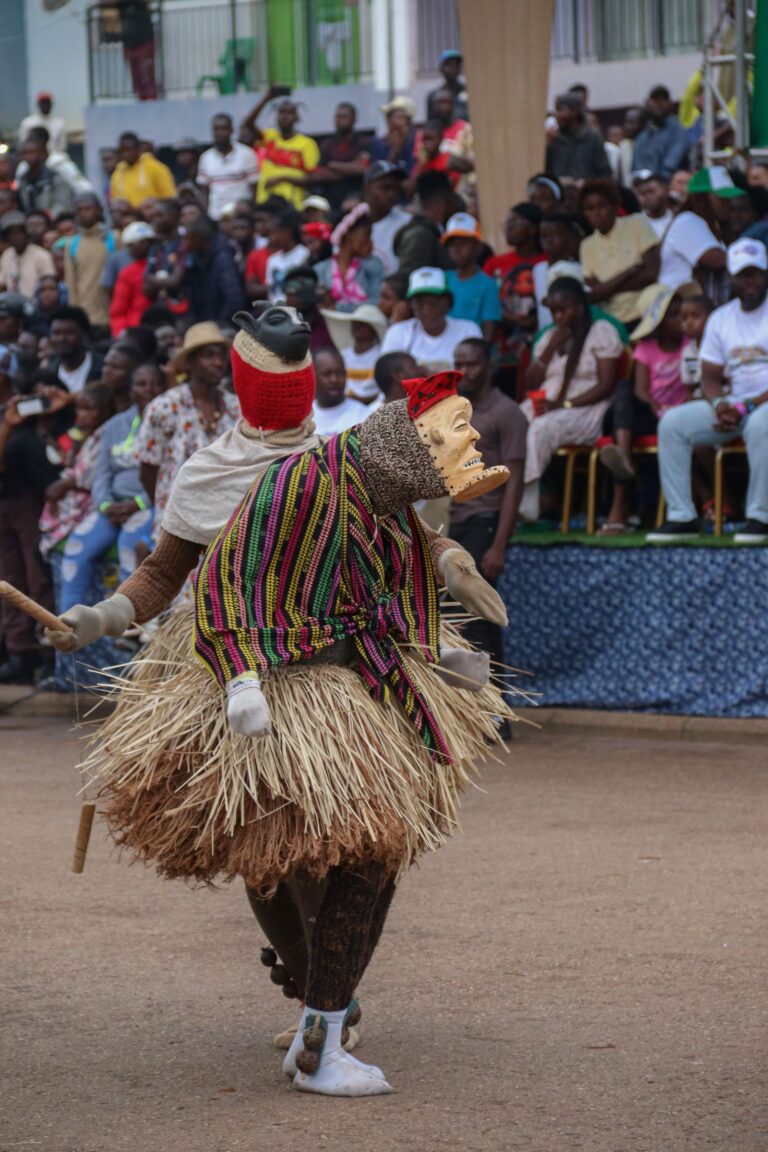
Temne Masks: The Spirit That Buys a Chiefdom, Then Disappears Forever
Most masks in this book appear repeatedly, at funerals, at harvests, at initiations that recur every generation. The Temne of Sierra Leone built one that does the opposite: a mask representing the guardian spirit of a ruling dynasty, seen in public only once, during the enthronement of a new chief, after which it disappears and is not seen again until the next succession. It is one of the more tightly scripted single-use objects documented anywhere in this book, a mask built entirely around a nine-day window that opens perhaps once in a generation.
That single-use structure, an object whose entire public life is compressed into nine days built around a single political transition, is the throughline worth carrying through this piece. Everything about the mask’s design and handling serves that narrow, high-stakes window, and understanding it means following the ceremony itself, day by day, rather than treating the mask as an object separate from the specific event it exists to serve.
Who Are the Temne?
Around one million Temne, related to the Baga whose own masking tradition is documented elsewhere on this site, live in small chiefdoms across Sierra Leone, each ruled by a central chief. Temne social life is regulated by secret societies, most prominently the male poro and the female bondo, also called bundu, associations that between them govern initiation, moral instruction, and much of the community’s ritual calendar. That combination, a centralized chieftaincy layered on top of powerful gender-specific secret societies, gives Temne society a structure distinct from many of its Upper Guinea Coast neighbors, where secret societies alone, without a central chief, typically hold the greater share of authority.
Poro and Bondo: The Societies That Govern Temne Life
The men of the poro society traditionally took future initiates away from the village entirely, sometimes for several months and sometimes for years, before the initiates underwent the ceremony that let them wear the sign of the poro, a distinctive hat. Afterward they would form a work group and spend several days in the meeting house before being formally “reborn” and given a bush name, a new identity marking their return to the community as adults. Girls’ initiation, overseen by bondo, ran along a related but distinct path: young initiates were led by the head of the association, called the soko, to a sacred grove by a river, the soko sometimes carrying a female figure representing an ideal woman at the head of the procession. There, the girls learned the secrets of womanhood and underwent a clitoridectomy, and once training was complete they were presented to the community as fully mature women. Carved wooden headdresses, danced by the leaders of the women’s association, make manifest the spirits who guide bondo initiation, and a masked spirit is understood as one embodiment of the bondo’s own mystical power, the same broader tradition of women-led masking documented among the neighboring Mende.
Nomoli: Stone Figures Older Than the Masks
Before turning to the Temne’s best known individual mask, it is worth noting an older sculptural tradition tied to the same territory. The nomoli are small soapstone sculptures, later reused by Atlantic coast ethnicities who came into contact with Portuguese traders beginning in 1550, representing masculine figures with a wide head and a noticeably reduced occipital, or back-of-skull, region. These figures predate the documented mask tradition and circulated well beyond the communities that originally carved them, a reminder that Temne sculptural history runs deeper than the ceremonial masks that are the primary subject of this piece.
The Mask That Legitimizes a Chief
For ceremonies designed specifically to legitimize the authority of certain ruling families, the Temne maintain a mask representing the spirit responsible for protecting the reigning dynasty of each chiefdom, and its appearance legitimizes the religious authority of a newly installed chief. The mask is seen in public only for the enthronement ceremony itself, in which it plays the central role, and the masker functions as a kind of go-between through whom the incoming chief actually takes possession of the chiefdom. Throughout the final four days of the installation’s preparatory stage, while the chief-to-be remains in ritual seclusion, the masker circulates through the community “buying” the chiefdom, distributing gifts from the chief’s own family to the various occupational groups that make up the community. On the fifth day, the masker leads the new chief out of the forest and into town for his first public appearance, then presides over the celebrations that continue across the following four days. After that, he disappears and is not seen again until the next chief is installed.
Nine Days, Then Gone
Numerous wooden masks, and more rarely masks of beaten brass, belonging to men’s associations have been documented and collected from the Temne, and versions of this enthronement tradition remain in active use today in many Temne chiefdoms. Each mask represents the guardian spirit of its own ruling clan and bears a specific name tied to that particular dynasty, meaning a mask from one chiefdom cannot simply substitute for the mask of another. The nine-day arc described above, four days of gift-giving seclusion, one day of public emergence, four days of celebration, is not an incidental detail of the ceremony. It is effectively the mask’s entire public existence, repeating only when the position of chief itself needs renewing.
Frequently Asked Questions
What is the Temne enthronement mask for?
It represents the guardian spirit of a ruling dynasty and appears publicly only during a new chief’s installation, legitimizing his authority as the masker leads him from ritual seclusion into his first public appearance.
How long does the enthronement mask appear in public?
Roughly nine days total: four days during which the masker “buys” the chiefdom by distributing gifts, one day leading the new chief into town, and four days of subsequent celebration, after which the mask disappears until the next succession.
What is the difference between poro and bondo?
Poro is the Temne men’s secret society overseeing male initiation, including a period of seclusion away from the village. Bondo, also called bundu, is the corresponding women’s society, overseeing female initiation through masked ceremony led by an official called the soko.
What are nomoli?
Nomoli are small Temne soapstone sculptures representing masculine figures, later reused by Atlantic coast peoples who came into contact with Portuguese traders from 1550 onward, predating the region’s documented mask tradition.
See also: African Masks by Region and Tribe · Sowei Mask of the Mende: The Only African Mask Tradition Owned by Women · Baga Masks: Nimba, the Massive Mother of Fertility on the Guinea Coast · African Coming-of-Age Ceremonies: How Different Cultures Mark the Transition to Adulthood